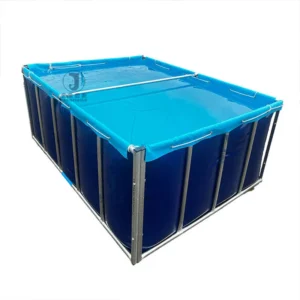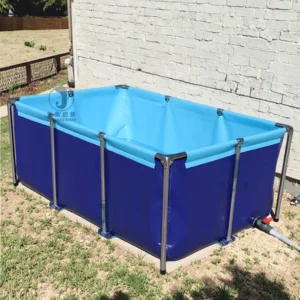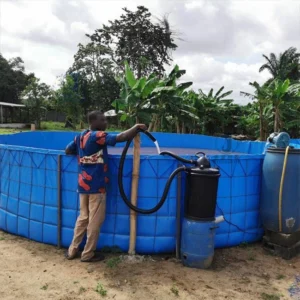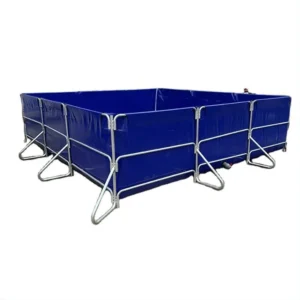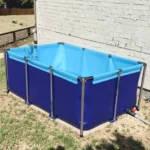
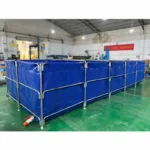
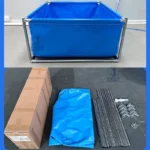
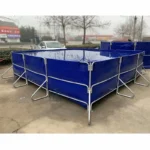
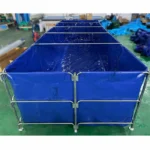
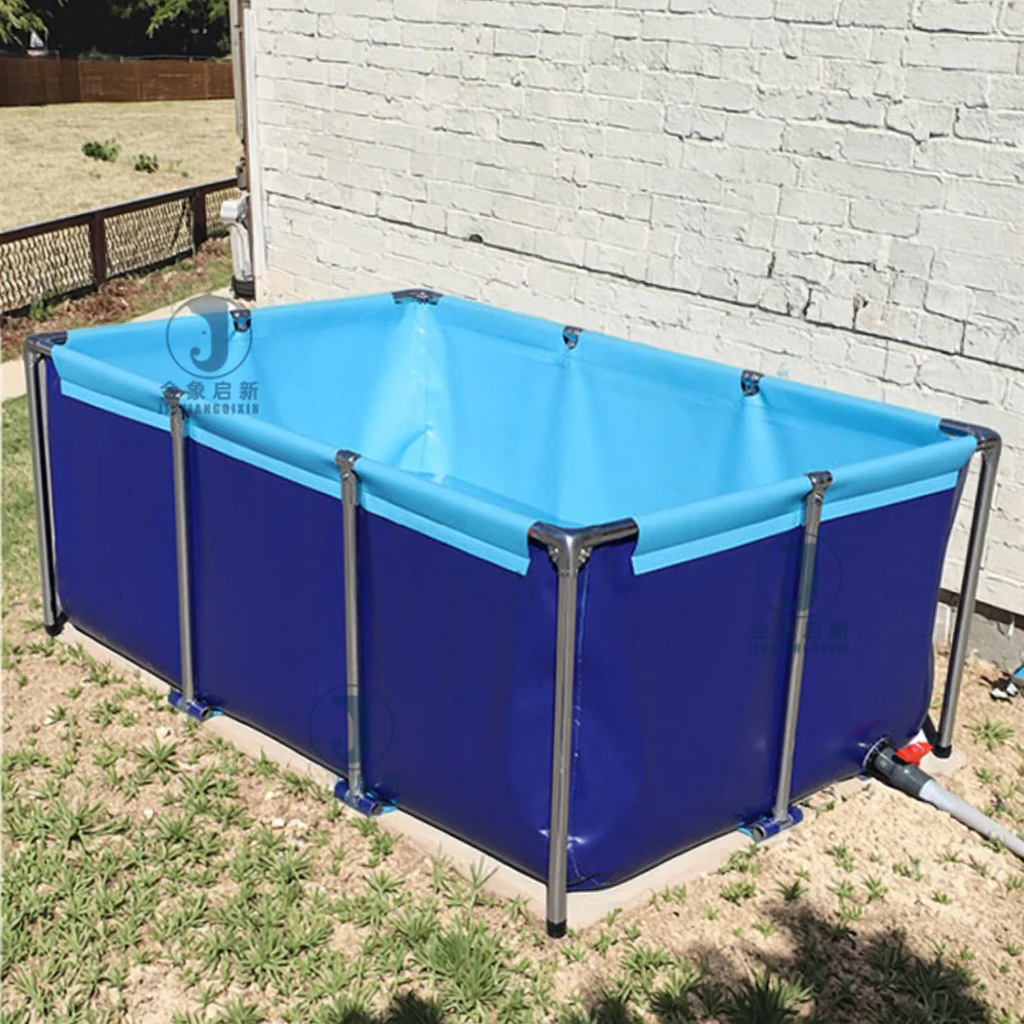
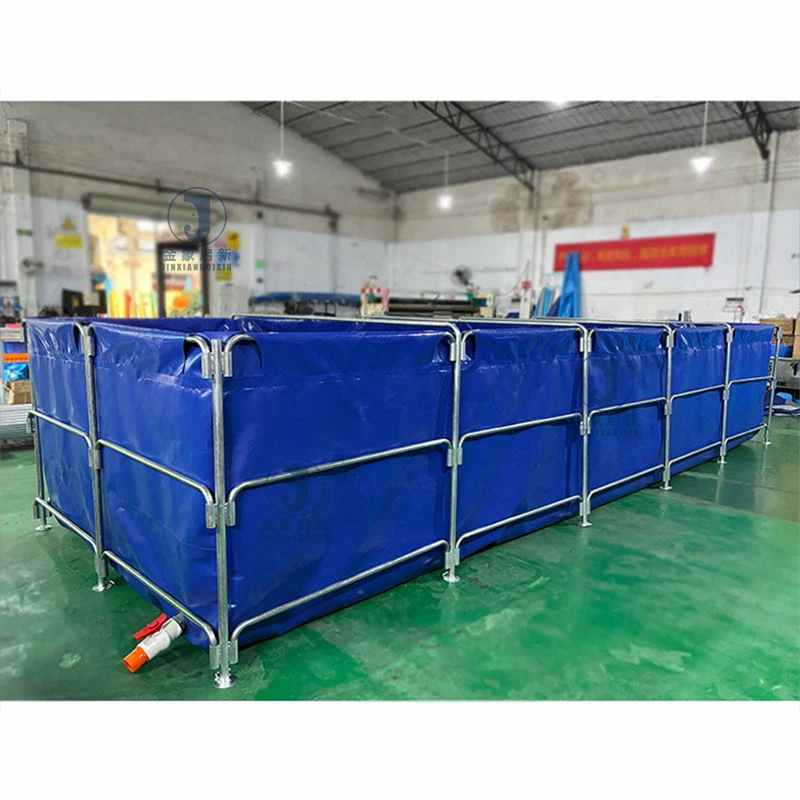
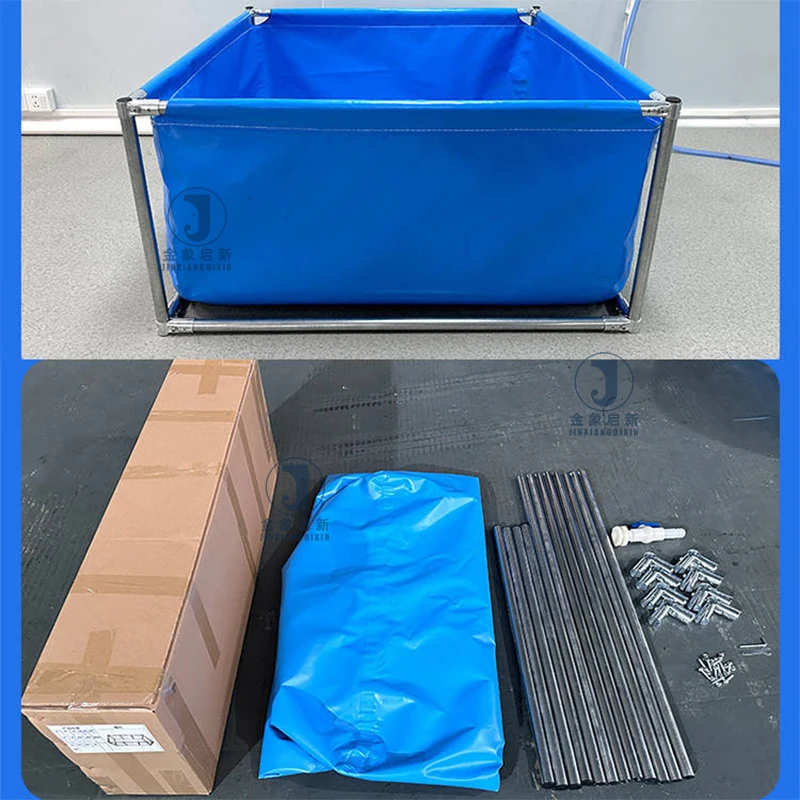
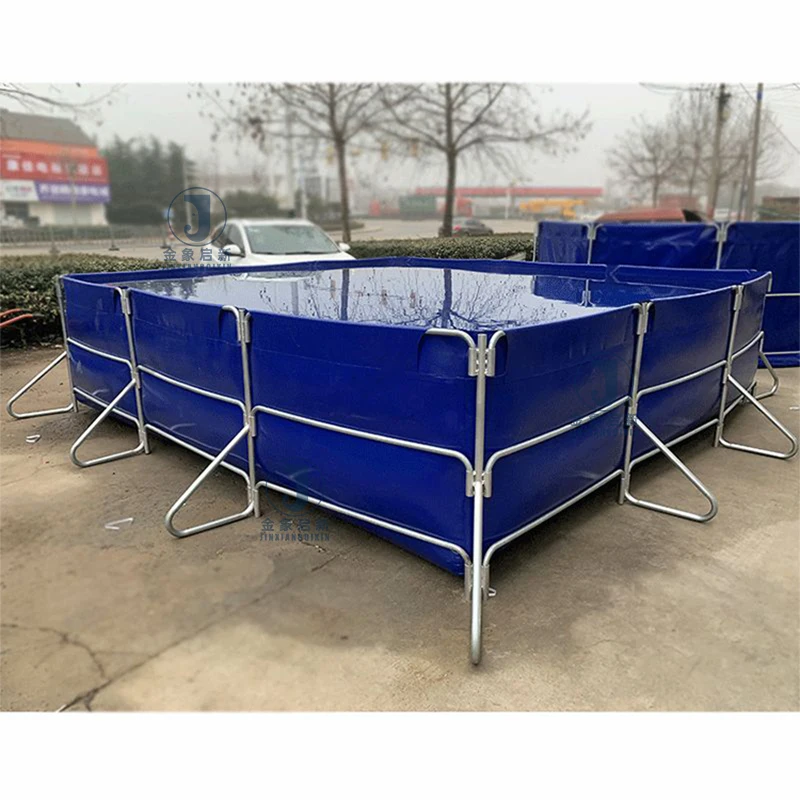
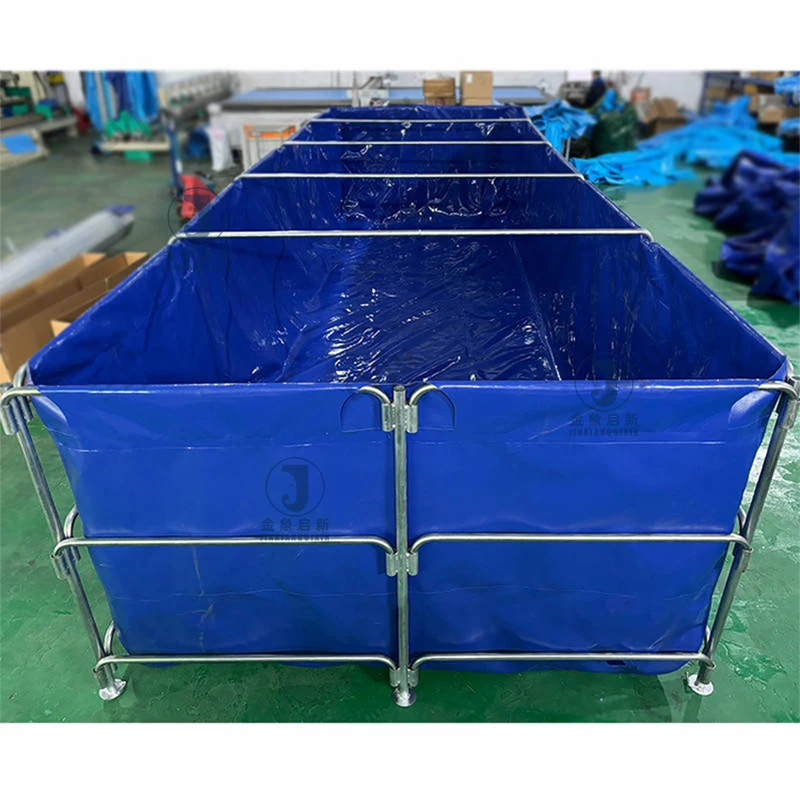
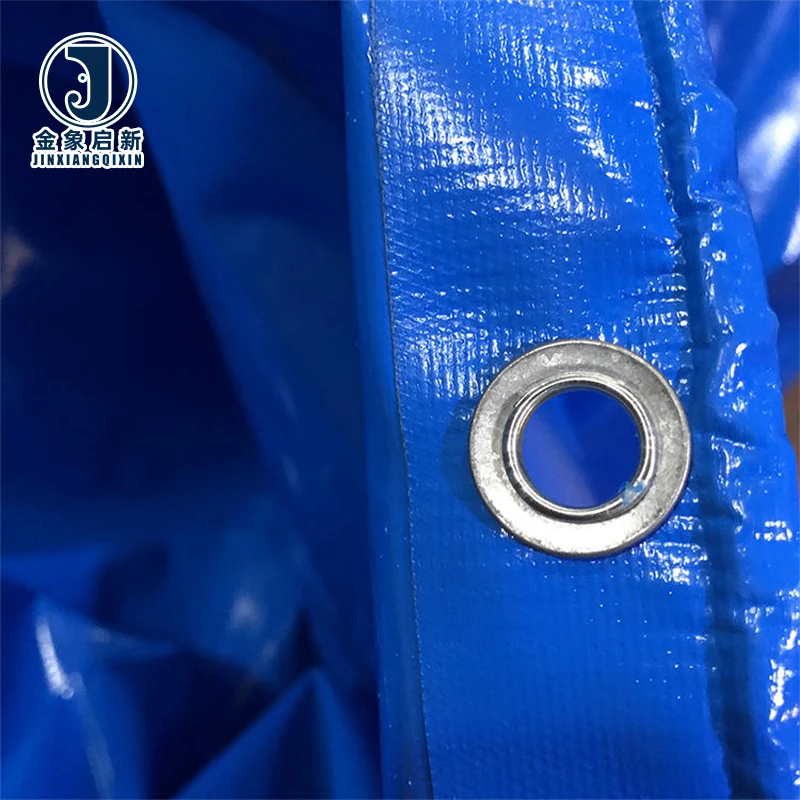
Deep Process Control — Coating weight and adhesion are monitored across every production run to ensure PVC pond liner for aquaculture meets the exact GSM and thickness stated on the quotation.
Technical Specifications
| Parameter | Value |
|---|---|
| Product Type | Pond Liner |
| Base Fabric Denier | 500D×840D, 500D×1000D, 1000D×1000D, 1000D×1300D, 1300D×1300D, 1000D×2000D |
| Mesh Count | 30×19, 20×20, 30×15 |
| Weight Options | 350 GSM, 400 GSM, 420 GSM, 500 GSM, 600 GSM, 650 GSM, 750 GSM, 900 GSM |
| Total Thickness | 0.29mm, 0.32mm, 0.38mm, 0.44mm, 0.46mm, 0.55mm, 0.65mm |
| Tensile Strength (Warp) | 1650N – 3900N (test basis not stated in source) |
| Tensile Strength (Weft) | 1600N – 3500N (test basis not stated in source) |
| Coating Material | PVC, Double-Sided |
| Base Material | Polyester |
| Key Features | Waterproof, Anti-Bacteria, Abrasion-Resistant, UV treatment available — confirm the grade required for your market, Flame retardant grades available — confirm the grade required for your market |
| Finish | Smooth, leather-like texture |
| Repairability | Hot air welding |
| Roll Width | 2m – 2.1m |
Application Suitability
| Application | Exposure & Requirement |
|---|---|
| Commercial fish and shrimp farming ponds | Permanent water immersion, soil chemistry contact, puncture risk from substrate and stocking equipment, UV exposure on exposed banks |
| Aquaculture tank and hatchery construction | Constant water containment, frequent cleaning and disinfection, bacterial adhesion prevention on liner surface |
| Agricultural irrigation reservoirs | Seasonal water level fluctuation, soil erosion at banks, prolonged sun exposure on uncovered water surfaces |
| Ornamental pond and water feature lining | Aesthetic surface consistency, UV exposure, water tightness over varied substrate profiles |
Why Quoted GSM Does Not Always Arrive at the Site
The number on the quotation only matters if it can be verified on the roll that arrives.
A PVC pond liner for aquaculture specified at a particular weight frequently arrives lighter than agreed. When a liner designed for 650 GSM arrives closer to 580 GSM, the tensile and tear resistance drop proportionally. For a fish pond that must hold thousands of litres of water against uneven substrate, that shortfall translates into higher puncture susceptibility and a greater chance of seam stress during filling. The buyer pays for a grade they never receive, and the failure appears only after the pond is filled and stocked. [NEED_CITE: ISO 1421 tensile and tear test methods for coated fabrics]
Coating Consistency and Containment Reliability
A pond liner must perform as a single, continuous barrier. The double-sided PVC coating on this polyester base fabric is applied to eliminate pinholes and maintain a uniform surface across the full roll width. For aquaculture operations, the smooth leather-like finish serves a functional purpose beyond appearance: it reduces bacterial adhesion on the submerged surface and allows for faster, more thorough cleaning between production cycles.
Seam Integrity Under Hydrostatic Load
Stitched seams are the most common leak point in any lined pond. This PVC pond liner for aquaculture is designed for hot air welding, which fuses overlapping panels into a continuous coated surface. The resulting bond relies on coating adhesion rather than thread tension, so the seam does not become a preferential failure path when the pond floor flexes under water load or when substrate settles unevenly beneath the liner. [NEED_CITE: hot air welding parameters for PVC coated polyester fabrics]
Reading Denier and Density Beyond the GSM Number
GSM tells you the total weight per square metre, but the base fabric construction determines how that weight translates into usable strength. A 1000D×1300D denier yarn in a 30×19 mesh count distributes load differently than a 500D×840D in a 20×20 mesh, even at comparable weight. Higher denier yarns resist tear propagation across the pond floor when sharp substrate or equipment contact initiates a cut. Mesh density governs how load transfers between warp and weft — a tighter count spreads point loads more effectively, which matters when pond walls carry lateral pressure from retained water.
What Happens When the Wrong Grade Goes Into the Ground
Selecting a liner grade too light for the pond depth or substrate conditions leads to early failure at stress points. A liner that is too thin for the soil profile beneath it will abrade and puncture during installation or under the weight of a full pond. When rolls from the same shipment vary in colour or coating thickness, adjacent panels welded together show visible inconsistency — and the thinner panel becomes the weak link under hydrostatic pressure. These problems emerge after the pond is filled, making remediation costly and disruptive to stocked operations. [NEED_CITE: coated fabric selection criteria for water containment applications]
What Verification Looks Like Before Dispatch
Material is produced across three full lines with dedicated QA/QC at every stage, not sampled after the fact. For each pond liner order, GSM weight is measured against the quoted specification before the roll leaves the facility, so the grade you pay for is the grade that ships. The 10-person R&D team handles specification matching when pond depth, soil type, or local compliance requirements call for a specific denier or treatment combination.
Documentation & Verification
- Material specification sheet stating exact GSM, denier, and coating weight for each roll
- Weight verification record per roll measured against quoted GSM before dispatch
- UV test report documentation where UV treatment has been specified for the order
- Pre-shipment inspection record confirming roll count, width, and surface condition
- Certificate of origin and customs documentation for international aquaculture project procurement
Fabrication, Handling & Storage
- Hot air weld at temperatures matched to the PVC coating grade and GSM for full fusion
- Store rolls upright on cores to prevent flat-spot creases across the 2m–2.1m width
- Clean smooth leather-like surface with non-solvent cleaners to preserve coating integrity
- Field repairs use hot air welding on matching PVC scrap for permanent bonded patches
- Plan roll layout to minimise cross-pond welds and reduce seam count in high-load zones
- Allow liner to relax after unrolling before welding to prevent tension-induced shrinkage
Specifying the Right Liner for Your Project
To receive an accurate specification recommendation, share the pond dimensions, maximum water depth, and substrate type. Confirm whether UV treatment or a specific flame retardant grade is required for your local regulatory environment. Provide target roll width preference and estimated annual volume so the quotation reflects the correct production run and lead time.
Frequently Asked Questions
Q: How is GSM weight verified on arrival against the quoted pond liner specification?
A: Each roll is weighed and measured during pre-shipment inspection against the stated GSM on your quotation. The inspection record accompanies the shipment so you can cross-check on receipt. If you require independent lab testing on arrival, we support third-party sampling from retained production samples before dispatch.
Q: Which GSM and thickness should I choose for my fish pond depth and soil type?
A: Shallow ponds with smooth prepared substrate typically use lighter grades from the available range. Deeper ponds or those with rocky, uneven floors require heavier denier base fabrics and greater thickness to resist puncture. Share your pond depth and soil profile so we can match the appropriate denier and GSM combination from the available options.
Q: How does hot air welding compare to other seaming methods for watertight pond installation?
A: Hot air welding fuses the PVC coating layers together, creating a continuous bonded seam without stitch holes. This eliminates the primary leak path found in sewn panels. The weld strength depends on correct temperature and speed settings matched to the specific GSM and coating thickness of the liner being installed.
Q: What UV treatment documentation is provided for pond liner exposed to direct sunlight?
A: Where UV treatment is specified on the order, the test report is included in the shipment documentation. The report confirms the treatment type and test method applied. Confirm the UV grade required for your climate and exposure conditions at the inquiry stage so the correct formulation is applied during production.
Q: What roll widths and lengths are available to reduce on-site joins in large ponds?
A: Rolls are produced in widths from 2m to 2.1m with custom lengths available based on order volume. Wider and longer rolls reduce the number of field welds needed to cover large pond areas. Provide your pond dimensions so we can calculate the optimal roll configuration to minimise seams and material waste.