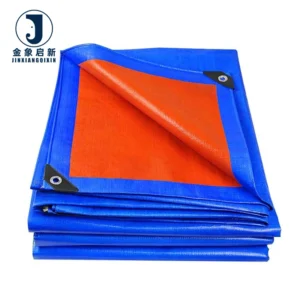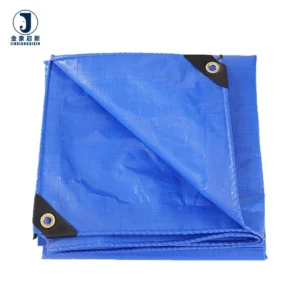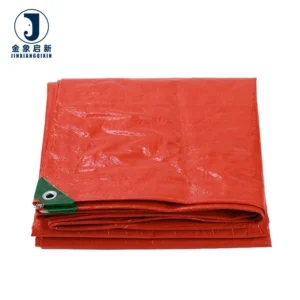

Specialist fabric expertise — nearly three decades of focused experience in coated fabrics, now extended to technical grade PE tarpaulin for industrial and specialist applications where compliance and documented performance matter.
Technical Specifications
| Parameter | Value |
|---|---|
| Product Type | PE Tarpaulin |
| Material | Polyethylene (HDPE fabric cross weaving, LDPE lamination both sides) |
| Construction | 3 layers (1 fabric + 2 coating) / 5 layers (2 fabric + 3 coating) |
| Weight (GSM) | 80-110 (lightweight) / 120-150 (medium-sized) / 160-240 (heavy-duty) |
| Total Thickness (mm) | 0.18-0.22 (lightweight) / 0.22-0.28 (medium) / 0.30-0.35 (heavy-duty) |
| Mesh Count | 8×8 (lightweight) / 10×10 (medium) / 12×12 (heavy-duty) |
| Tensile Strength (N/5cm) | Meridian 900-1200 / Latitude 700-1000 (heavy-duty) |
| Coating Material | LDPE |
| Base Fabric | HDPE |
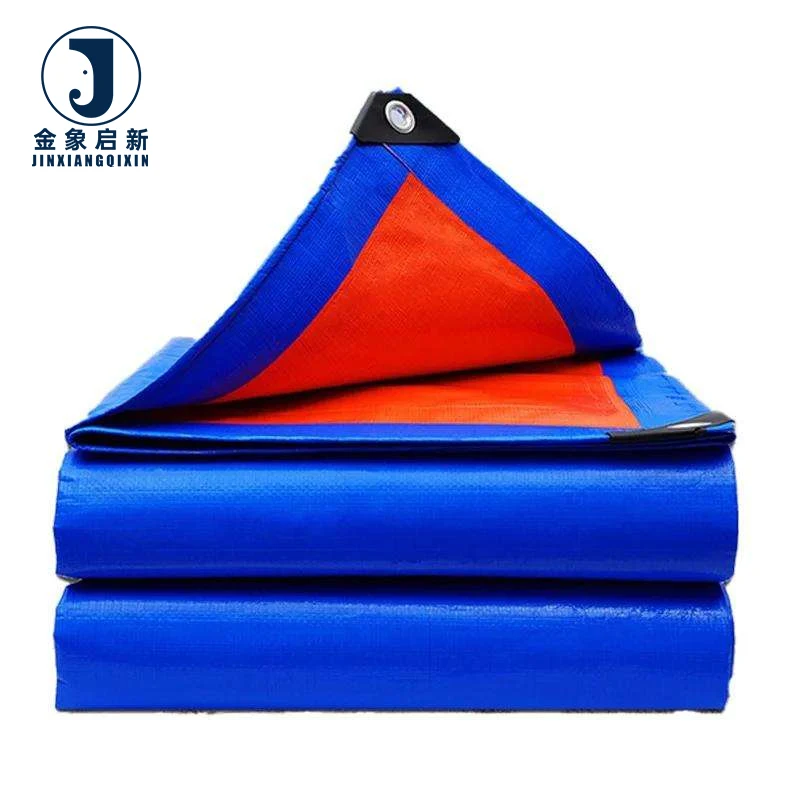
| Color | custom color |
| Size | custom size |
| UV Treatment | available (test basis not stated) |
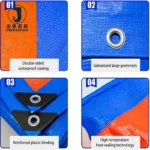
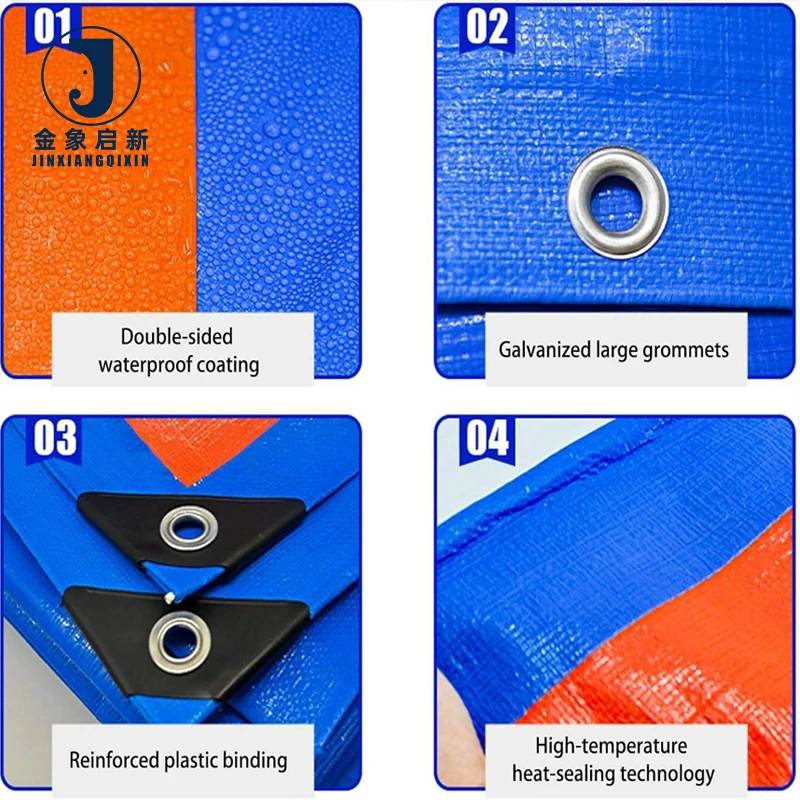
| Waterproof | Double waterproof surfaces |
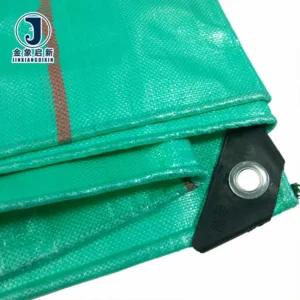
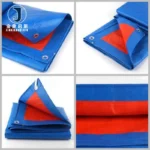
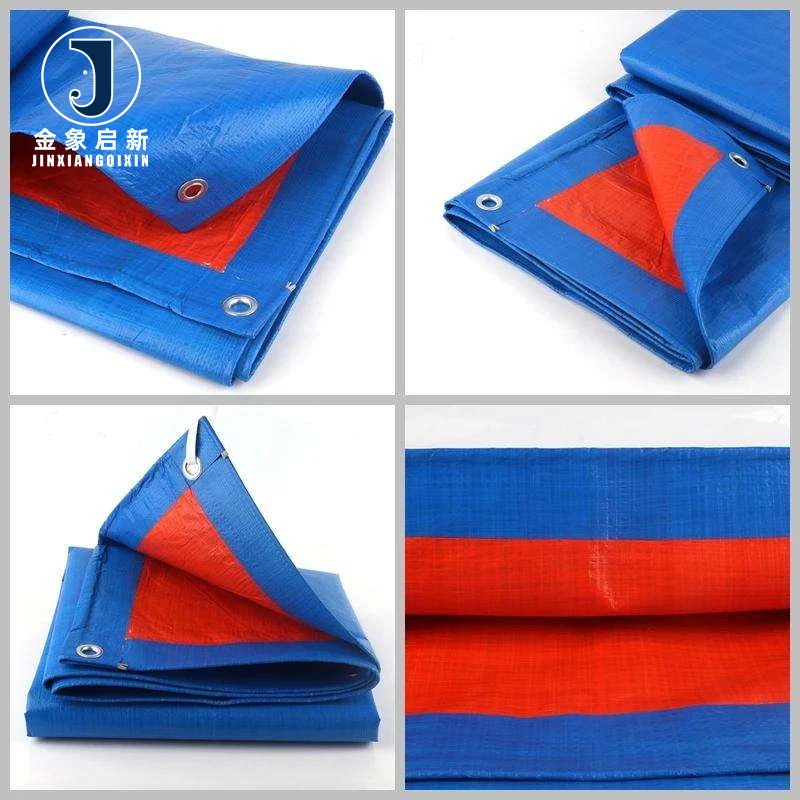
| Eyelet & Hem Options | Reinforced rustproof grommets, reinforced corner |
| Center To Center Spacing | 39.4 Inches |
| Printing Option | Custom printing of brand supported |
Application Suitability
| Application | Exposure & Requirement |
|---|---|
| Mining and tunnelling ventilation duct fabric | Fire-retardant and anti-static compliance, continuous airflow, underground particulate exposure |
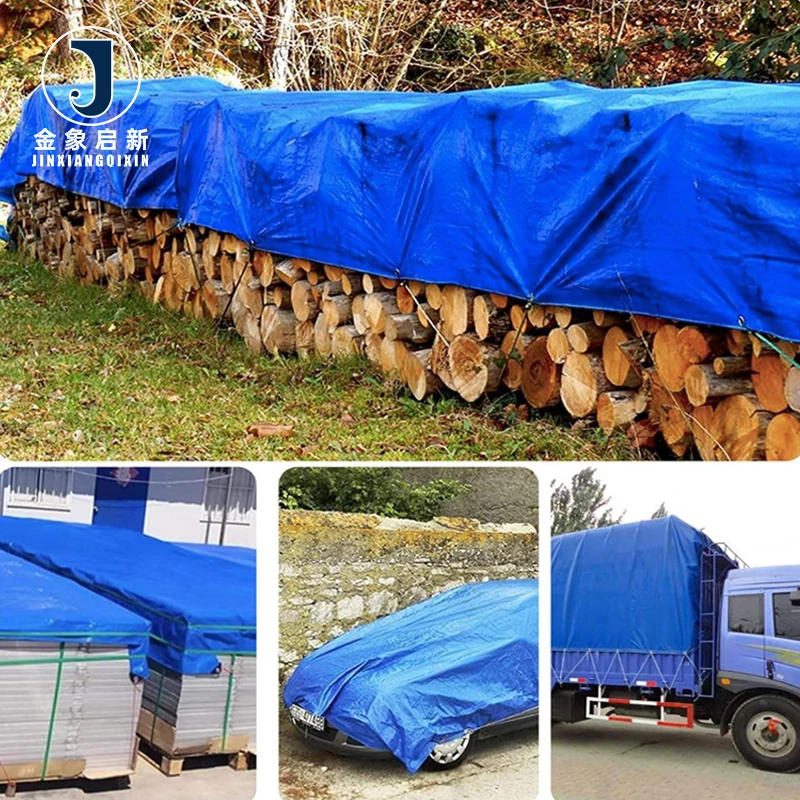
| Membrane and inflatable structure fabric | Wind loading, UV exposure, tension stability, weather sealing at seams |
| Aviation and industrial ventilation applications | Certified material documentation, flame behaviour compliance, operational temperature variance |
Compliance Without the Paperwork is Just Marketing
A certified PE Tarpaulin for industrial use requires a test report, not a claim.
Technical buyers in aviation, mining, and specialist construction regularly encounter materials marketed as fire-retardant or anti-static without any third-party verification to support the assertion. When a ventilation duct or specialist cover is supplied without the documentation the site auditor demands, the entire installation can be rejected, forcing a costly teardown and replacement cycle. [NEED_CITE: site compliance audits for underground and aviation ventilation materials]
The Documentation Gap in Technical Fabric Sourcing
Many PE Tarpaulin suppliers offer the material but separate the compliance documentation from the physical delivery. The product arrives, installation begins, and then the contractor discovers the fire-retardant or anti-static certificate is either missing, expired, or issued for a different product grade entirely. This gap between what is quoted and what is delivered creates liability for the contractor, not the supplier.
Certified Material for Specialist Applications
Our approach ensures the PE Tarpaulin you specify is the PE Tarpaulin you receive, with documentation that matches the batch. For ventilation duct and membrane structure applications where site inspectors require documented compliance, the material specification sheet, test reports, and pre-shipment inspection records travel with the shipment. This eliminates the disconnect between procurement specification and on-site verification. [NEED_CITE: material certification requirements for mining ventilation ducts]
Laminated Construction and Moisture Management
The 3-layer and 5-layer construction options address different moisture and humidity exposure profiles in technical applications. A 3-layer build, with one HDPE woven fabric and two LDPE coatings, suits environments where water contact is intermittent. The 5-layer construction adds a second fabric ply and an additional coating layer, increasing structural stability for applications where the material faces sustained humidity or condensation, such as enclosed ventilation systems or inflatable membrane structures.
Mesh Density and Structural Performance
The mesh count progression from 8×8 through 10×10 to 12×12 directly correlates with the tensile performance envelope of the fabric. Higher mesh density in the HDPE base fabric distributes load across more yarns per unit area, reducing the stress concentration at any single filament intersection. For technical applications where the PE Tarpaulin experiences dynamic loading — such as ventilation duct fabric under positive pressure or membrane fabric under wind load — this distribution is critical to preventing progressive tear propagation.
Reading the Specification Sheet
The relationship between GSM, mesh count, and tensile strength in PE tarpaulin is not linear. A 160-240 g/m² heavy-duty grade with 12×12 mesh delivers meridian tensile strength in the 900-1200 N/5cm range because the higher density HDPE weave provides more yarns to carry the load, while the thicker LDPE lamination contributes to overall weight but less to structural strength. Buyers specifying for technical applications must evaluate mesh count and tensile data together, not rely on GSM alone as a proxy for performance. The lamination method — LDPE applied to both sides of the woven HDPE — creates a composite where the base fabric carries structural loads and the coating provides waterproofing and environmental protection. Total thickness values from 0.18-0.22 mm in lightweight grades to 0.30-0.35 mm in heavy-duty grades reflect this composite build-up, and thickness alone does not determine puncture resistance or flex life.
When the Spec Looks Right but the Material Fails
Generic PE tarps frequently arrive with GSM below the quoted specification, a discrepancy that becomes apparent only when the material is weighed on arrival. Seams on undersized material split at flex points under load because the base fabric lacks the yarn density to hold the welded joint. UV treatment claimed without a test report leaves site covers degrading within a single exposure season, forcing unplanned replacement during active operations. These failures are rarely catastrophic; they are the slow accumulation of small specification shortfalls that compound over the installation life. [NEED_CITE: tensile and tear test methods for coated fabrics per ISO 1421]
Why Technical Buyers Source Here
Nearly 30 years of process control over coating weight and adhesion means GSM stated on the quotation is the GSM measured at production, not an aspirational target. Three full production lines and 36 sets of professional equipment support the volume consistency required when multiple rolls must match for a single membrane or duct installation. A 10-person R&D team handles material selection and sample development, ensuring custom sizing and colour requirements are resolved before the bulk run begins. Dedicated QA/QC at every production stage with 100% inspection before shipment catches weight deviation, colour variance, and lamination defects before they leave the facility. Samples are developed within days for custom technical fabric requirements, reducing the time between specification and confirmed approval.
Documentation & Verification
- Material specification sheet stating GSM, base fabric weave, LDPE coating weight, and colour reference for each roll
- Test report for UV treatment grades where specified, documenting the test basis and results achieved
- ISO and CE certificates included with shipment documentation for compliance-sensitive technical applications
- Pre-shipment inspection record confirming weight, colour consistency, and lamination integrity before dispatch
- Roll packing list with individual roll identification matching the specification sheet
Fabrication, Handling & Storage
- Heat welding parameters should be adjusted for the specific LDPE lamination thickness, as 3-layer and 5-layer builds respond differently to temperature and dwell time
- Reinforced rustproof grommets at 39.4-inch spacing require matching reinforcement patches at corner stress points for heavy tie-down loads
- Rolls should be stored horizontally on pallets to prevent permanent creasing in the HDPE woven base fabric that may telegraph through the LDPE coating
- Low-temperature transport may stiffen the LDPE lamination; allow material to acclimate before unrolling to avoid cracking at fold lines
- Custom printed branding on the LDPE surface requires solvent-free cleaning agents to preserve ink adhesion over repeated wash cycles
- Field repairs on PE tarpaulin should use compatible LDPE repair tape or hot-air welding rather than solvent-based adhesives that may not bond to the polyethylene surface
Specifying for Your Application
Provide the exposure conditions your installation will face — continuous UV, underground particulate, positive pressure ventilation, or wind-loaded membrane tension — so the appropriate construction grade and treatment package can be confirmed. Specify the fire-retardant or anti-static compliance standard required by your site auditor or local regulation, as this determines the treatment grade and documentation package. Indicate whether you require roll stock for your own fabrication or finished panels with grommets and reinforced hems, and whether a pre-production sample is needed to confirm colour and finish before bulk commitment.
Frequently Asked Questions
Q: What fire-retardant grades are available for mining and aviation ventilation duct applications?
A: Fire-retardant treatment is available for PE tarpaulin used in ventilation duct and specialist structure applications. The specific grade required depends on your site regulation — mining operations typically require anti-static and flame-behaviour compliance specific to underground use, while aviation applications follow different standards. Confirm the standard your site auditor requires so we can match the treatment and provide the corresponding test report with your shipment.
Q: How is the GSM verified to ensure the material matches the quotation?
A: GSM is measured during production using standard weight-per-area methods, and the actual measured value is recorded on the material specification sheet that accompanies each shipment. Our QA/QC protocol includes weight verification at the lamination stage and again at final inspection. If your procurement process requires independent third-party weight verification on arrival, we can coordinate the inspection documentation format to match your receiving protocol.
Q: Can UV treatment performance be confirmed with a test report?
A: UV treatment is available as an option and can be documented with a test report when specified at the inquiry stage. The test basis and exposure duration will be stated on the report so you can evaluate suitability for your installation environment. Specify your expected outdoor exposure duration and climate zone when inquiring so the appropriate treatment level can be recommended and documented for your records.
Q: What is the minimum order for custom width, length, and colour on technical fabric orders?
A: Minimum order quantities for custom specifications vary based on the grade selected, the colour required, and whether you need roll stock or finished panels. Custom colours require a separate production run to ensure batch consistency across all rolls in your order. Provide your required dimensions, colour reference, and estimated annual volume so we can confirm the minimum and lead time for your specific configuration.