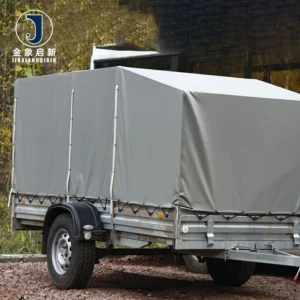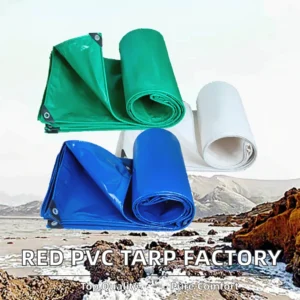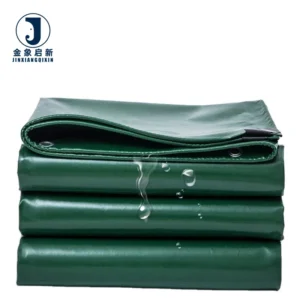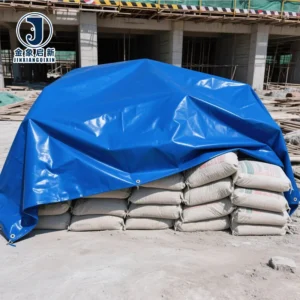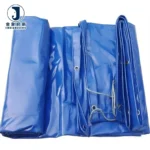
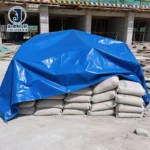
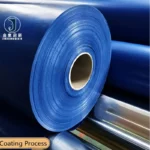
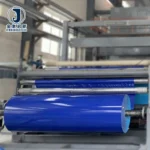
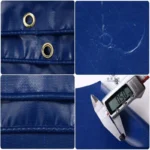
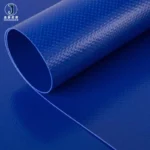
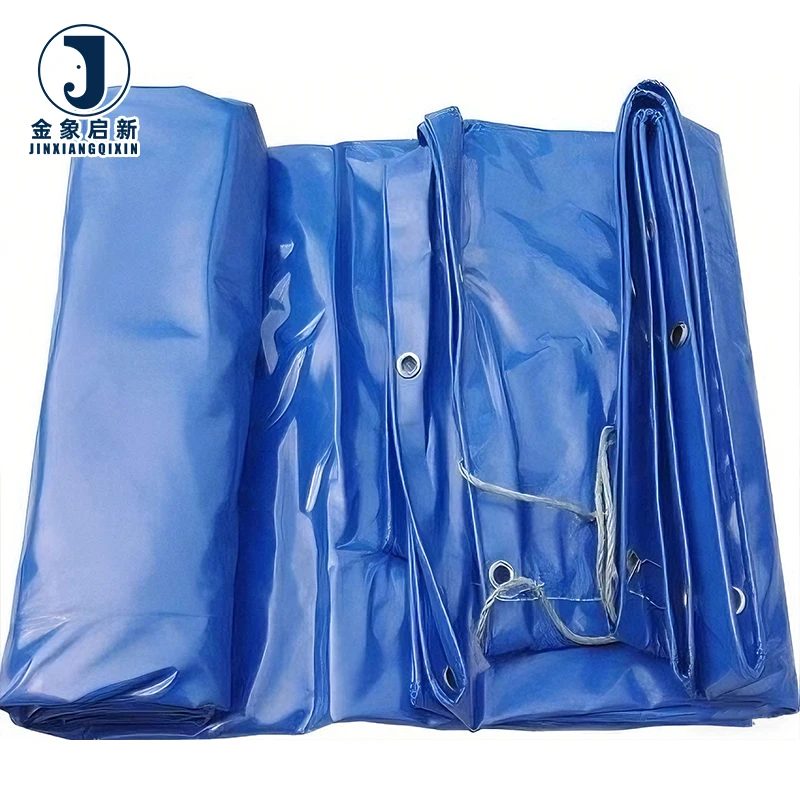
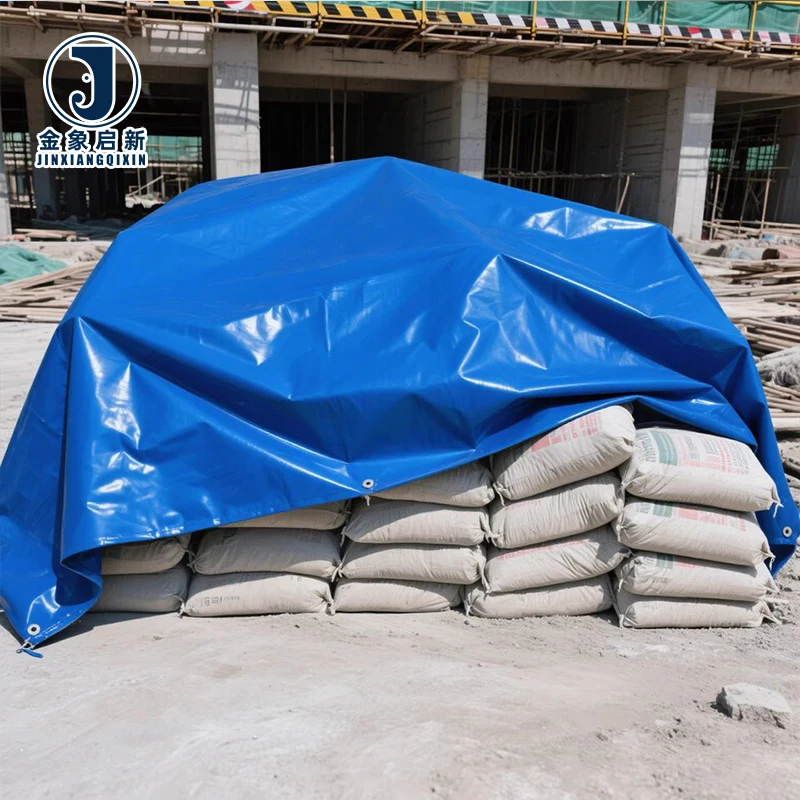
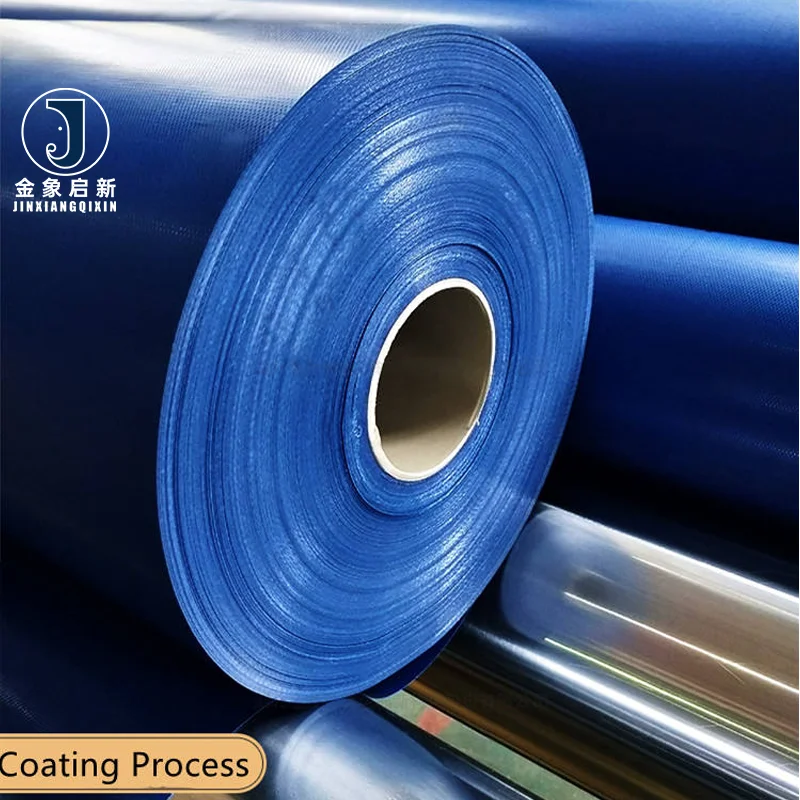
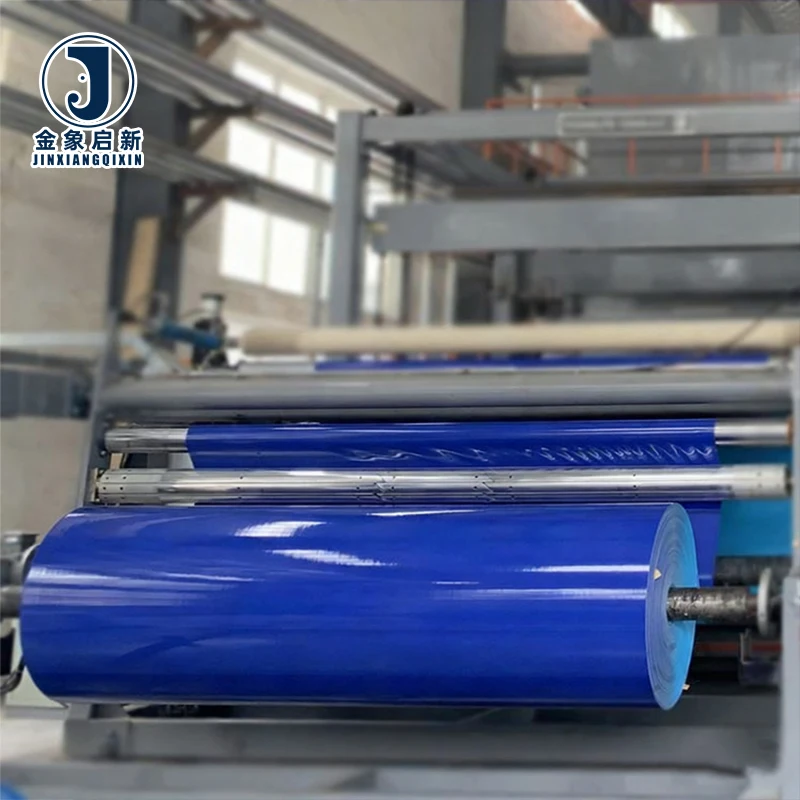
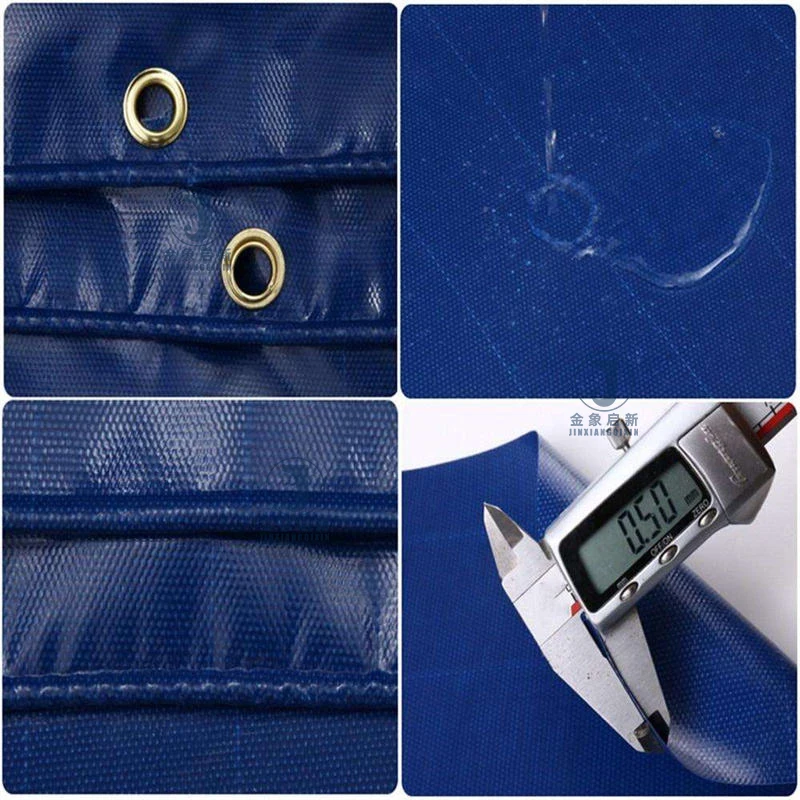
Coating Weight Control — three full production lines with 36 sets of equipment deliver consistent PVC adhesion across every roll of industrial ventilation and specialist structure fabric.
Technical Specifications
| Parameter | Value |
|---|---|
| Product Type | PVC Coated Tarpaulin |
| Base Fabric Denier | 200D×300D, 500D×500D, 840D×840D, 1000D×1000D |
| Weight (GSM) | 250gsm–1500gsm (range covers product family — confirm the grade for this item) |
| Surface Finish | Glossy or matte |
| Temperature Range | -15ºC to 70ºC |
| Treatment Options | Waterproof, UV (customized), Flame Retardant (grade not stated — confirm to project specification), Anti-fungal |
| Environment | Eco-friendly |
| Working Life | 3–10 years depending on usage environment |
| Key Features | Water-proof, rain-resistant, tear-resistant, good flexibility and adhesion strength, abrasion resistance |
| Standards | ISO, CE |
| Package | Carton or bale |
| OEM/ODM | Warmly welcomed |
Application Suitability
| Application | Exposure & Requirement |
|---|---|
| Mining ventilation duct | Continuous airflow, high humidity, particulate abrasion, mandatory fire-retardant and anti-static compliance underground |
| Tunnelling air supply systems | Confined spaces, elevated temperature, moisture ingress, regulatory inspection for flame propagation |
| Aviation ground ventilation fabric | Fuel-adjacent environments, strict flammability code, repeated deployment and stowage flex cycles |
| Membrane and inflatable structures | Tensile load from internal pressure, UV exposure on external surfaces, weld seam integrity under cyclic stress |
| Specialist enclosure and temporary building | Wind load, weather exposure, fire code compliance for occupied spaces |
What "Certified" Means When the Duct Fails Inspection
The wrong fire-retardant grade on a ventilation duct does not become a problem at the factory gate — it surfaces during a site safety audit, weeks after installation, when the inspector asks for the test report. PVC coated tarpaulin fire retardant claims without a documented grade leave contractors exposed to shutdown orders, replacement costs, and project delays. [NEED_CITE: DIN 4102 fire classification for building materials]
Request the specific test standard and grade before confirming the order.
Buyers regularly receive fabric described as flame retardant with no accompanying certificate naming M2, B1, NFPA 701, or the equivalent local code. When the site authority demands proof, the supply chain scrambles. In mining and tunnelling, an undocumented duct material can halt an entire ventilation circuit until compliant fabric arrives. The documentation trail must match the physical roll.
Ventilation Duct Fabrication Requirements
Industrial duct systems demand more than a waterproof coating. The base fabric denier, from 200D×300D for light temporary ducting to 1000D×1000D for permanent underground air supply, determines how well the finished duct resists internal pressure and mechanical damage. Selecting the correct denier is the first decision in duct specification. PVC coated tarpaulin for this application must also support reliable heat welding, since duct joints carry the same airflow stress as the body fabric.
Compliance Documentation Underground
Mining and tunnelling projects operate under strict ventilation regulations. Site inspectors check fire-retardant documentation against the installed material, and a mismatch means immediate removal. Anti-fungal treatment matters equally in humid underground conditions where biological growth on duct interiors degrades airflow quality over time. Confirming treatment grades and obtaining test data before shipment prevents costly on-site rejection. [NEED_CITE: fire-retardant and anti-static compliance in underground mining ventilation]
Reading the Specification Beyond GSM
GSM tells you how much material is in each square metre, but it does not tell you how that mass is distributed between base fabric and coating. A roll with a heavier coating but a lighter base fabric may show acceptable weight on the scale yet tear easily when cut and welded into duct sections. The denier of the polyester yarn — whether 500D×500D or 840D×840D — governs the tensile and tear resistance that duct seams rely on under continuous positive or negative pressure. Coating adhesion strength determines whether the PVC layer delaminates at the weld line, which is where most field failures originate. Surface finish selection, glossy or matte, affects how well the fabric feeds through automated welding equipment and how cleanly it accepts printed identification markings.
The Cost of Undocumented Fire Performance
When a ventilation duct is specified with flame-retardant treatment but delivered without a grade-specific test report, the contractor assumes liability for an unverified claim. If a fire incident triggers an investigation, the absence of documentation becomes a legal exposure beyond the material replacement cost. Batch-to-batch inconsistency in coating weight compounds this risk — a lighter roll may pass visual inspection but fall short of the GSM that the fire test was originally conducted on. These gaps only surface after the duct is hung and operating. [NEED_CITE: tensile and tear test methods for coated fabrics per ISO 1421]
Production Capability Behind Every Roll
Three full production lines allow parallel manufacturing of different denier grades, so a ventilation duct order in 1000D×1000D does not wait behind a truck cover run in lighter fabric. A 10-person R&D team handles material selection and sample development for project-specific requirements, including custom widths and treatment combinations. Dedicated QA/QC at every production stage includes coating weight checks during the run, not only at final inspection. Pre-shipment inspection covers roll-by-roll GSM verification against the quoted specification, ensuring the fabric that arrives matches the fabric that was tested.
Documentation & Verification
- Material specification sheet stating base fabric denier, coating weight, and treatment options for each roll
- Fire-retardant test report citing the specific grade when treatment is applied to this product
- Pre-shipment inspection record with per-roll GSM verification before dispatch
- ISO and CE certificates included with shipment documentation
- Certificate of origin and customs paperwork for cross-border project delivery
Fabrication, Handling & Storage
- Heat weld temperature and dwell time must be calibrated to the selected glossy or matte surface finish
- Store rolls upright on pallets to prevent permanent creasing across the PVC coating layer
- Allow fabric to acclimatise before unrolling in conditions below -15ºC to avoid coating crack
- Anti-fungal treated rolls should be stored in ventilated areas to preserve treatment efficacy
- Cut patterns with allowance for weld seam overlap, matching the denier weight to joint load
Specify Before You Order
Provide the ventilation duct diameter, operating pressure, and the fire-retardant or anti-static standard required by your local authority. State the denier preference or describe the mechanical exposure so the correct base fabric grade is recommended. Confirm whether you need rolls in standard widths or custom-cut panels with welded seams prepared for site assembly.
Frequently Asked Questions
Q: What fire-retardant grade is available and does it meet my project’s local code?
A: Flame-retardant treatment is available across this product family, but the specific grade must be confirmed against your project specification. We supply test reports citing the applicable standard once the grade is agreed. Share your local fire code requirement at inquiry stage so we match the correct treatment.
Q: How is GSM verified on arrival and what documentation supports the quoted weight?
A: Every roll undergoes GSM measurement during pre-shipment inspection, recorded on a per-roll basis. The inspection report accompanies your shipment, allowing you to cross-check actual weight against the quoted specification upon delivery without relying on sample-stage data alone.
Q: Can anti-static treatment be supplied with surface resistance test data?
A: Anti-static treatment is available for ventilation duct applications where particulate or gas environments require it. We provide surface resistance test data with the shipment documentation. Specify the required resistance range during inquiry so the correct formulation is applied to your production run.
Q: What is the lead time for custom width or fire-retardant grade on this product?
A: Lead times depend on the denier grade, treatment combination, and order volume. Custom widths and specific fire-retardant grades require separate production scheduling. Request a quotation with your full specification and we confirm the timeline before order confirmation.
Q: How do I select the correct base fabric denier for ventilation duct versus membrane structure use?
A: Ventilation ducts typically need higher denier to resist internal pressure and welding stress, while membrane structures may prioritise lighter weight with adequate tensile strength. Share your application load data and we recommend whether 500D×500D, 840D×840D, or 1000D×1000D best fits the performance requirement.