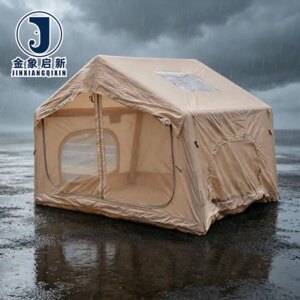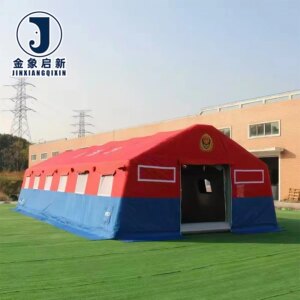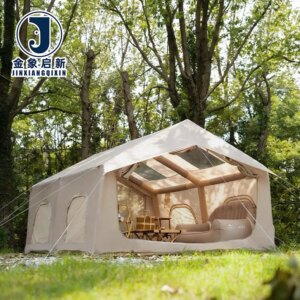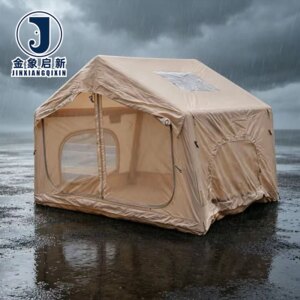


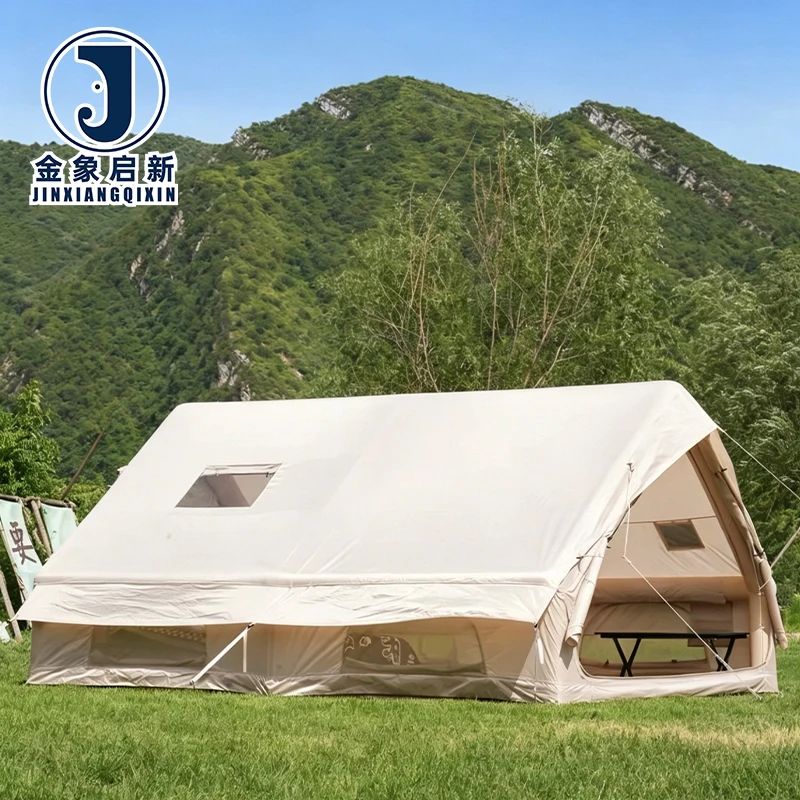
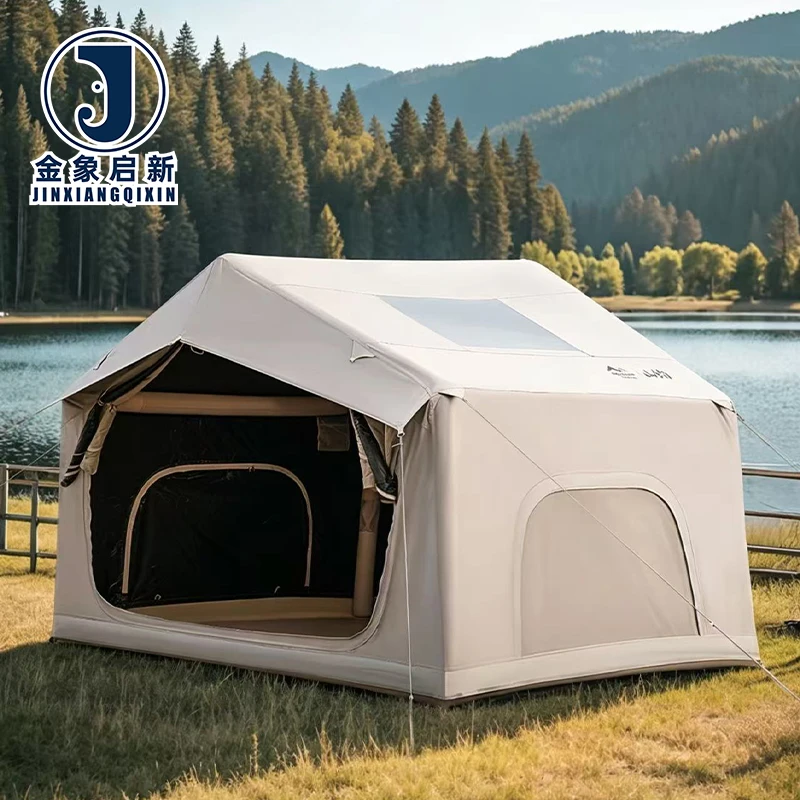
Rigorous 7-Stage QA — Every roll of inflatable tent fabric ships with batch-specific test records retained for five years, ensuring traceable compliance for disaster relief and industrial shelter projects.
Technical Specifications
| Parameter | Value |
|---|---|
| Product Type | Inflatable Tent |
| Core Material | PVC waterproof tarpaulin |
| Waterproof Rating | 3000 mm |
| Fire Rating | Fire-retardant (grade not stated — confirm to target market standard) |
| UV Resistance | UV-resistant formulation (test basis not stated) |
| Tear Resistance | Tear-resistant construction (standard not stated) |
| Deployment | Quick automatic opening, inflatable structure |
| Season Rating | 4-season |
| Customization | OEM & ODM — dimensions, color, pattern printing |
| Production Facility | 9,180 m² with 3 full production lines |
| Processing Equipment | 36 sets |
| R&D Team | 10 technicians |
| Quality Control | Full-process QA/QC inspection |
| Standards | ISO 9001, ISO 14001, ISO 45001, CE |
Application Suitability
| Application | Exposure & Requirement |
|---|---|
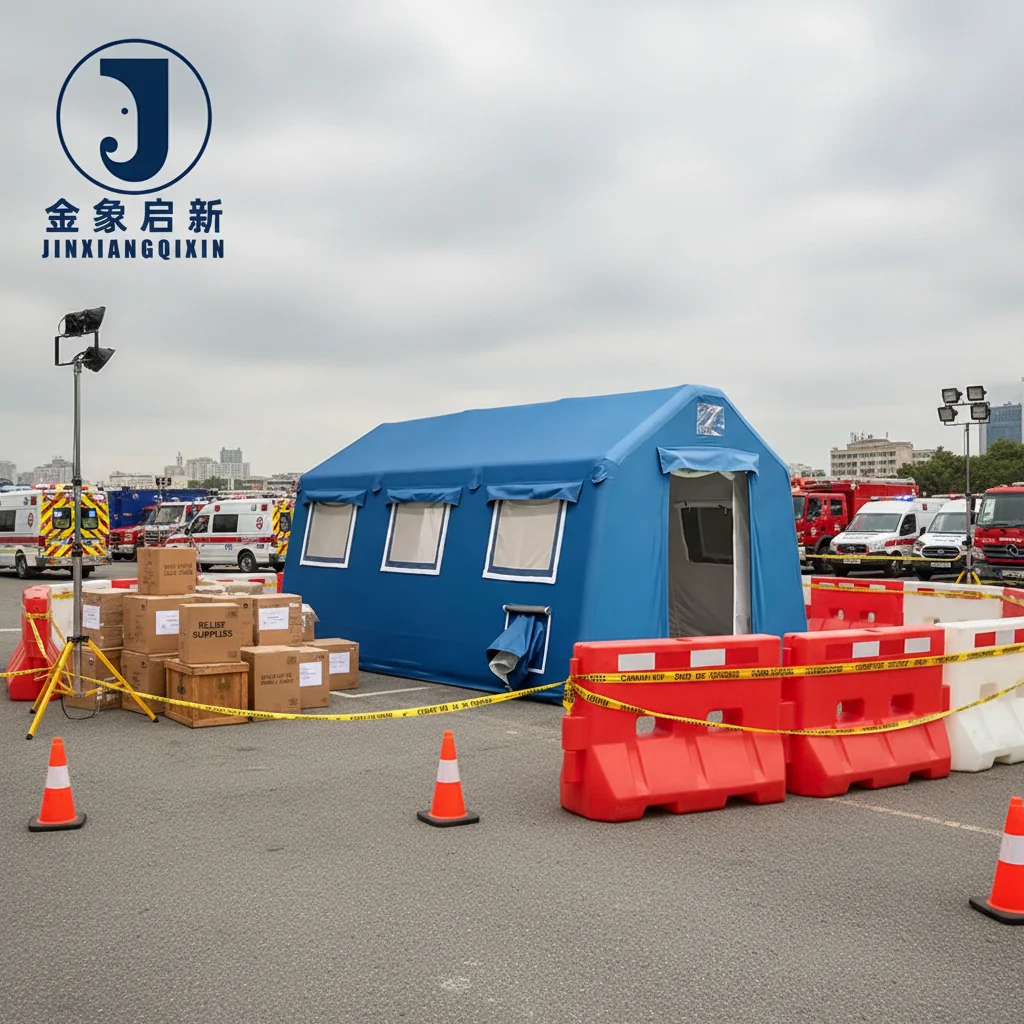
| Temporary site offices during disaster recovery | Continuous rain, wind loading, rapid deployment within hours |
| Equipment storage shelters in emergency response | Water ingress prevention, UV exposure over extended outdoor standing |
| Mobile command centers for infrastructure projects | Frequent inflation cycles, internal climate control, certified fire performance |
| Temporary workspace for remote industrial sites | Abrasive ground contact, dust ingress, temperature extremes across seasons |
What "Certified Fire-Retardant" Actually Means for Your Inflatable Shelter
A fire-retardant claim without a documented grade is a liability, not a feature.
Inflatable disaster relief shelters concentrate personnel and equipment inside an enclosed PVC membrane. When procurement specifications call for an Inflatable Tent Fabric fire retardant rating, the purchasing team often receives a generic "fire-retardant" statement with no classification behind it. I have reviewed tender submissions where the fabric passed initial screening on paper, then failed the site safety audit because the fire classification did not match the jurisdiction’s building code for temporary structures [NEED_CITE: fire classification standards for temporary membrane structures]. The consequence is not a price renegotiation — it is a full material replacement on site, with the shelter already inflated and the project clock running.
Airflow, Inflation Pressure and Coating Adhesion
Inflatable structures depend on continuous positive air pressure to maintain their shape. The PVC tarpaulin used for these shelters must hold that pressure without delamination at the welded seams, where the inflation load concentrates most. A coated fabric with strong base-fabric adhesion keeps the air chamber sealed through repeated inflation and deflation cycles. When the Inflatable Tent Fabric fire retardant specification is met at the coating level, the flame-retardant additives must not compromise the bond between the PVC layer and the polyester base cloth, because any reduction in peel strength shows up first at the seam under pressure.
Four-Season Exposure and Material Formulation
A disaster relief shelter may be deployed in freezing conditions one week and in high-humidity tropical heat the next. The PVC formulation must remain flexible enough at low temperatures to inflate without cracking, yet stable enough at elevated temperatures to resist softening and deformation under sustained air pressure [NEED_CITE: low-temperature flexibility and high-temperature stability of plasticised PVC]. UV-resistant additives are incorporated into the compound to address prolonged outdoor exposure, though the specific test basis should be confirmed against the solar radiation profile of the deployment region. This is where a four-season rating translates from a marketing label into a formulation decision.
Reading the Specification Sheet Beyond the Headline Numbers
A 3000 mm waterproof rating indicates the hydrostatic head the coated fabric can withstand before water penetrates — relevant for shelters deployed in heavy rain or standing water environments. However, waterproof performance in an inflatable structure is only as reliable as the seam integrity. Heat-welded joints on PVC tarpaulin must be set at the correct temperature and dwell time; under-welding leaves a channel for water ingress, while over-welding degrades the plasticiser in the coating and creates a brittle zone. The base fabric denier and weave density determine how the material resists tear propagation once punctured — a higher denier yarn in a ripstop or panama weave limits the damage from a single cut or abrasion point. Fire-retardant grades vary significantly across markets, so the correct approach is to confirm the classification your jurisdiction requires — whether that is DIN 4102 B1, NFPA 701, or a local building code for temporary structures — before placing the order.
The Hidden Cost of Specifying on Price Alone
When a buyer selects inflatable tent fabric based on the lowest quoted rate per square metre, the savings vanish at the first site inspection. A coating that is thinner than the agreed specification may pass a visual check but fail the hydrostatic test once the shelter is inflated in rain. Fire-retardant additives that are under-dosed to reduce cost will not trigger a failure until the flame test is conducted on site — by which time the shelter is already erected and the emergency timeline is compromised [NEED_CITE: correlation between coating weight and flame-retardant performance in PVC tarpaulins]. Batch-to-batch colour variation across rolls in the same order becomes visible once panels are heat-welded side by side on a large membrane structure, forcing a full reskin of the affected section.
Why Procurement Teams Source This Fabric Here
The 7-stage quality inspection process catches coating weight deviations, colour drift and adhesion failures before any roll leaves the facility, which matters when a single defective roll can halt an entire shelter assembly line. Three full production lines and 36 sets of processing equipment support volume orders with consistent output across batches. The 10-technician R&D team develops custom samples within days, covering pattern printing, non-standard dimensions and specific fire-retardant formulations required by different markets. Every batch ships with traceable test documentation — waterproof performance records, material composition reports and dimensional accuracy checks — so your site compliance team has the paperwork before the fabric arrives. Pre-production samples are standard procedure, not an exception, giving your fabrication team the chance to validate heat-weld parameters before committing to the full order.
Documentation & Verification
- Batch-specific waterproof test report referencing the 3000 mm rating for each production run
- Fire-retardant performance certificate with grade confirmed to your target market standard
- Material specification sheet detailing PVC coating weight, base fabric construction and colour reference
- ISO 9001, ISO 14001, ISO 45001 and CE certificates included with every shipment
- Pre-shipment inspection record covering dimensional accuracy and surface quality per roll
Fabrication, Handling & Storage
- Heat-weld PVC tarpaulin seams at temperatures matched to the specific coating formulation to maintain peel strength
- Store rolls horizontally on pallets in a shaded, ventilated area to prevent pressure marks on the coated surface
- Allow cold-stored rolls to acclimatise to workshop temperature before unrolling to avoid coating stiffness and cracking
- Use PVC-compatible cleaners only; solvent-based products can strip the UV-resistant additives from the surface
- Inflate test panels after welding to verify seam integrity before assembling the full shelter structure
- Cut pattern pieces with the weave direction noted to maintain consistent tear resistance across all panels
What to Include in Your Inquiry
Provide the deployment environment — climate zone, expected wind loading and ground conditions — so the correct PVC formulation and weight can be recommended. Specify the fire-retardant classification your jurisdiction requires for temporary inflatable structures, along with any anti-static needs if the shelter will house electronic command equipment. Indicate whether you need rolls for your own fabrication or finished panels with welded seams, pattern printing and custom dimensions, and whether pre-production samples are required before the bulk order.
Frequently Asked Questions
Q: Which fire-retardant grade does this inflatable tent fabric meet?
A: The PVC compound is formulated with fire-retardant additives, but the specific classification depends on the target market standard. Confirm whether your project requires DIN 4102 B1, NFPA 701 or another local code, and the formulation will be adjusted and tested accordingly before production begins.
Q: Can the UV resistance be verified with a test report?
A: UV-resistant additives are incorporated into the PVC formulation for extended outdoor exposure. A test report documenting the specific UV stability method and result is available on request — provide your deployment region so the relevant solar radiation profile can be referenced.
Q: What is the process for custom dimensions and pattern printing?
A: Submit your panel dimensions, colour references and artwork files. The R&D team produces a pre-production sample with the specified printing and cutting for your approval. Once confirmed, the full order runs through the same QA inspection process as standard products.
Q: How is batch-to-batch consistency ensured across a large order?
A: Each production run goes through a 7-stage inspection covering coating weight, colour matching and dimensional accuracy. Test records are retained for five years, so any roll can be traced back to its batch for verification or reorder matching.
Q: What heat-weld parameters should we use on this PVC tarpaulin?
A: Welding temperature and dwell time depend on the specific coating weight and formulation. Pre-production samples are provided so your fabrication team can dial in the correct settings on your own equipment before the bulk material arrives.