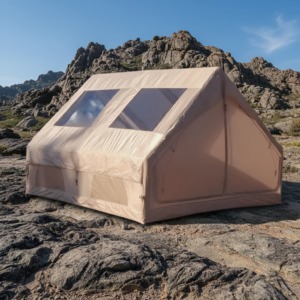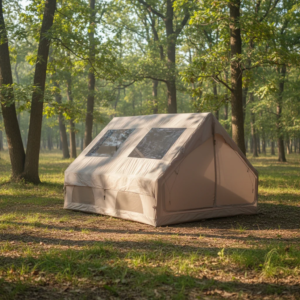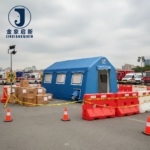
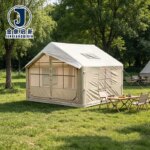
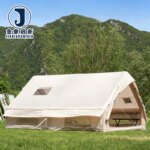
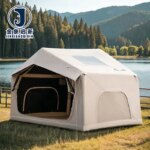
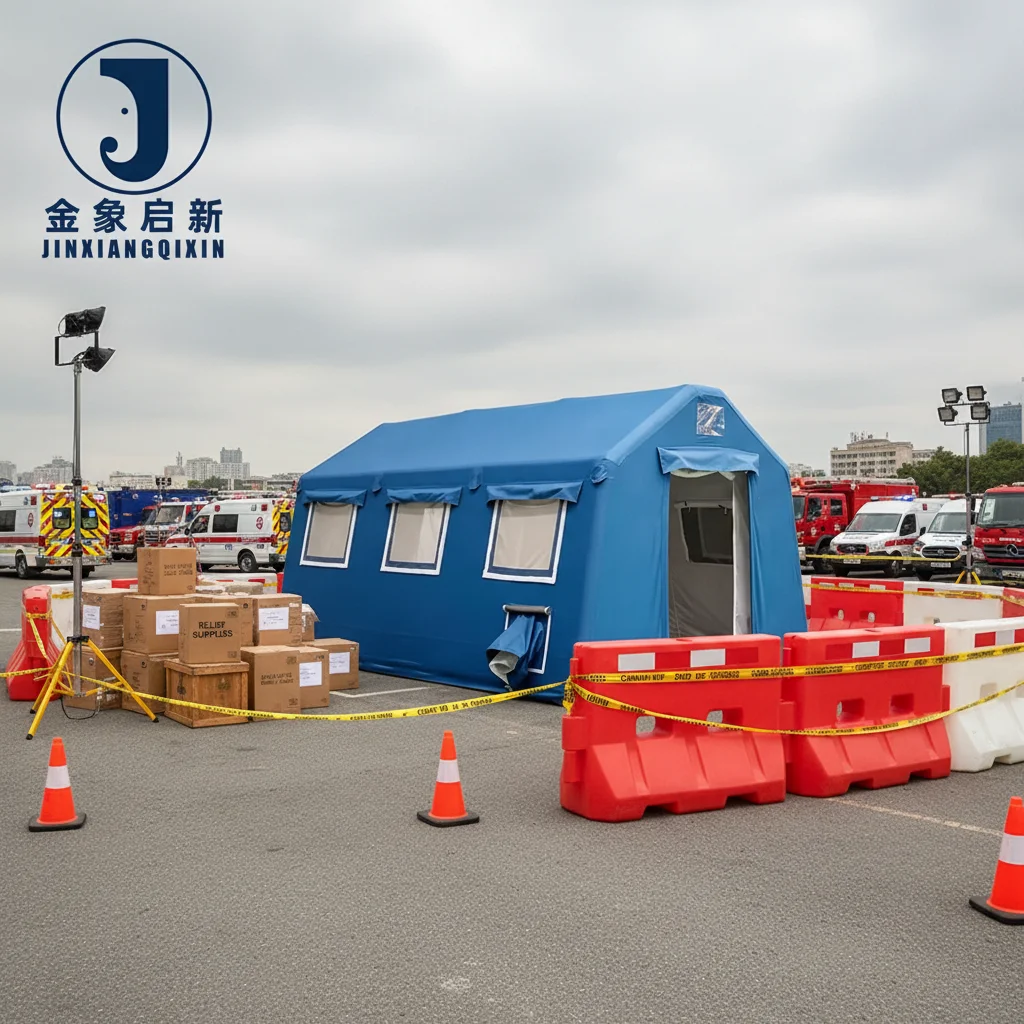
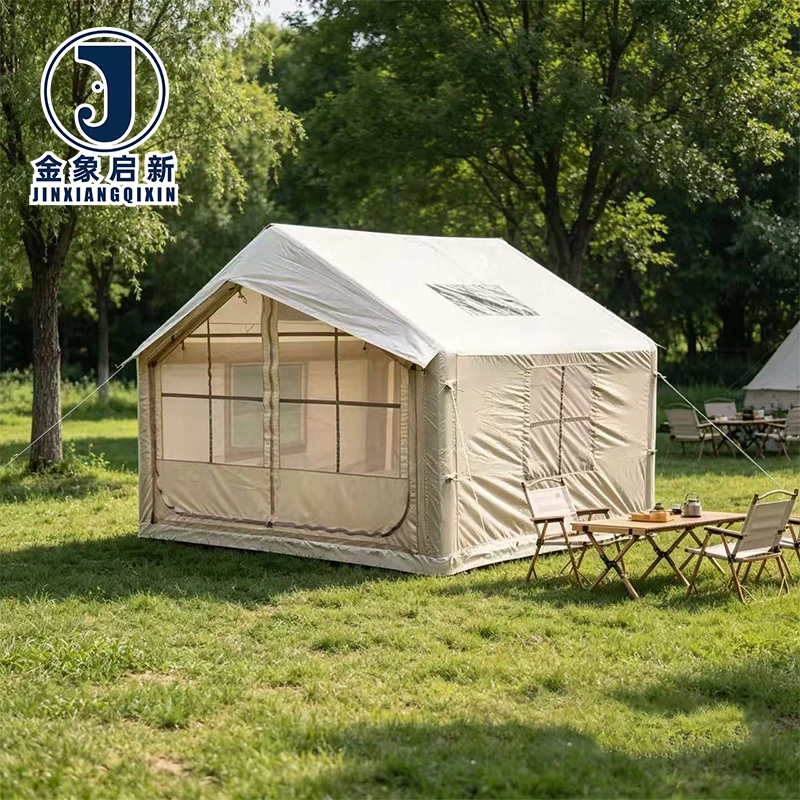
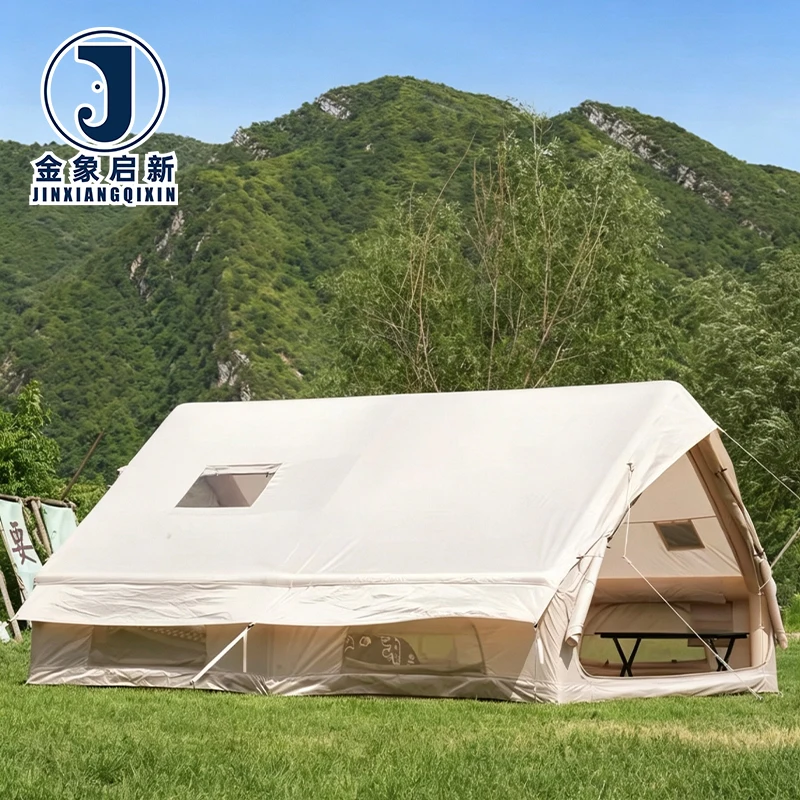
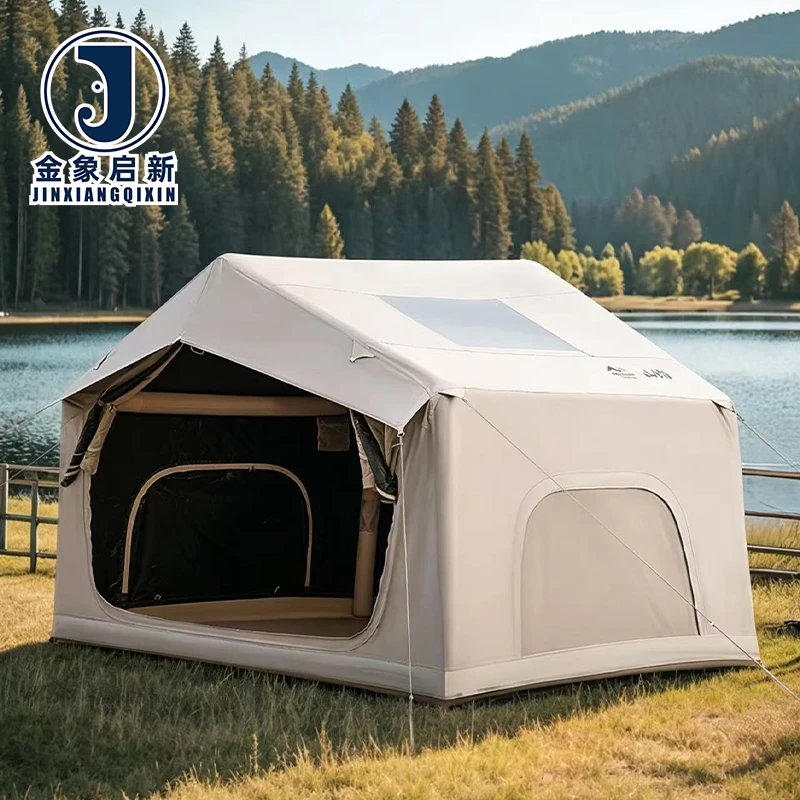
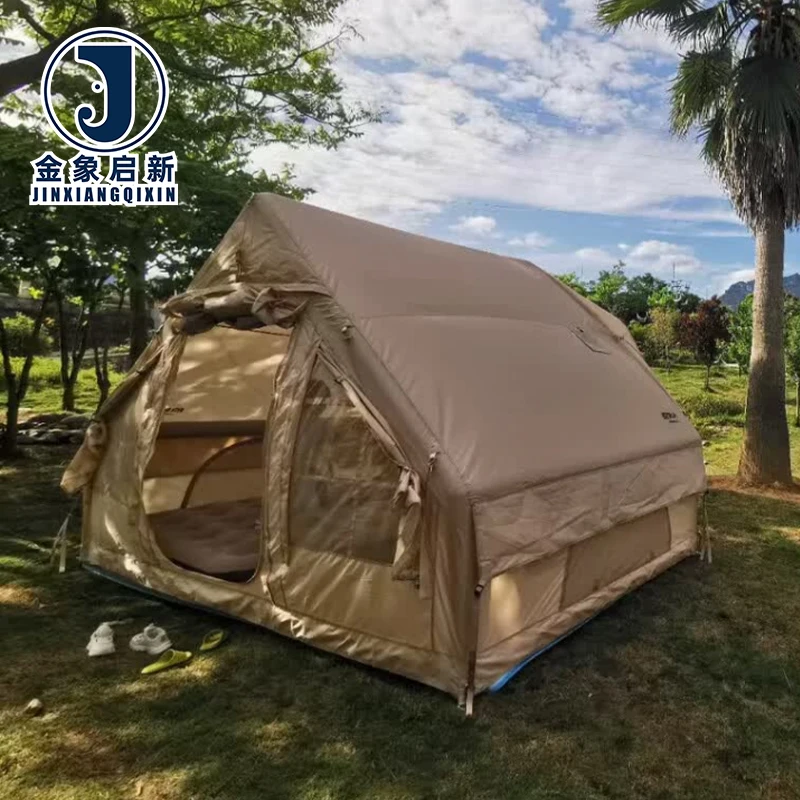
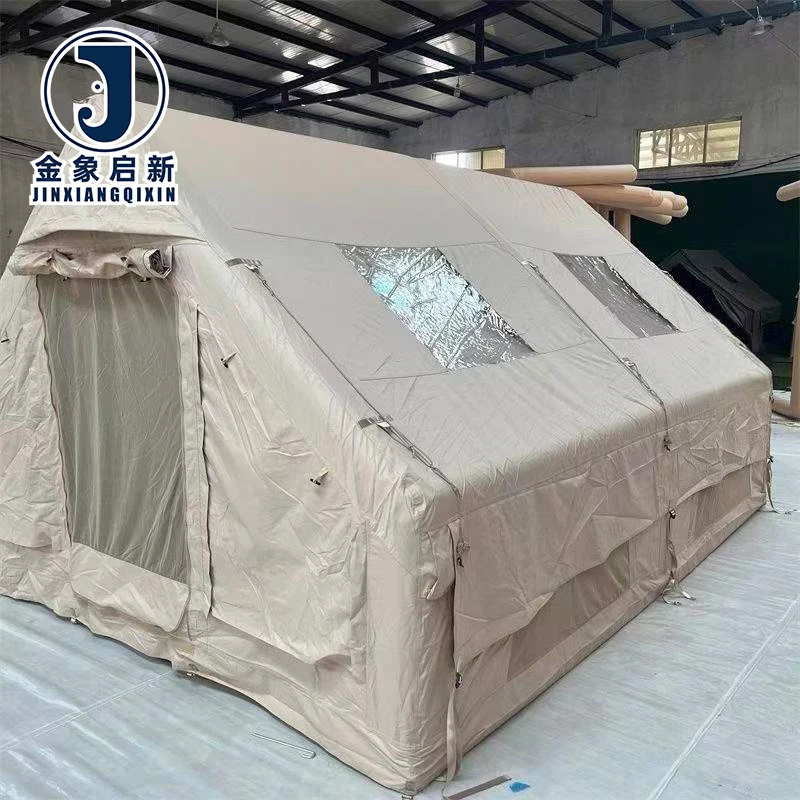
Proven Coating Expertise — Three dedicated production lines deliver single-layer PVC tarpaulin with consistent waterproof performance across every inflatable structure batch.
Technical Specifications
| Parameter | Value |
|---|---|
| Product Type | Inflatable Tent |
| Core Material | PVC tarpaulin |
| Waterproof Rating | >3000mm |
| Design | 4-season |
| Opening Mechanism | Quick automatic opening |
| Construction | Single layer |
| UV Treatment | Available in UV-resistant grades — confirm the grade required for your market |
| Flame Retardant Grade | Available in flame retardant grades — confirm the grade required for your market |
| Customization Service | OEM & ODM (sample customization, pattern printing) |
| Production Facility Area | 9180 square meters |
| Production Lines | 3 full production lines |
| Processing Equipment | 36 sets of professional processing equipment |
| R&D Team Scale | 10 technicians |
| Sample Lead Time | 7-10 business days |
| Production Lead Time | 15-20 business days for bulk orders |
| Certifications | ISO9001, ISO14001, ISO45001, CE |
Application Suitability
| Application | Exposure & Requirement |
|---|---|
| Temporary site offices at construction projects | Wind loading, rain ingress, dust, repeated inflation cycles, rapid deployment pressure |
| Mobile equipment shelters for outdoor events | Direct sunlight, sudden weather changes, frequent transport and redeployment |
| Auxiliary storage facilities for logistics operations | Continuous internal pressure, temperature fluctuation, abrasion from stored equipment |
| Mining and tunnelling inflatable shelters | Fire-safety compliance, ventilation adjacency, confined-space structural integrity |
| Aviation ground-support inflatable covers | Weather exposure on tarmac, quick inflation for time-sensitive operations |
What Compliance Gaps Cost on a Live Construction Site
Documented certification at every production stage prevents the shutdown that unverified fabric causes.
When an inflatable structure fails a site safety audit because the supplied fabric lacks the required fire-retardant or anti-static certification, the entire deployment halts. Project managers absorb daily delay penalties while sourcing compliant replacement material. The inflatable tent fabric must carry verifiable test reports that match the specific regulatory framework of the jurisdiction — a generic "flame retardant" claim without a stated grade holds no weight during inspection [NEED_CITE: fire-safety classification requirements for temporary structures].
Pressure Retention and Structural Integrity
Inflatable structures depend entirely on consistent internal pressure to maintain their shape and load-bearing capacity. This inflatable tent fabric is engineered with a single-layer PVC tarpaulin construction that balances airtightness with transport weight efficiency. The >3000mm waterproof rating ensures that rain penetration does not compromise the internal pressure differential during prolonged outdoor deployment, which is critical for maintaining structural rigidity under wind loading.
Batch-Level Verification for Regulatory Submission
Every commercial and industrial deployment carries audit requirements that consumer-grade shelters do not face. This inflatable tent fabric is produced under an ISO9001 management system, with batch-specific quality inspection reports covering waterproof test results, tensile strength measurements, and seam integrity verification. Each shipment includes a material safety data sheet and the relevant ISO9001, ISO14001, ISO45001, and CE certificates, giving site safety officers the documentation needed to clear regulatory checkpoints without delay.
How Single-Layer Construction Affects Inflation Performance
The single-layer PVC tarpaulin design eliminates the delamination risk present in multi-layer laminates when subjected to repeated inflation and deflation cycles. In a coated single-layer structure, the base fabric and the PVC coating function as one unified membrane [NEED_CITE: tensile and tear test methods for coated fabrics per ISO 1421]. This means the airtightness depends on coating adhesion strength and seam welding quality rather than the bonding between separate plies. The >3000mm waterproof rating is achieved through the coating itself, so water-column testing before shipment confirms both waterproof integrity and pressure retention simultaneously. Fabric weight and base denier together determine how well the material resists puncture from ground debris or stored equipment while maintaining the flexibility needed for packing and redeployment.
The Real Cost of Undocumented Fire Performance
An inflatable shelter deployed at a mining or tunnelling site must meet the specific fire-safety classification mandated by local regulation. When fabric is supplied with an unspecified fire-retardant claim, site inspectors reject the installation and the structure must be deflated, removed, and replaced — at the contractor’s expense. Colour variation between rolls in the same order becomes immediately visible once panels are joined side by side, forcing aesthetic rework on commercial event shelters. Inflation seams that fail before the fabric body indicate inadequate welding parameters for the specific coating formulation, a problem that surfaces only under sustained internal pressure [NEED_CITE: weld seam integrity testing for inflatable PVC structures].
Why This Fabric Meets Specialist Procurement Requirements
The 10-person R&D team develops samples for custom inflatable structure dimensions within days, allowing fabricators to validate welding parameters and panel geometry before committing to bulk production. Three full production lines and 36 sets of professional processing equipment support the volume consistency required for repeat orders across multiple project sites. Dedicated QA/QC at every production stage with full pre-shipment inspection means waterproof ratings and seam strength are verified on the actual batch being dispatched, not on a reference sample from a previous run. ISO9001, ISO14001, ISO45001, and CE certifications are maintained as active management systems, provided as order-level documentation rather than marketing references. Pattern printing and branding are handled in-house, so custom markings for site identification or corporate branding remain consistent across production batches.
Documentation & Verification
- Material specification sheet stating PVC coating type, base fabric reference, and waterproof rating per order
- Batch-specific quality inspection report with waterproof test results and seam integrity verification
- ISO9001, ISO14001, ISO45001, and CE certificates provided per order, not as generic downloads
- Material safety data sheet included with every commercial inflatable tent fabric shipment
- Pre-shipment inflation test record confirming airtightness and pressure retention per batch
- Third-party testing at accredited laboratories arranged on request before production begins
Fabrication, Handling & Storage
- Hot-air welding temperature must match the PVC coating formulation to avoid seam failure under internal pressure
- Store rolls flat and avoid stacking heavy items on single-layer PVC tarpaulin to prevent permanent creasing
- Clean inflated surfaces with mild detergent only — solvent-based cleaners can degrade the PVC coating surface
- Allow fabric to reach ambient temperature before unfolding in cold conditions to prevent low-temperature cracking
- Cut panels with sealed edges to prevent moisture ingress into the base fabric at exposed cross-sections
- Inflate to operating pressure gradually to allow seam welds to distribute stress evenly across joints
Specifying the Right Fabric for Your Inflatable Project
To ensure the inflatable tent fabric meets your deployment requirements, share the specific fire-safety or anti-static classification mandated in your jurisdiction along with the intended application environment. Provide the required panel dimensions and whether you need finished cut panels or full rolls for in-house fabrication. If your project involves custom branding or colour matching, indicate the reference standard so samples can be developed for your approval before bulk production.
Frequently Asked Questions
Q: What fire-retardant or anti-static certifications apply to inflatable structures in my jurisdiction?
A: Fire-retardant and anti-static requirements vary by region and application sector. We supply inflatable tent fabric in grades that can be tested to specific standards. Share your local regulatory classification with our R&D team, and we will confirm the available grade and provide supporting test documentation before production commences.
Q: How is airtightness and pressure retention verified before shipment?
A: Each batch undergoes inflation testing that confirms both airtightness and pressure retention under sustained load. The results are recorded in a batch-specific inspection report that accompanies your shipment, providing verifiable evidence of performance for your site audit and regulatory submission.
Q: Can the fabric be engineered to meet specific mining or tunnelling compliance standards?
A: Our 10-person R&D team works with mining and tunnelling contractors to develop inflatable tent fabric that aligns with sector-specific compliance frameworks. Samples are produced within days for your testing, and third-party laboratory verification is arranged on request to meet your project specification.
Q: What documentation accompanies each batch for site audit and regulatory submission?
A: Every shipment includes a material specification sheet, batch-specific quality inspection report, material safety data sheet, and the applicable ISO9001, ISO14001, ISO45001, and CE certificates. Additional third-party test reports can be arranged for your specific regulatory requirements before production begins.