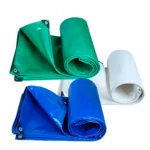
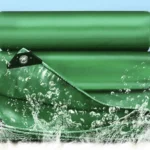
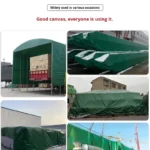
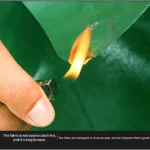

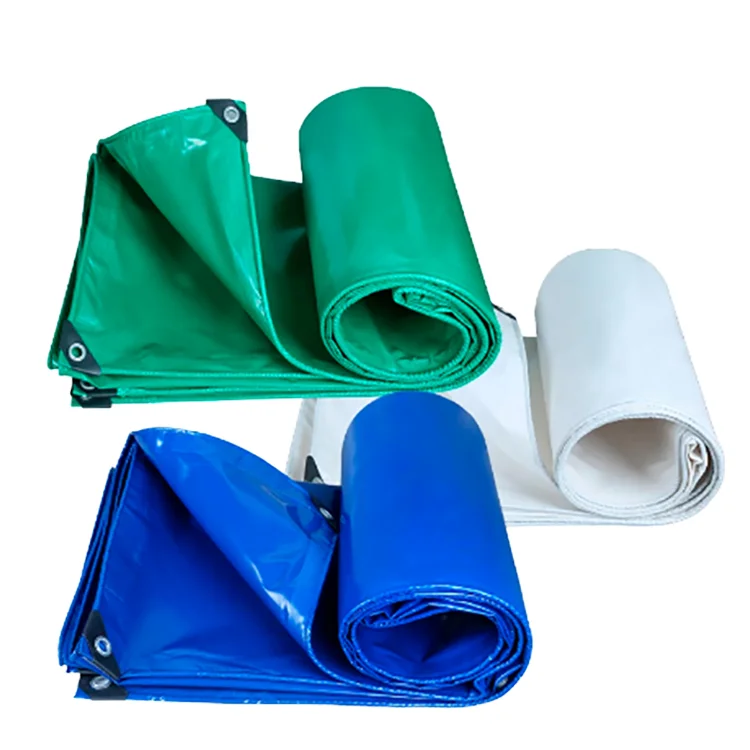

Verified Coating Process Control — nearly 30 years of knife coating production with dedicated QA at every stage, ensuring the PVC coating weight and adhesion stated on the quotation match what arrives on your factory floor.
Technical Specifications
| Parameter | Value |
|---|---|
| Product Type | PVC Coated Tarpaulin |
| Coating Method | Knife Coated |
| Coating Material | PVC |
| Base Fabric | Tricot (verify against manufacturer catalog) |
| Weight | 500 GSM (verify against manufacturer catalog) |
| Style | Plain Weave |
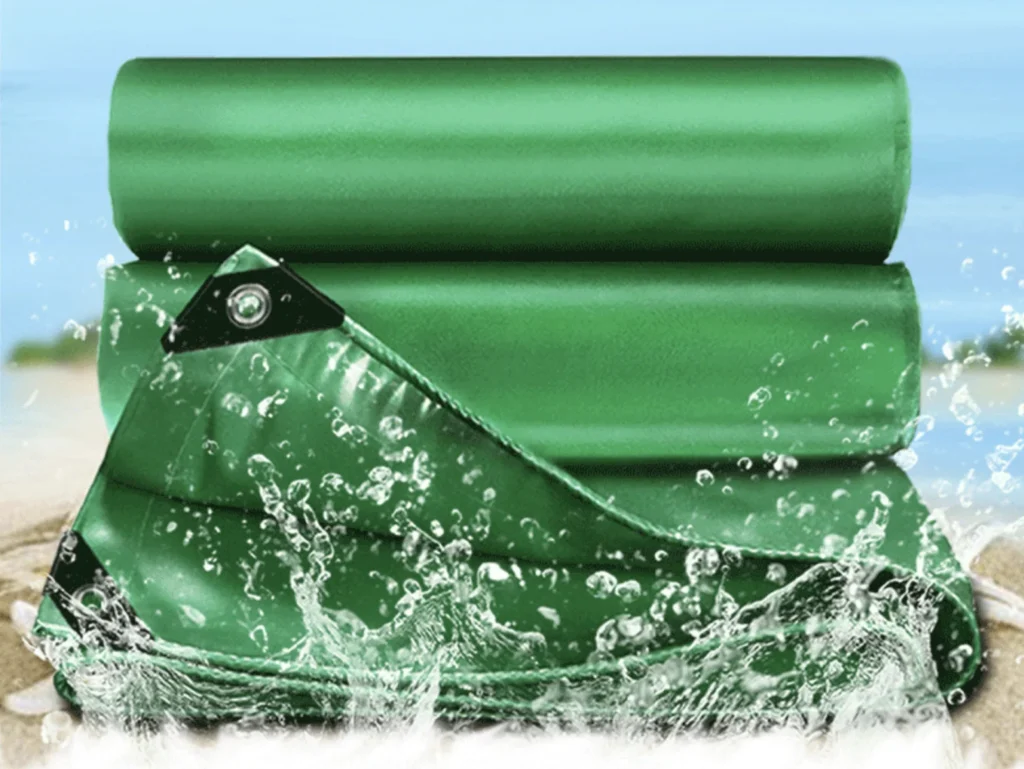
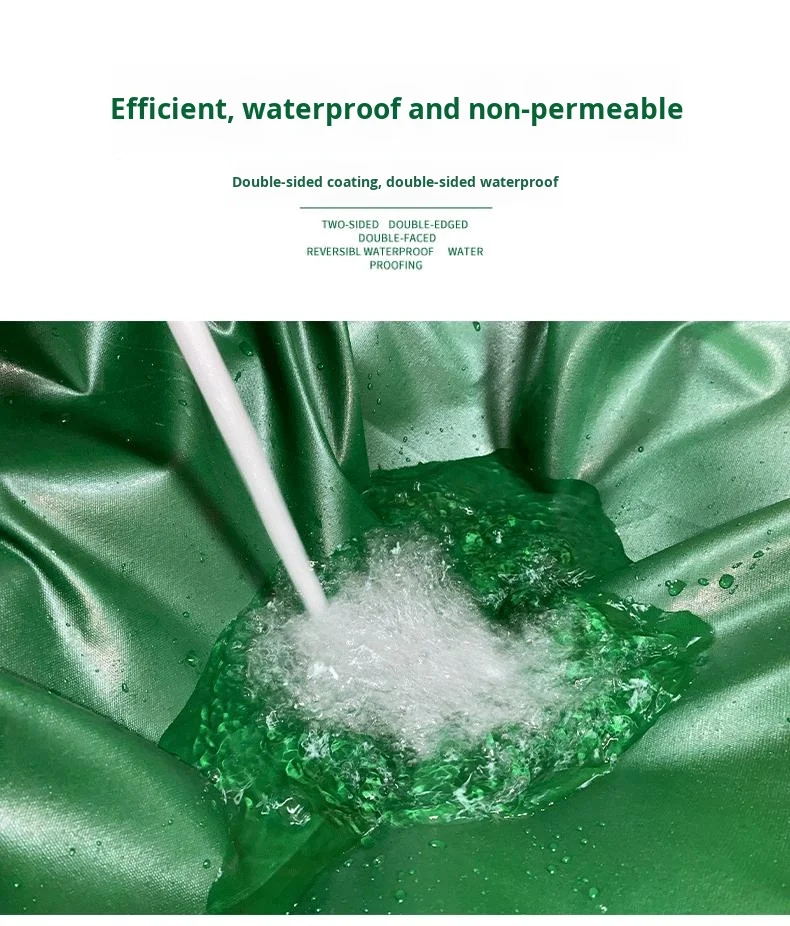
| Waterproof Rating | ≥ 20KPa hydrostatic pressure |
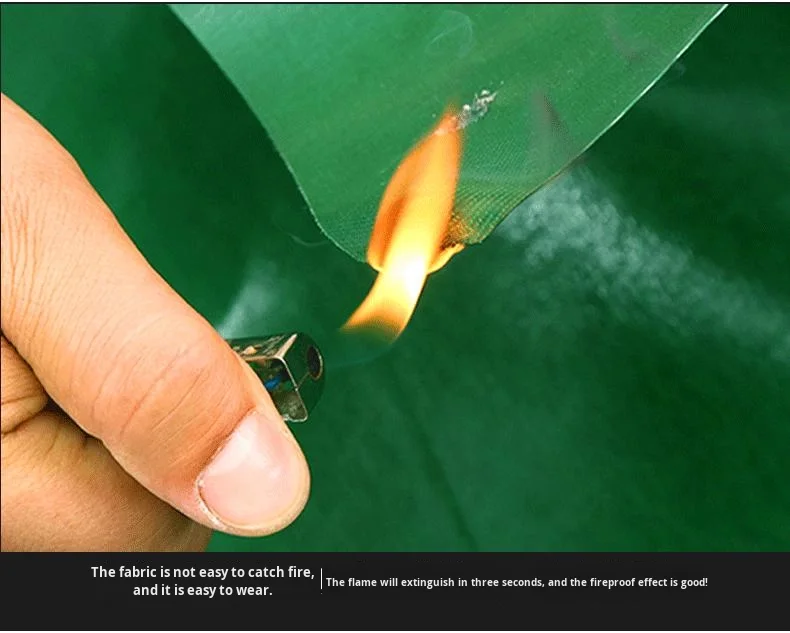
| Flame Retardant Grade | ≤ 10 seconds (verify against manufacturer catalog) |
| Low-Temperature Flexibility | Down to -30°C |
| Treatments | Anti-UV, Wrinkle Resistant, Mildew Proof, Anti-Corrosion (acid, alkali, brine) |
| Finish | Solid |
| Standards | ISO, CE (company-level certification) |
Application Suitability
| Application | Exposure & Requirement |
|---|---|
| Frame Tents & Event Marquees | Continuous outdoor rain exposure, tensioned frame loading, UV degradation from prolonged sun exposure |
| Retractable Awnings | Repeated folding and unfolding cycles, crease resistance, colour consistency across visible panels |
| Inflatable & Membrane Structures | Air-tight seam welding requirement, pliability for inflation cycling, fire safety compliance for public venues |
| Industrial Shelter Covers | Corrosive atmosphere exposure, chemical splash resistance, abrasion from wind-driven particulate |
| Canopy & Shade Structures | Long-span tensioning, UV stability, roll-to-roll colour match across large covered areas |
Why "Flame Retardant" Claims Fail at the Inspection Stage
A flame retardant grade only matters when it matches the fire safety standard enforced in your target market — a generic claim without a test result is a compliance risk.
When tent and awning manufacturers source PVC knife coated tarpaulin tent awning fabric from suppliers who state "flame retardant" on the quotation, the assumption is that the material will pass the fire marshal’s inspection or the venue’s safety audit. In practice, the test standard applied by the supplier may not align with the regulation in force at the installation site — for instance, a material tested to one national standard may not satisfy the classification required under another jurisdiction’s building or temporary structure code. The result is a failed inspection, delayed event setup, and a fabric roll that has already been cut and welded into a structure that now cannot be used [NEED_CITE: fire classification standards for temporary membrane structures].
Coating Adhesion and Weld Behaviour for Tensioned Structures
Knife coating produces a mechanical bond between the PVC compound and the tricot base fabric, where the coating is forced into the weave interstices under blade pressure. This matters for tent and awning fabricators because the primary joining method is hot-air welding, and weld strength depends on how consistently the coating transfers heat and fuses at the seam interface. PVC knife coated tarpaulin tent awning fabric with uniform coating adhesion across the roll width allows welding parameters — temperature, speed, pressure — to remain stable from the first seam to the last, reducing the rejection rate on the fabrication line.
Fire Safety Documentation for Public-Access Installations
Event marquees, exhibition tents, and inflatable structures installed in public spaces are subject to fire safety scrutiny that goes beyond the fabric supplier’s general assurance. Project specifications typically call for a specific flame retardant classification, and the authority having jurisdiction will ask for the test report — not just the claim. When sourcing PVC knife coated tarpaulin tent awning fabric, the critical step is to confirm which test standard applies in the destination market and to obtain a test report stating the measured result against that standard before committing to a production run [NEED_CITE: flame retardant test methods applicable to coated textiles for temporary structures].
Reading the Specification Sheet Beyond the GSM Number
The stated 500 GSM weight tells you the total mass per square metre but does not isolate the base fabric contribution from the coating contribution. A heavy coating on a light base fabric may reach the target GSM while delivering lower tensile and tear performance than a lighter coating on a denser tricot weave. The tricot base fabric construction provides dimensional stability under tension — important for frame tents where the fabric is stretched across aluminium or steel profiles and must resist deformation over days or weeks of continuous installation.
The ≥ 20KPa hydrostatic pressure rating indicates the coating can resist water penetration under sustained rainfall conditions, which is the baseline expectation for outdoor tent and canopy applications. The -30°C low-temperature flexibility specification addresses a different problem: PVC compounds tend to stiffen in cold conditions, and a membrane or awning deployed in winter climates needs to remain pliable enough to fold, transport, and install without cracking at the crease. Acid, alkali, and brine corrosion resistance extends the usable environment beyond standard outdoor exposure into industrial and coastal settings where chemical or salt-laden air would degrade untreated coatings over time.
The Cost of a Specification Mismatch on a Tent Production Run
When the colour varies between rolls in the same order, the difference becomes visible the moment two adjacent panels are installed on a frame tent or awning — and there is no fix short of replacing the affected panel. Similarly, when a flame retardant grade is specified without verifying the test standard, the failure is discovered at the inspection stage after the fabric has already been fabricated, welded, and delivered to the site. Both scenarios represent losses that compound: wasted material, wasted fabrication labour, delayed project timelines, and reputational exposure with the end client who expected a compliant, visually uniform structure [NEED_CITE: common causes of rejection in fabricated PVC membrane structures].
What Consistent Production Delivers for Your Fabrication Line
Three full production lines and 36 sets of professional equipment support the batch volumes that tent and awning manufacturers require, with capacity to maintain roll-to-roll consistency across a single order. The 10-person R&D team handles colour matching, custom width development, and treatment specification — producing samples within days so that fabrication trials can proceed without waiting weeks for material confirmation. Dedicated QA and QC at every production stage, culminating in 100% inspection before shipment, means the PVC knife coated tarpaulin tent awning fabric that arrives at your cutting table matches the specification sheet you approved.
Documentation & Verification
- Material specification sheet stating GSM, tricot base fabric type, and PVC coating weight for cross-reference against received rolls
- Flame retardant test report included where applicable, stating the test standard applied and the measured result
- Pre-shipment inspection record documenting roll-by-roll weight and visual check before dispatch
- ISO and CE certificates supporting compliance requirements in regulated export markets
- UV and anti-corrosion treatment documentation aligned to the specification requested at inquiry stage
Fabrication, Handling & Storage
- Hot-air welding parameters should be calibrated to the PVC coating thickness and tricot base before production runs begin
- Store rolls horizontally on racking to prevent flat-spot deformation on the tricot base fabric
- Allow cold-stored rolls to acclimatise before unrolling to avoid creasing at the -30°C flexibility boundary
- Use compatible PVC-based repair adhesive for field patching of knife coated seams and puncture points
- Plan cutting layouts to minimise off-cuts and utilise the full roll width across tent panel dimensions
- Clean fabricated surfaces with mild detergent; avoid solvent-based cleaners that may attack the anti-corrosion treatment
Request a Specification Match for Your Project
Provide the tent or awning type you are fabricating, the fire safety classification required in your destination market, and the roll width and annual volume you need. If your project demands a specific colour match or custom treatment beyond the standard anti-UV and mildew-proof options, include the reference standard or sample so that the PVC knife coated tarpaulin tent awning fabric can be developed and sampled before production commitment.
Frequently Asked Questions
Q: Can you supply fabric with fire-retardant certification matching my project specification?
A: Flame retardant grades are available, but the applicable standard varies by market — some jurisdictions require classification per building material codes while others apply temporary structure regulations. Provide the standard referenced in your project specification so we can confirm availability and supply the matching test report with the material documentation.
Q: What test reports are available for UV and anti-corrosion treatment claims?
A: Treatment documentation is provided based on the specification confirmed at the inquiry stage. Anti-UV and anti-corrosion treatments for acid, alkali, and brine exposure are documented alongside the material specification sheet. Share your end-use environment so the appropriate treatment level and supporting documentation can be included.
Q: How do you ensure colour consistency across multiple rolls in the same order?
A: Colour consistency is controlled through in-process QA at each production stage and verified during the 100% pre-shipment inspection. Rolls within a single production batch are cross-referenced against the approved colour standard to detect variation before dispatch. For large-area membrane projects, specify that all rolls must come from a single batch run.
Q: What is the minimum order for custom width or colour on tent and awning fabric?
A: Custom widths and colours are produced on dedicated runs, and the minimum depends on the width requested and the coating formulation required. Samples are developed within days to allow fabrication trials before the full production order is placed. Contact us with your roll dimensions and annual volume for a production schedule assessment.
Q: Can you develop samples for membrane or inflatable structure trials?
A: Sample development is part of the standard sales process. Provide the treatment requirements, colour reference, and any fire-retardant or anti-static classification needed for your inflatable or membrane application. Samples are produced for weld testing, inflation cycling, and tension trials before you commit to volume production.