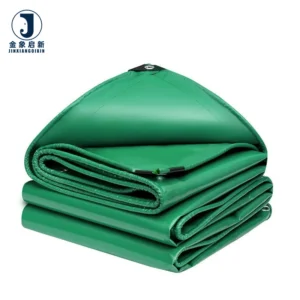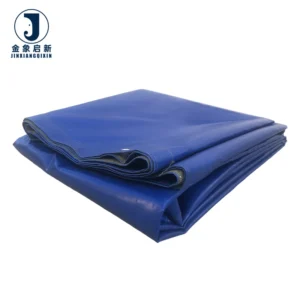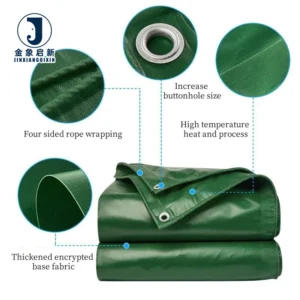
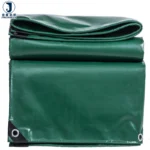
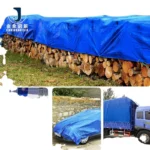
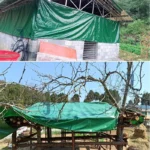
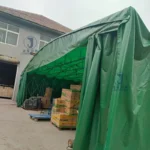
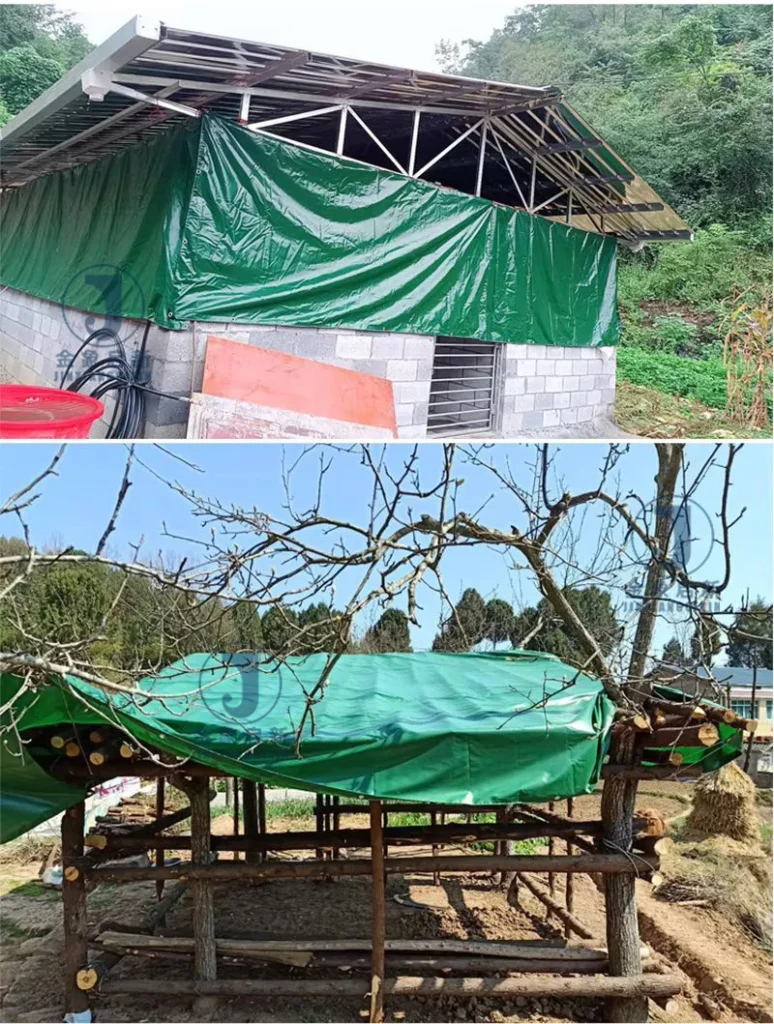
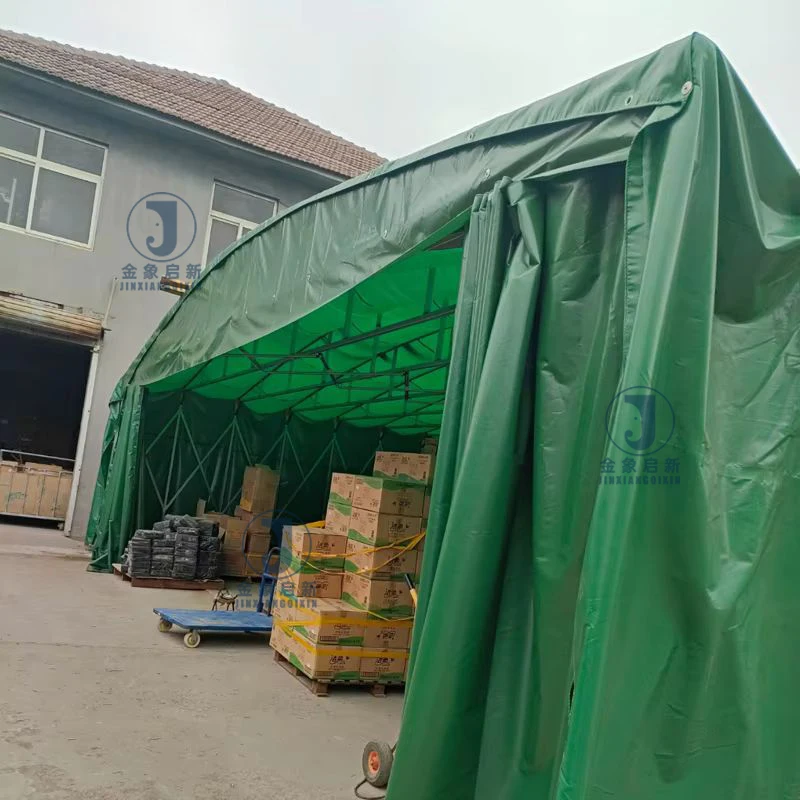
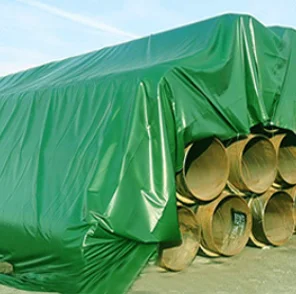
Deep Process Control — coating weight and adhesion verified at every production stage for agricultural cover fabrics, ensuring each roll meets the stated specification before it leaves the facility.
Technical Specifications
| Parameter | Value |
|---|---|
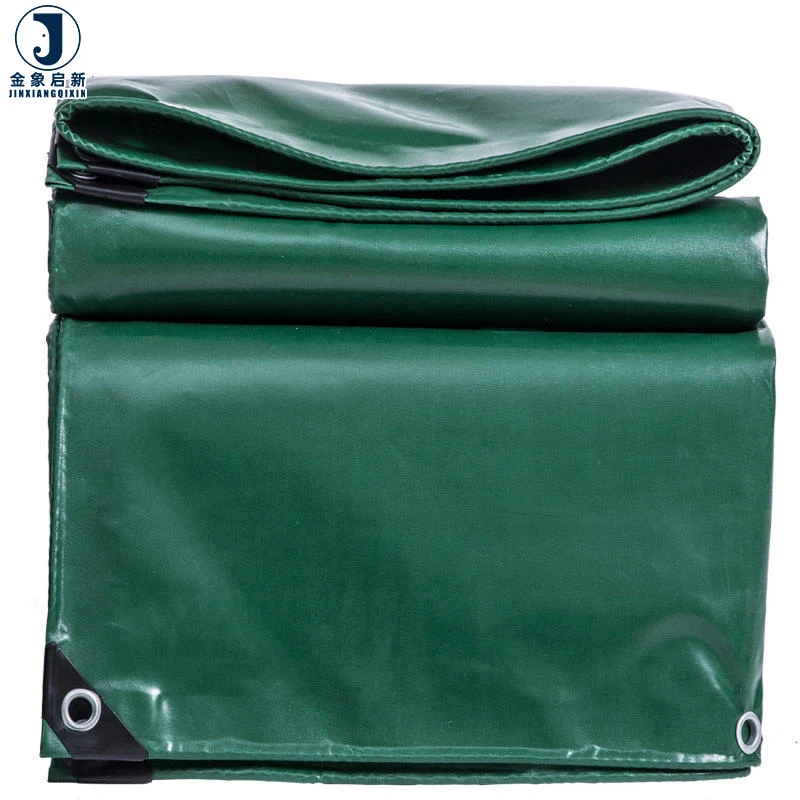
| Product Type | PVC Coated Tarpaulin |
| Coating Material | PVC |
| Base Fabric | Warp Knitted |
| Weave Type | Warp Knitted |
| Waterproof | Yes |
| Anti-Static | Claimed (test basis not stated in source) |
| Tear Resistance | Claimed (test basis not stated in source) |
| Style | Plain |
| Color | Customizable |
| Application Grade | Industrial / Agricultural Heavy-Duty |
| Standards | ISO, CE (company certified) |
Application Suitability
| Application | Exposure & Requirement |
|---|---|
| Broiler and chicken house side curtains | Continuous flexing from ventilation cycles, humidity, ammonia-rich air, dust accumulation requiring anti-static surface |
| Pig and sheep shelter tent enclosures | Wind-loaded frames, rain and mud exposure, puncture risk from structural contact points |
| Open-sided poultry farm roof covers | UV exposure, thermal cycling, static-prone dry conditions in feed storage zones |
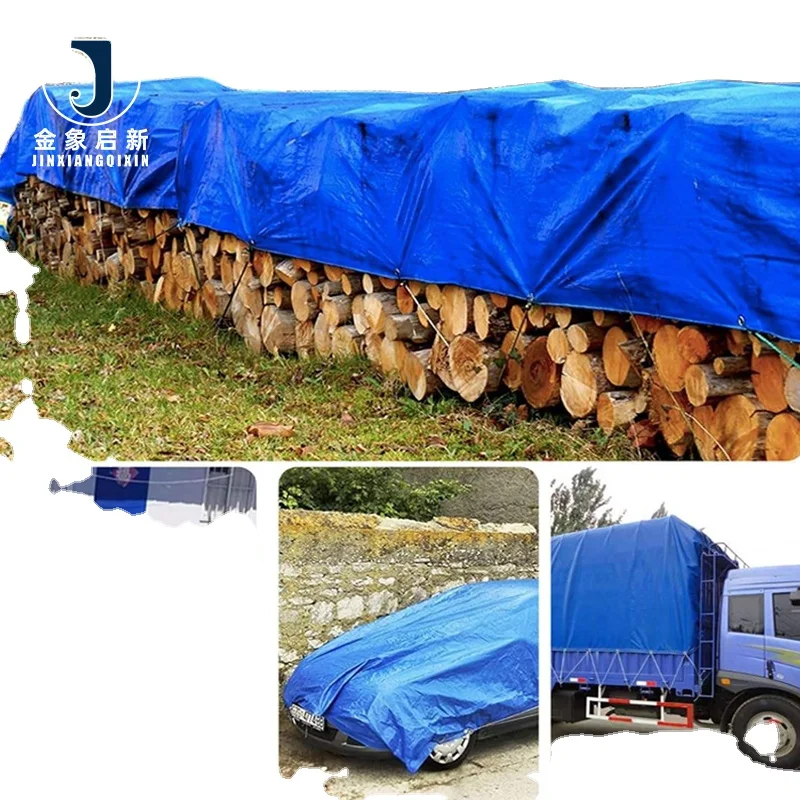
| Agricultural storage and livestock covers | Weather exposure, mechanical handling during seasonal deployment and takedown |
Why Static Discharge on a Farm Cover Is a Bigger Risk Than Most Buyers Anticipate
Anti-static treatment without a documented surface resistance value leaves you guessing at compliance.
Static buildup on PVC coated tarpaulin for poultry farm ventilation structures is not a theoretical concern. In environments where feed dust, dry bedding material, and low humidity converge, an untreated fabric surface accumulates charge with every wind cycle and curtain movement. Buyers routinely specify anti-static fabric for livestock housing and then discover, at the compliance audit stage, that no test report was supplied to confirm the surface resistance level [NEED_CITE: surface resistance test methods for anti-static textile materials]. The fabric may perform adequately, but without documentation the installation fails inspection and operations stall until the gap is closed.
Warp Knitted Base Fabric for Dimensional Stability Under Farm Frame Tension
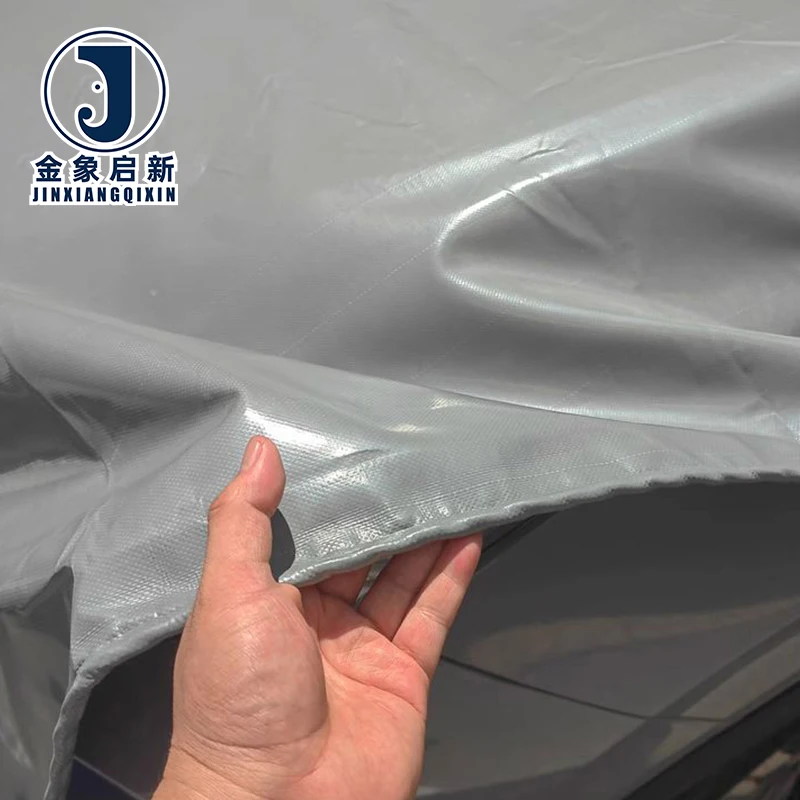
Farm tent and side-curtain structures place sustained tension on fabric across multiple anchor points. A warp knitted base fabric resists distortion along both axes, maintaining panel geometry as wind load and thermal expansion cycle through the structure day after day. This stability matters most at the panel edges where the PVC coated tarpaulin roll meets the frame — if the fabric shifts or stretches unevenly, the entire cover system develops stress concentrations that accelerate seam fatigue.
Anti-Static and Waterproof Performance in the Livestock Environment
The PVC coating delivers a continuous waterproof barrier that handles rain ingress and the high-humidity conditions inside broiler and pig housing. The anti-static treatment addresses charge accumulation in dry, dust-heavy zones where feed handling and ventilation create friction on the fabric surface. Because the specific surface resistance standard has not been stated in the available documentation, buyers should confirm the anti-static grade required for their local agricultural compliance framework before placing a production order [NEED_CITE: anti-static compliance requirements for agricultural textile structures].
How Coating Weight, Base Fabric Density, and Tensile Behaviour Interact
The relationship between PVC coating weight and warp knitted base fabric density determines how the material behaves under load. Coating weight alone does not dictate tensile or tear strength — a heavy coating on a loosely knitted base will crack under tension, while a light coating on a dense base may lack puncture resistance. The warp knitted structure distributes load across interlocking loops rather than simple over-under weaves, which limits tear propagation when a puncture occurs. Buyers evaluating PVC coated tarpaulin for poultry farm ventilation should request the material specification sheet stating both the base fabric denier and the coating weight to understand the composite performance rather than relying on GSM alone. Surface finish — in this case a plain style — also influences how dust and organic matter adhere to the cover, affecting cleaning intervals and long-term appearance in visible farm installations.
The Hidden Cost of Skipping Pre-Shipment GSM Verification
When coating weight on arrival does not match the quotation, the consequences cascade through the entire farm cover project. Panels cut to specification may lack the puncture resistance needed for wind-loaded roof applications. Waterproof integrity degrades faster under UV exposure because the coating film is thinner than engineered. Welded seams — already the weakest link in any fabricated cover — fail earlier when the PVC layer cannot absorb flex stress at the joint [NEED_CITE: welded seam failure modes in coated fabric structures]. Colour may also shift between a lighter-coated batch and the approved sample, creating visible variation across a multi-panel farm shelter installation.
What This Supply Process Delivers for Agricultural Cover Projects
Three full production lines and 36 sets of professional equipment support bulk roll output with consistent coating application, critical when a single farm project requires dozens of matched rolls. A 10-person R&D team handles material selection and sample development for custom colour and sizing requirements, with samples produced within days for buyer approval. Dedicated QA/QC at every production stage means coating weight and adhesion are checked in-process, not only at final inspection. Pre-shipment inspection covers 100% of rolls before dispatch, catching GSM deviation, colour drift, and surface defects before they reach the project site.
Documentation & Verification
- Material specification sheet stating PVC coating weight, warp knitted base fabric denier, and colour reference per roll
- Anti-static surface resistance test report available to confirm compliance with farm safety standards upon request
- Pre-shipment inspection record verifying GSM and visual quality against the approved sample before dispatch
- ISO and CE certificates confirming the production facility management system standards
- Certificate of origin and customs documentation for cross-border agricultural project supply
Fabrication, Handling & Storage
- Heat welding parameters should match the PVC coating thickness to prevent seam failure at farm cover flex points
- Store rolls upright on pallets to avoid flat-spot deformation of the warp knitted base fabric under prolonged horizontal stacking
- Allow cold-transported rolls to acclimatise before unrolling to prevent coating micro-cracking at low temperatures
- Use mild detergent for cleaning — solvent-based agents may degrade the PVC coating surface on farm shelter panels
- Cut panels with allowance for hem folding and eyelet reinforcement at stress-concentrated anchor edges
What to Include in Your Enquiry
Provide the specific livestock application — whether broiler house side curtains, pig shelter roof panels, or temporary agricultural tent covers — along with the environmental conditions the fabric will face. State any anti-static or fire-retardant certification requirements mandated by your local agricultural authority. Confirm the required roll width, panel dimensions if cut-to-size is needed, and the annual volume to align production scheduling.
Frequently Asked Questions
Q: What surface resistance standard does the anti-static treatment meet for livestock environments?
A: The anti-static treatment is claimed but the specific test standard and surface resistance value have not been published. Request the test report during sampling to confirm the grade matches your local agricultural compliance requirements before committing to full production.
Q: How can I verify the coating weight on arrival matches the quoted specification?
A: Every roll undergoes pre-shipment inspection with GSM recorded against the material specification sheet. The inspection report travels with the shipment documentation so you can cross-reference coating weight on receipt without conducting independent lab tests immediately.
Q: What are the minimums for ordering custom width and roll length for farm tent panels?
A: Minimum order quantities apply to custom width and length configurations, particularly for non-stock colours. Submit your panel dimensions and total linear metre requirement during the enquiry stage so production can confirm feasible roll sizes and lead time.
Q: How is shade variation controlled across multiple rolls in a single farm project order?
A: Rolls for the same order are produced in a continuous coating run with in-process colour checks at regular intervals. The pre-shipment inspection record documents shade consistency across the batch, and any roll outside tolerance is flagged before packing.
Q: Is flame-retardant certified fabric available for agricultural structure fire codes?
A: Flame-retardant grades are available within the broader product range, but the specific certification grade for this agricultural cover fabric has not been stated. Confirm the fire classification required by your market and request the corresponding test report during sample approval.