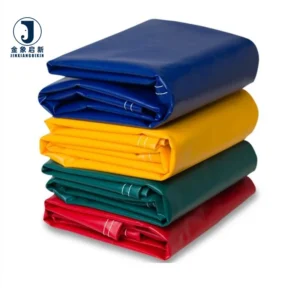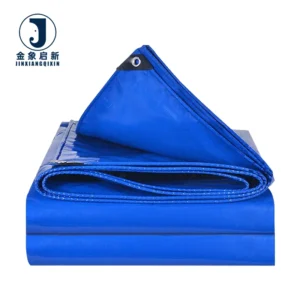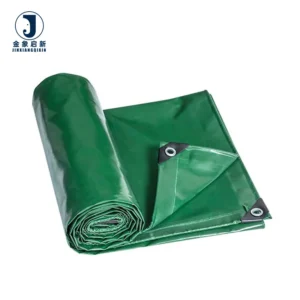
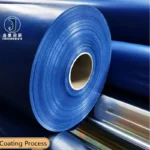
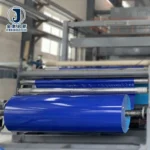
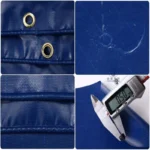
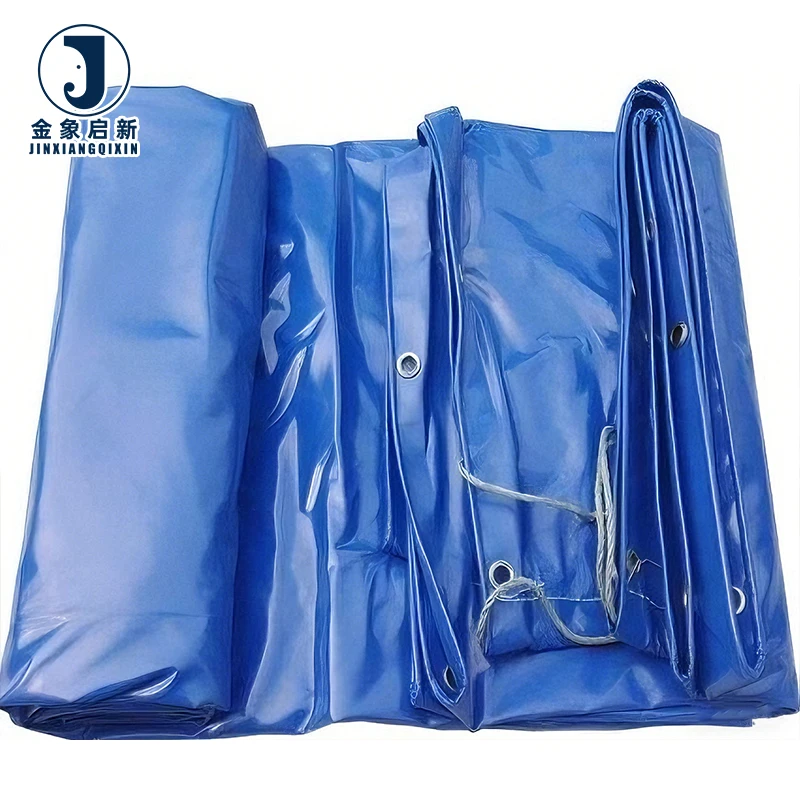
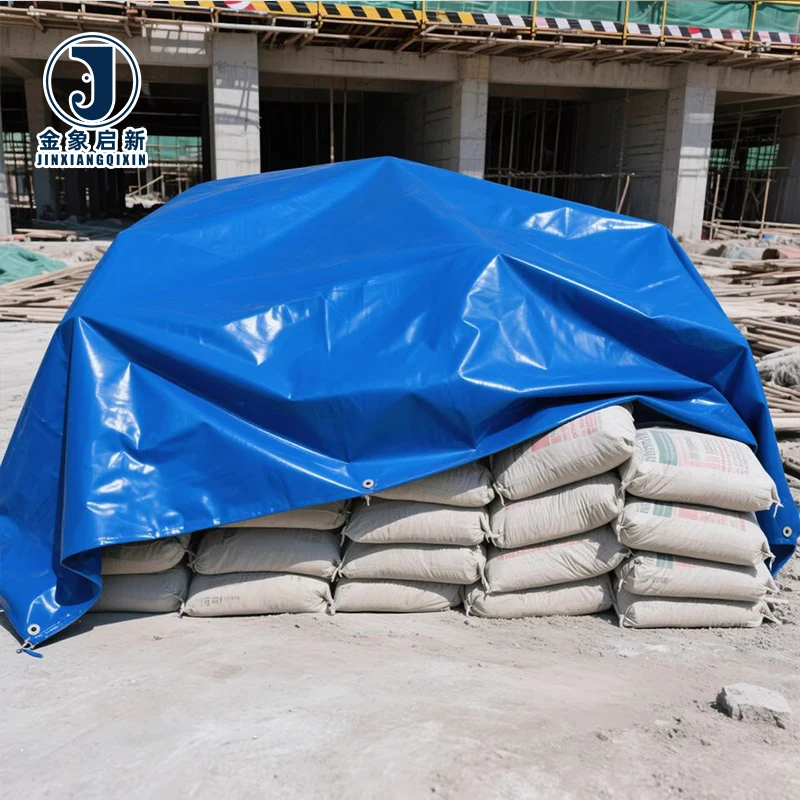
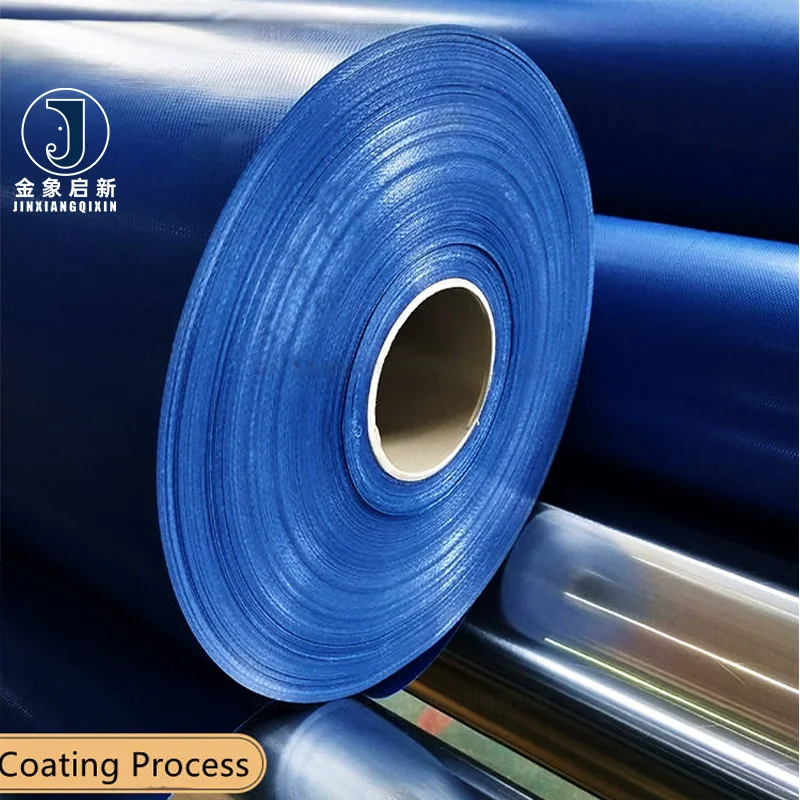
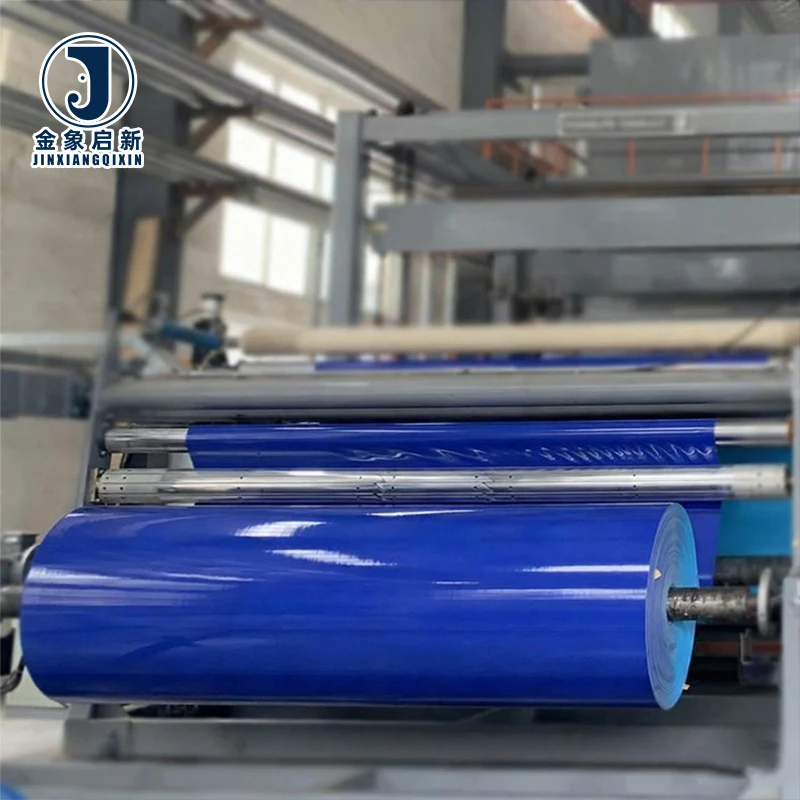
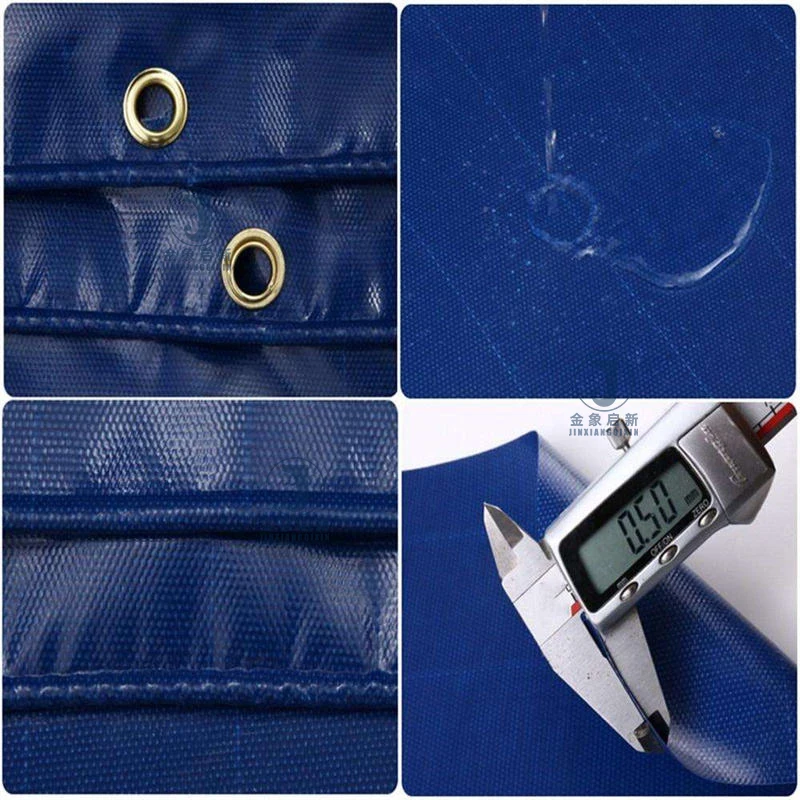
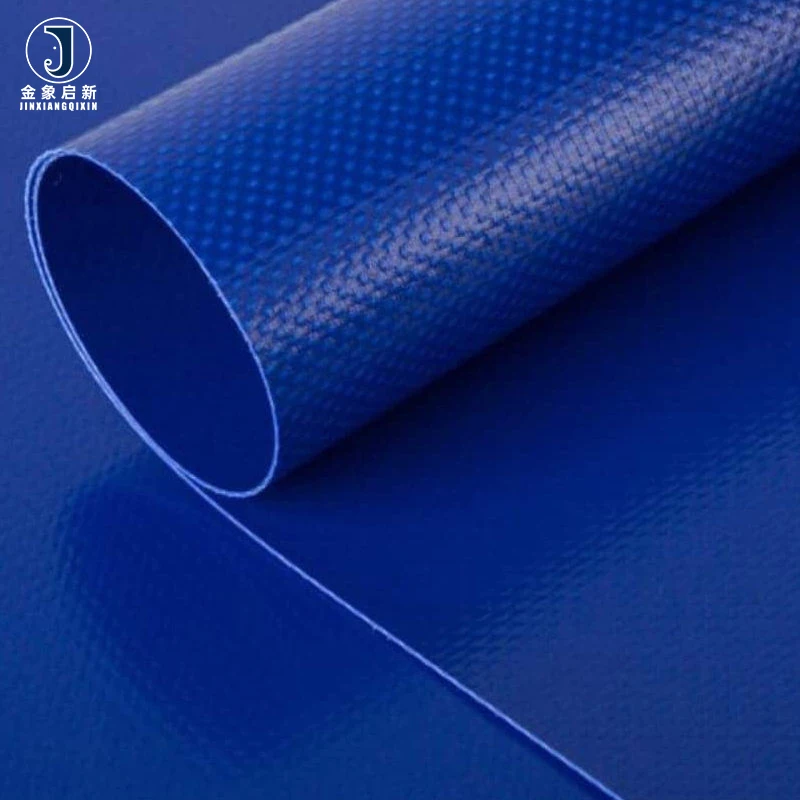
Coating Adhesion Control — Our three full production lines maintain consistent PVC coating weight and adhesion across every roll, ensuring the fabric performs as specified in demanding ventilation and specialist structure applications.
Technical Specifications
| Parameter | Value |
|---|---|
| Product Type | PVC Coated Tarpaulin Fabric |
| Weight (GSM) | 250gsm-1500gsm (confirm the grade required for your application) |
| Base Fabric Denier | 200DX300D, 500DX500D, 840DX840D, 1000DX1000D |
| Coating Material | PVC |
| Available Colors | Blue, Yellow, Black, Green, White, Custom |
| Surface Finish | Glossy or matte |
| Temperature Range | -15°C to 70°C |
| Treatment Options | Waterproof, UV resistant, flame retardant, anti-fungal (grades and test basis available upon request) |
| Standards | ISO, CE |
| Fabrication | OEM/ODM welcomed |
Application Suitability
| Application | Exposure & Requirement |
|---|---|
| Mining ventilation ducts | Continuous airflow abrasion, fire-retardant compliance mandatory, anti-static surface resistance required underground |
| Aviation hangar ventilation | Anti-static compliance for ground support areas, flexible duct construction under temperature fluctuation |
| Tunnelling exhaust systems | Confined-space fire safety regulations, high particulate abrasion, duct collapse resistance under negative pressure |
| Membrane and inflatable structures | Tensile load under inflation pressure, welded seam integrity at panel joints, UV exposure on external surfaces |
| Temporary industrial enclosures | Wind load on large unsupported spans, repeated installation and removal, weather sealing at overlap joints |
What "Certified Fire Retardant" Actually Means for Your Ventilation Duct
A fabric only meets the compliance standard when the test report matches the jurisdiction where your site operates.
Ventilation ducts in mining and tunnelling face mandatory fire-retardant audits, yet many contractors receive duct material with a generic "flame retardant" label and no supporting documentation. The gap between a supplier’s claim and the grade your safety officer requires can shut a project down at inspection. PVC coated tarpaulin fabric destined for underground or aviation use must carry a test report referencing the specific standard — whether that is M2, B1, NFPA 701, or DIN 4102 — and the report must trace back to the production batch you received [NEED_CITE: DIN 4102 fire classification for building materials]. Without this chain of evidence, the material is uncertified regardless of what the quotation says.
Matching Fire-Retardant Grade to Site Regulation
Different jurisdictions mandate different flame classification systems, and specifying the wrong one means the duct fails inspection even if the fabric genuinely resists ignition. Our PVC coated tarpaulin fabric is available in flame retardant grades — confirm the grade required for your market before sampling. We provide test documentation aligned to the classification system your project specifies, so the compliance path is clear before production starts.
Anti-Static Compliance for Underground and Aviation Environments
Static discharge in mining ventilation and aviation ground support areas represents a documented ignition risk where combustible dust or fuel vapour may be present. Anti-static treatment modifies the surface resistivity of the PVC coating to dissipate charge rather than accumulate it [NEED_CITE: anti-static surface resistance testing standards for mining ventilation materials]. We supply anti-static PVC coated tarpaulin fabric with test data on surface resistance values — request the report format your safety authority requires.
How Base Fabric Denier Drives Duct Performance
The denier selection — from 200DX300D for lightweight duct sections up to 1000DX1000D for high-pressure ventilation runs — determines how the fabric handles tensile load when the duct inflates under positive pressure. Higher denier base fabric resists tear propagation at welded seams and at hanging attachment points where stress concentrates. Coating weight in the 250gsm-1500gsm range then adds abrasion protection and air impermeability, but the structural backbone always comes from the woven polyester base. A heavier coating on a light denier base will not compensate for insufficient tensile capacity [NEED_CITE: tensile and tear test methods for coated fabrics per ISO 1421]. The correct combination of denier and GSM depends on duct diameter, operating pressure, and hanging span length.
The Cost of Specifying Duct Fabric Without Verified Documentation
When flame retardant certification arrives as a generic statement rather than a batch-specific test report, the contractor carries all the compliance risk. A failed inspection underground means the entire duct run is removed and replaced — not just the material cost but the lost production time while ventilation is offline. Similarly, GSM stated on the quotation but not verified on delivery can mean the fabric is lighter than the duct design assumed, leading to premature abrasion failure at bends and flex points [NEED_CITE: GSM verification practices for coated fabric shipments]. Colour variation between rolls in the same duct installation may not affect performance but signals inconsistent coating formulation, which raises questions about treatment uniformity across the batch.
Why Specialist Contractors Source Duct Fabric Here
Our ten-person R&D team develops ventilation duct fabric samples matched to your denier, GSM, and treatment requirements within days, allowing compliance verification before bulk commitment. Three full production lines with 36 sets of professional equipment support the volume and lead-time reliability that tunnelling and mining programmes demand. Every roll undergoes dedicated QA/QC with 100% inspection before shipment, and the pre-shipment record accompanies your documentation package. We control the coating process end-to-end, meaning the fire-retardant and anti-static treatment is integrated during coating rather than applied as a secondary finish.
Documentation & Verification
- Material specification sheet stating base fabric denier, GSM, coating weight, and treatment type per roll
- Flame retardant test report referencing the classification standard applicable to your project jurisdiction
- Anti-static surface resistance test data for underground mining or aviation compliance submissions
- ISO and CE certificates confirming manufacturing system compliance
- Pre-shipment inspection record with roll-by-roll weight verification against quoted GSM
Fabrication, Handling & Storage
- Hot-air welding parameters vary by coating weight across the 250gsm-1500gsm range — request our recommended temperature and dwell time settings for your selected GSM
- Store PVC coated tarpaulin fabric rolls upright on pallets to prevent flat-spot deformation of the base fabric weave
- Allow cold-stored rolls to reach above -15°C before unrolling to avoid coating crack damage at low temperature
- Clean gloss-finish duct sections with mild detergent only — solvent-based cleaners degrade PVC plasticiser content and compromise flame retardant treatment
- Pattern cutting for duct panels should account for weld seam allowance at longitudinal joints to maintain duct diameter tolerance
Request Your Ventilation Duct Fabric Sample
Tell us the duct diameter, operating pressure, and the fire-retardant or anti-static classification your site authority requires. Specify whether you need roll stock for your own fabrication or finished duct sections, and confirm the colour or surface finish for visual consistency across the installation. We will develop a sample with full test documentation for your compliance review before any production commitment.
Frequently Asked Questions
Q: How do I confirm the flame retardant grade matches my market requirements?
A: Share the fire safety standard your jurisdiction enforces — M2, B1, NFPA 701, DIN 4102 or equivalent. We supply PVC coated tarpaulin fabric in flame retardant grades and provide the corresponding test report. Confirm the required grade at enquiry stage so the correct formulation is sampled and verified before production.
Q: What anti-static surface resistance values are available for mining duct?
A: Anti-static treatment is available for PVC coated tarpaulin fabric destined for underground ventilation and aviation environments. We provide surface resistance test data in the format your safety authority requires. Specify the target resistance range at enquiry so the correct treatment package is applied during coating.
Q: How do you ensure GSM matches the quotation on delivery?
A: Every roll is weighed during our 100% pre-shipment inspection. The inspection record documents actual weight against the quoted 250gsm-1500gsm specification and ships with your documentation. If your receiving team requires a specific verification protocol, tell us at order confirmation.
Q: What is the lead time for custom denier and treatment combinations?
A: Lead time depends on base fabric denier availability, GSM requirement, and treatment package complexity. Sample development for custom combinations typically completes within days of specification confirmation. We provide a firm production lead time with your quotation once the sample is approved.
Q: Can duct fabric panels be hot-air welded without seam failure?
A: Yes. Our PVC coating formulation supports hot-air and high-frequency welding across the 250gsm-1500gsm range. We provide recommended welding parameters for your selected GSM and denier. Seam strength should be verified on your first production weld to confirm settings match your equipment.