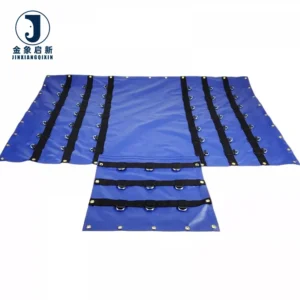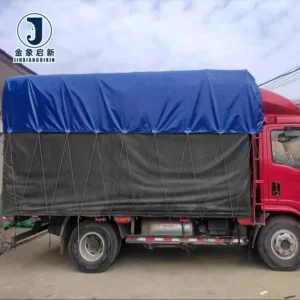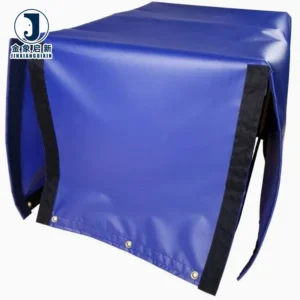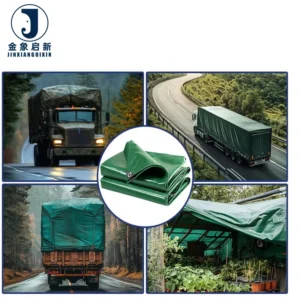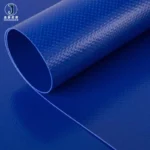
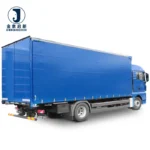
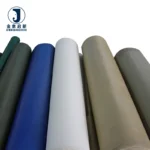

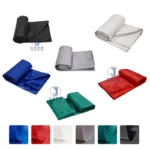
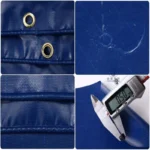
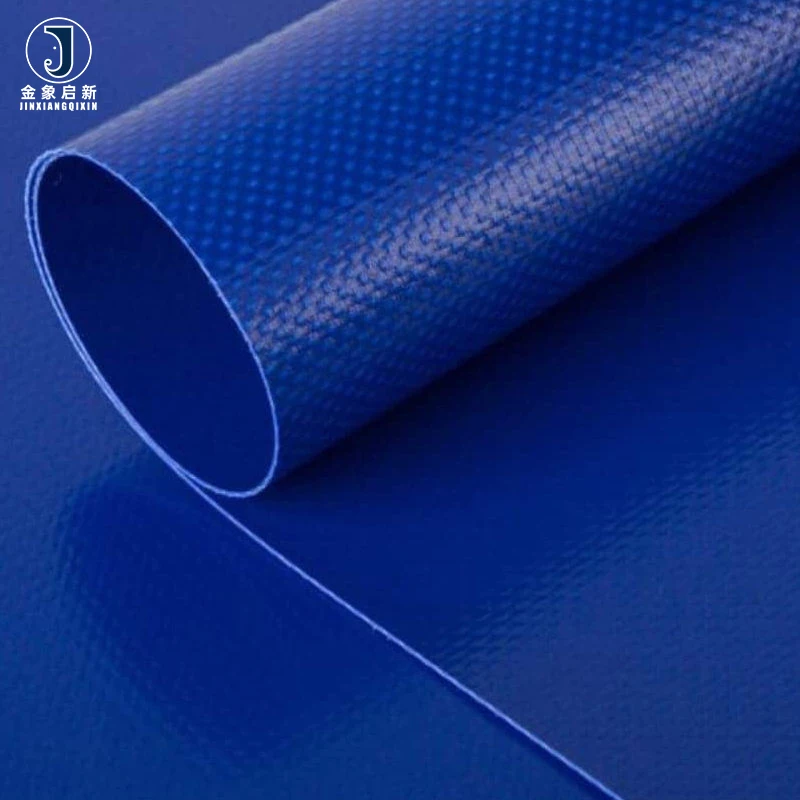
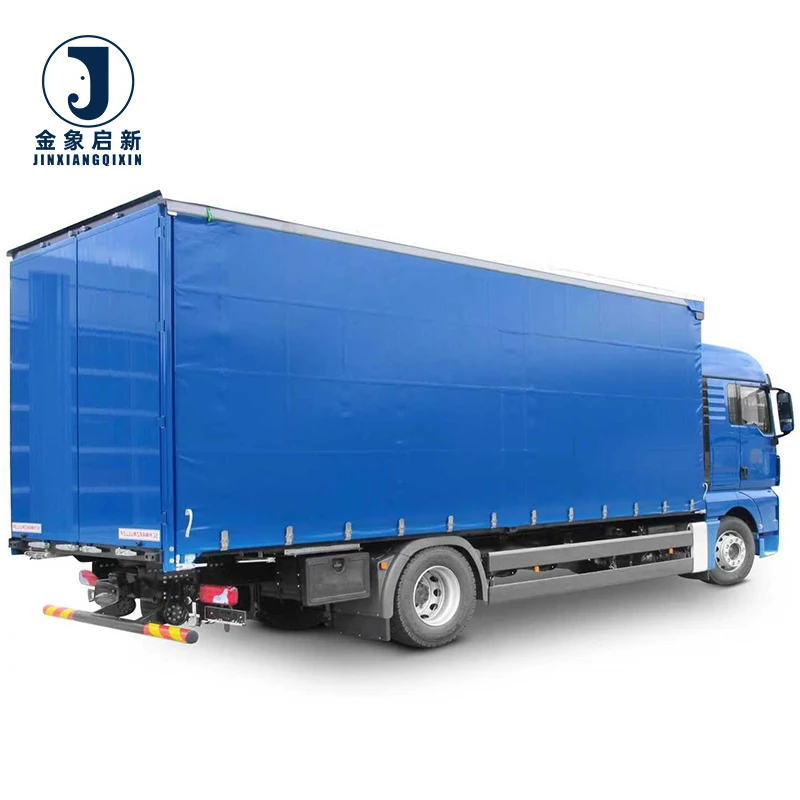
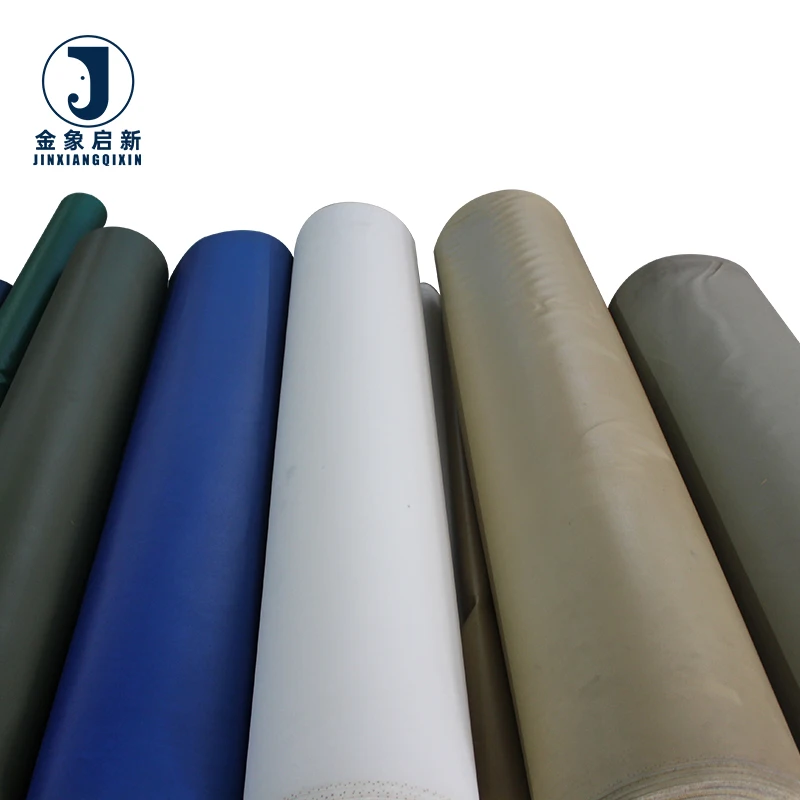
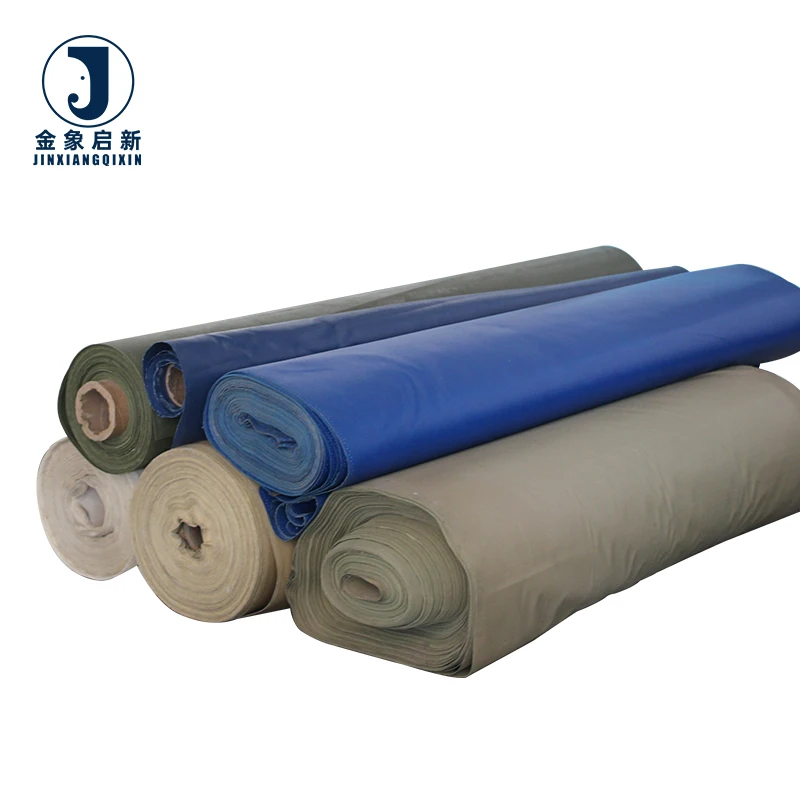
Precision-coated fabric engineered for moving loads — Hot-melt and laminated coating processes ensure PVC adhesion holds through repeated flex cycles at trailer side curtain and flatbed cover stress points, supported by dedicated QA checkpoints from coating weight to finished roll inspection.
Technical Specifications
| Parameter | Value |
|---|---|
| Product Type | PVC Coated Tarpaulin Roll |
| Material | PVC coating on high-strength polyester mesh fabric |
| Weight Options | 350 gsm / 420 gsm / 500 gsm / 550 gsm / 600 gsm / 750 gsm |
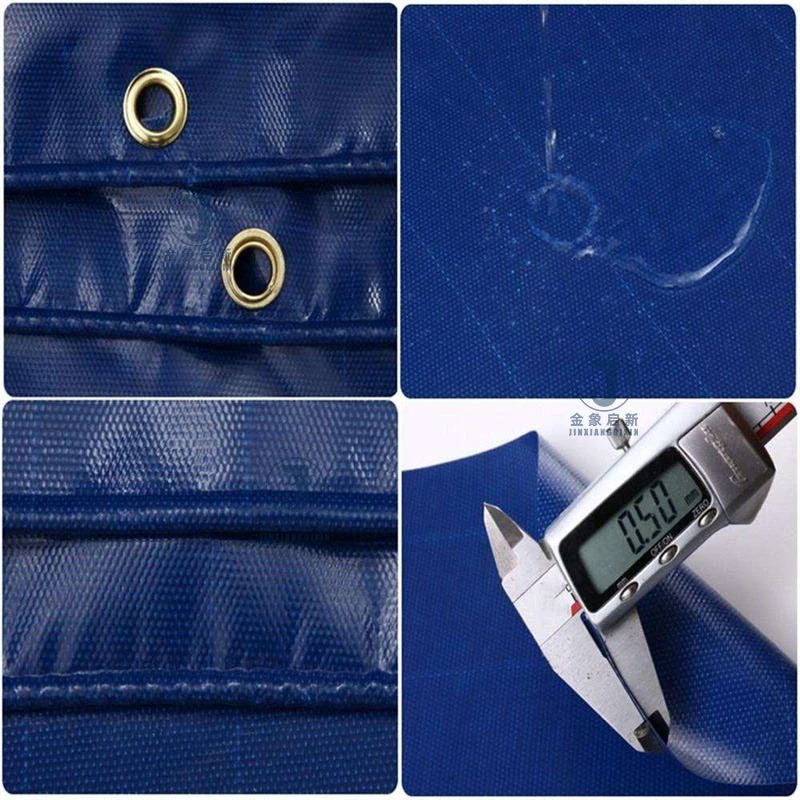
| Total Thickness | 0.32 mm / 0.35 mm / 0.4 mm / 0.45 mm / 0.5 mm / 0.65 mm |
| Roll Width | 2 m or 2.1 m |
| Roll Length | 75 m (2 m width) / 50 m (2.1 m width) |
| Coating Technology | Laminated technology and hot-melt coating technology |
| Key Features | Waterproof, cold crack resistant, anti-mildew, anti-static treatment, high tearing strength for welding |
| Special Treatments | Flame retardant grades available — confirm the grade required for your market; UV treatment available — test basis to be confirmed |
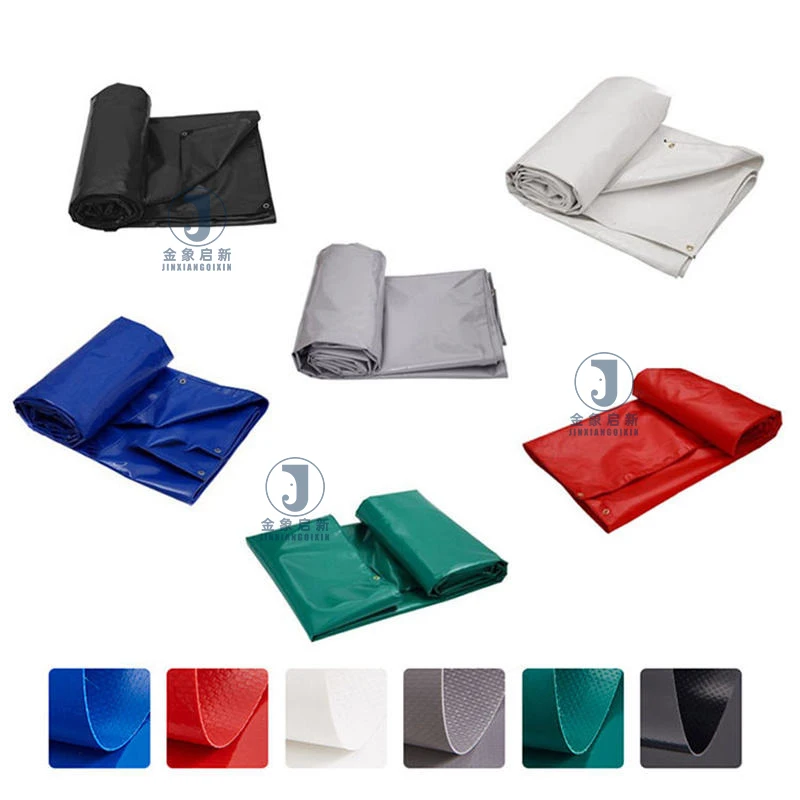
| Colour Options | Blue, Red, Yellow, Light Blue, Grey (custom colours available) |
| Finish Product Size | Custom cut-to-size or supplied by inventory |
Application Suitability
| Application | Exposure & Requirement |
|---|---|
| Side curtain fabric for articulated trailers | Constant flexing at load shift points, road spray, UV exposure, tie-down abrasion at reinforcement zones |
| Flatbed and tipper truck covers | Full weather exposure, mechanical stress from wind flap, cargo edge abrasion |
| Construction site and equipment covers | Dust, debris impact, standing water, repeated handling and folding |
| Scaffolding and building enclosure | Wind load on large unsupported spans, scaffold tube friction, prolonged sun exposure |
| Marine and offshore maintenance wraps | Salt spray, moisture ingress, chemical contact during hull or deck work |
| Temporary industrial and plant covers | Chemical splash, airborne particulate, confined-space ventilation compliance |
Why Quoted GSM Does Not Always Survive the Journey to Your Dock
Coating weight and base fabric denier must be verified independently — a single GSM figure tells you nothing about where the strength actually sits.
Fleet operators and transport builders regularly receive rolls where the combined weight meets the number on the invoice, yet the coating layer is thinner than specified and the polyester base fabric carries a lower denier. The total gram per square metre adds up because a heavier filler compound compensates for a lighter yarn structure. When that PVC coated tarpaulin for truck and transport goes onto a side curtain, the weld line flexes against a weaker base and the seam opens within months. This is not a defect in the conventional sense — it is a procurement gap. [NEED_CITE: tensile and tear test methods for coated fabrics per ISO 1421]
A material specification sheet that breaks down base fabric weight, coating weight and combined GSM gives you the evidence to hold a supplier accountable. Without that breakdown, you are buying a number, not a fabric.
Hot-Melt Coating Adhesion Where Trailer Flex Demands It
The hot-melt coating process bonds PVC directly into the polyester mesh under heat and pressure, filling the gaps between yarns rather than sitting on the surface. For a PVC coated tarpaulin for truck and transport, this matters most at the hem and weld zones where side curtains fold and flatbed covers experience wind flap. Laminated technology layers a pre-formed PVC film onto the base fabric, producing a smoother surface finish and consistent thickness across the roll width. Both processes are available across the 350 gsm to 750 gsm weight range, and the choice between them depends on whether your priority is weld seam strength or surface appearance for fleet branding.
Cold Crack Resistance Across Seasonal Road Conditions
Cold crack resistance is critical for truck covers operating through winter months or in high-altitude transport routes. PVC coatings that lack plasticiser stability become brittle below certain temperatures, and a flexed side curtain can crack along the fold line during routine opening and closing. The PVC coated polyester formulation in this range is designed to retain flexibility under cold conditions, though the specific cold crack temperature threshold should be confirmed against your operating environment before committing to bulk roll orders. [NEED_CITE: cold crack test standards for flexible PVC coated textiles]
Base Fabric Density, Coating Weight and What GSM Actually Measures
The weight of a coated fabric comes from two distinct contributors: the woven polyester base and the PVC coating applied to both sides. A heavier base fabric with a tighter weave delivers higher tensile and tear strength because the yarns themselves carry the load. A heavier coating improves waterproofing, abrasion resistance and weld performance but adds weight without proportional strength gain. When a 550 gsm roll and a 650 gsm roll share the same base fabric denier, the extra 100 gsm is almost entirely PVC compound — useful for durability, less relevant for structural load-bearing. This is why specifying base fabric denier alongside GSM prevents the mismatch between what the fabric weighs and what it can withstand at tie-down and eyelet reinforcement points. The 0.32 mm to 0.65 mm thickness range across this product family reflects these coating weight variations, and matching thickness to application prevents over-engineering for light covers or under-specifying for heavy flatbed use.
What Specification Mismatches Cost After the Cover Is Installed
A batch of truck covers cut from rolls with inconsistent colour between them becomes visible the moment two panels sit side by side on a trailer — and the fleet operator pays for replacement material and re-installation labour. A flame retardant grade specified for a mining ventilation duct that arrives without the test report to back it up fails the site safety audit before the fabric is ever unrolled. Welded seams that part before the fabric body shows wear indicate a coating adhesion problem, not a material strength problem, and no amount of additional GSM compensates for poor bonding at the weld interface. These failures are not random; they trace back to gaps in the specification and verification process at the point of purchase. [NEED_CITE: common failure modes in coated fabric end-use applications]
How Production Control Reduces Your Incoming Inspection Burden
Three full production lines and 36 sets of professional equipment maintain coating weight consistency across the 350 gsm to 750 gsm range, with dedicated QA checkpoints at each stage rather than end-of-line sampling only. A 10-person R&D team develops custom colour matches, cut-to-model sizing and sample rolls so you can verify weld behaviour and flex performance before committing to container quantities. The 30 years of coated fabric process control translates directly to batch-to-batch colour consistency and verified coating adhesion — the two specifications that most frequently cause rejection at receiving docks. Every roll undergoes 100 percent pre-shipment inspection against the material specification sheet, reducing the need for your own incoming QC to catch weight or colour deviations.
Documentation & Verification
- Material specification sheet stating base fabric denier, coating weight and combined GSM per roll
- Colour reference documentation matching Pantone or RAL codes across the full order batch
- Pre-shipment inspection record confirming 100 percent roll-by-roll weight and visual check
- Test report for flame retardant grades — confirm required standard before production
- ISO and CE certificates provided with each shipment dispatch
- Roll packing list with individual roll weights and dimensions for receiving verification
Fabrication, Handling & Storage
- Hot-melt coated rolls respond well to high-frequency welding; set temperature and dwell time per the 350 gsm to 750 gsm grade selected
- Reinforce hem folds at tie-down points with additional PVC strip overlays before welding to distribute eyelet pull-out load
- Store rolls vertically on pallets in a covered area; horizontal stacking compresses lower rolls and creates permanent crease marks
- Allow cold-stored rolls to acclimatise to ambient temperature before unrolling to prevent coating micro-cracking at the fold
- Cut-to-size covers should be fabricated within the same batch to maintain colour consistency across a fleet order
- Avoid solvent-based cleaners on the coated surface; mild detergent and water preserve the PVC top layer finish
What We Need to Quote Accurately
Provide the specific trailer model dimensions or required cut sizes so we can confirm roll width utilisation and seam layout. Share the fire classification or anti-static standard your site or end market mandates, along with any colour matching requirements across multiple rolls. Let us know whether you need finished covers with hem and eyelet reinforcement or roll stock for your own fabrication line, and whether sample approval is required before bulk production.
Frequently Asked Questions
Q: How do I verify that the GSM on arrival matches what was quoted?
A: Request a material specification sheet before production that breaks down base fabric weight and coating weight separately from the combined GSM. Our pre-shipment inspection record documents measured weight per roll, and the roll packing list included with your shipment allows you to cross-reference individual roll weights against the stated specification at your receiving dock.
Q: Can you cut truck covers to fit specific trailer models?
A: Yes. We produce custom cut-to-size covers based on your trailer model dimensions, including eyelet spacing and hem reinforcement layout. Provide the vehicle model or exact measurements, and we develop a cutting pattern that minimises waste from the 2 m or 2.1 m roll width while placing reinforcement at known high-stress points.
Q: What test reports are available for flame retardant or anti-static treatments?
A: Flame retardant grades are available as a special treatment, and anti-static treatment is applied during coating. The specific test standard and grade must be confirmed based on your market requirements before production. We provide the corresponding test report with shipment once the applicable standard is agreed during the quotation stage.
Q: How do you ensure colour consistency across multiple rolls in one order?
A: Colour matching is controlled against a confirmed reference standard, and every roll in a batch order is produced from the same coating compound mix. Our pre-shipment inspection checks colour visually roll-to-roll before dispatch, and the inspection record documents any variation so you can verify consistency when rolls are installed side by side on fleet vehicles.
Q: What is the typical lead time for custom widths, colours or printed branding?
A: Lead times depend on the level of customisation and current production scheduling. Custom colours and printed branding require sample development and approval before bulk coating runs begin. Standard colour rolls in the 350 gsm to 750 gsm range move through production faster. Confirm your required delivery window at the enquiry stage so we can align production scheduling accordingly.