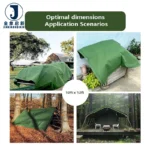

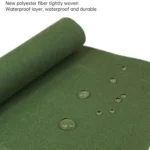

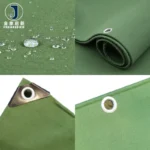
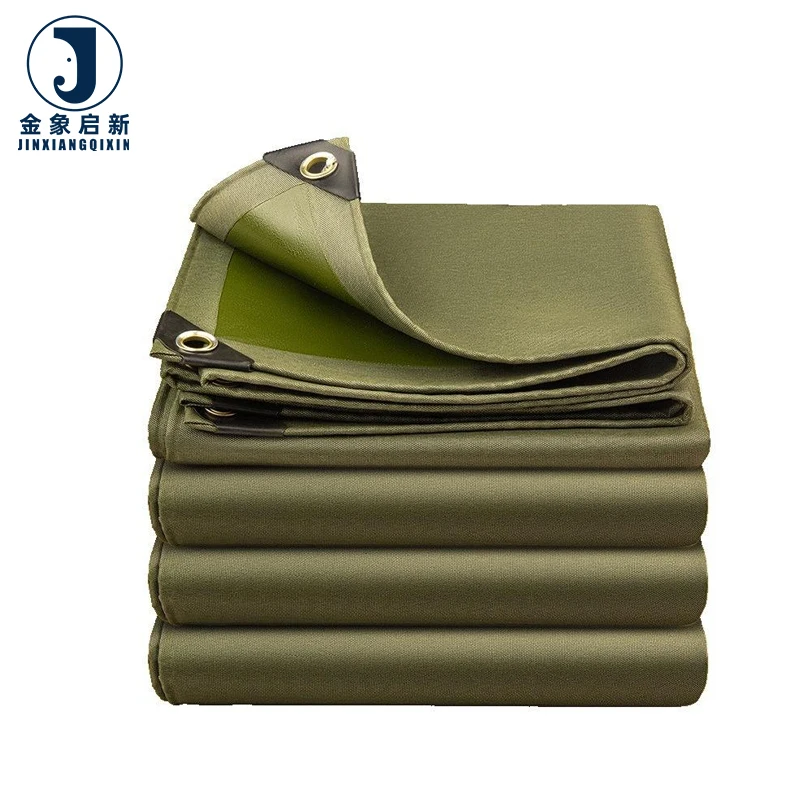
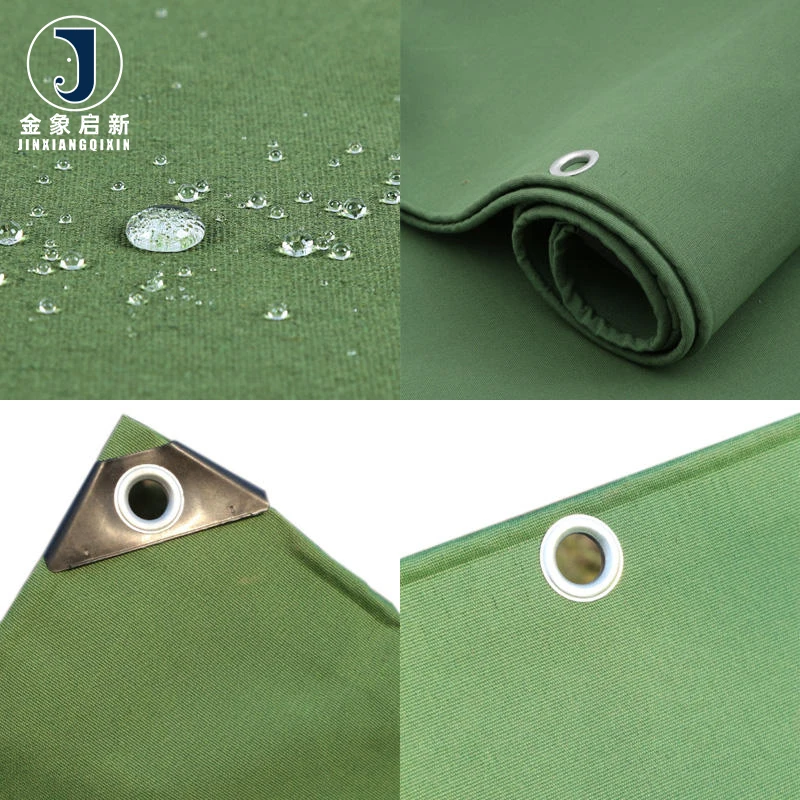
Process control depth — Coating weight and adhesion verified at every production stage on three dedicated lines, matching material properties to site-specific ventilation and membrane structure compliance requirements.
Technical Specifications
| Parameter | Value |
|---|---|
| Product Type | Canvas Tarpaulin |
| Coating Material | PVC (laminated) |
| Base Fabric | Polyester cotton industrial textile with 8–12 strands of fine cotton yarn |
| Total Thickness | 0.5mm / 0.6mm / 0.7mm |
| Weight | 600gsm |
| Roll Width | 2m |
| Roll Length | 100m |
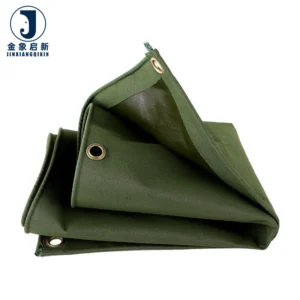
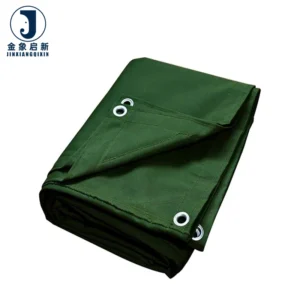
| Colour Options | Army Green Camouflage / Custom |
| Eyelets | Rust-proof aluminium, 1-metre spacing at corners and hem |
| Seam Construction | Folded and welded, sewn with poly ropes |
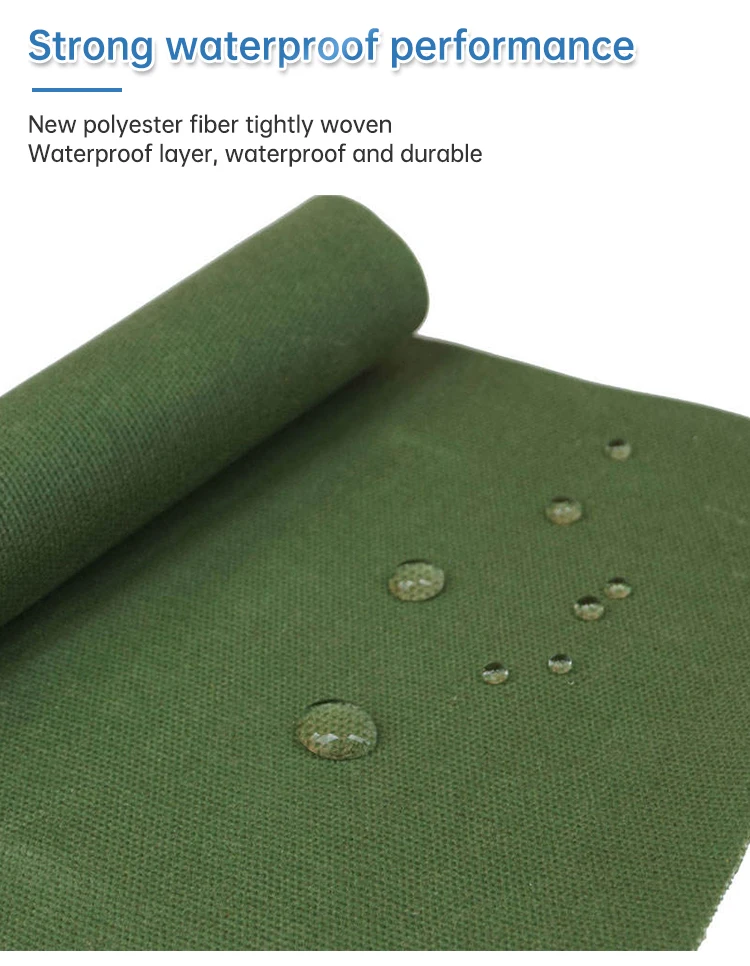
| Waterproof Rating | Waterproof (test basis not stated) |
| UV Treatment | UV resistant (test basis not stated) |
| Flame Retardant Grade | Available in flame retardant grades — confirm the grade required for your market |
| Anti-Static | Available in anti-static grades — confirm surface resistance requirement |
| Anti-Mildew | Mold resistant (test basis not stated) |
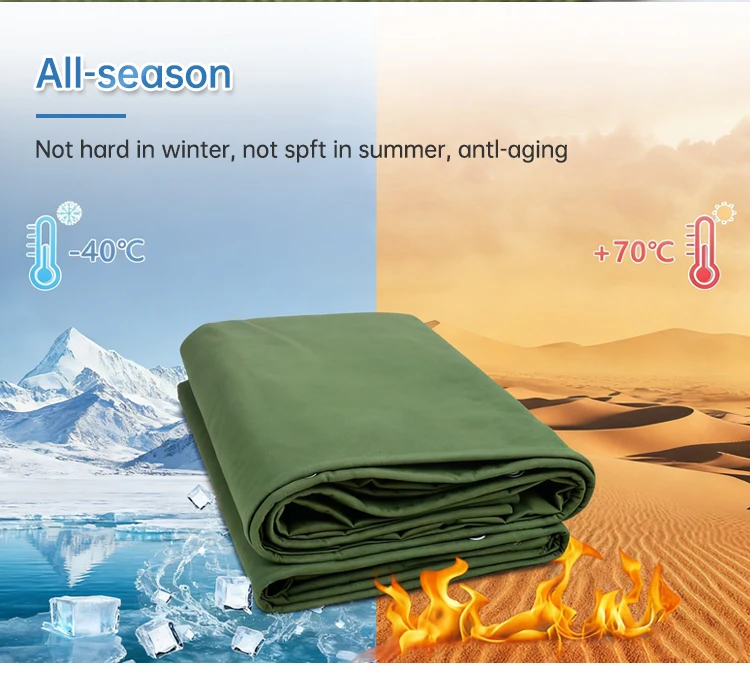
| Temperature Behaviour | High- and low-temperature resistant (specific range not stated) |
| Standards | CE, ISO (specific standard numbers not stated) |
Application Suitability
| Application | Exposure & Requirement |
|---|---|
| Mining and tunnelling ventilation ducts | Continuous airflow abrasion, particulate loading, mandatory fire-retardant and anti-static compliance on site |
| Inflatable and membrane structures | Biaxial tension, UV exposure, weld integrity at seam junctions under internal pressure |
| Aviation ground ventilation | Fuel-adjacent environment requiring verified anti-static surface resistance |
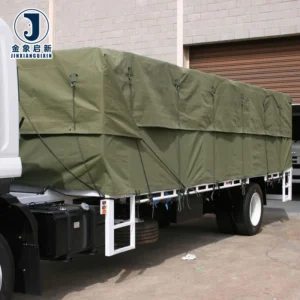
| Heavy-duty truck covers | Road debris impact, flex fatigue at tie-down points, weather exposure during transit |
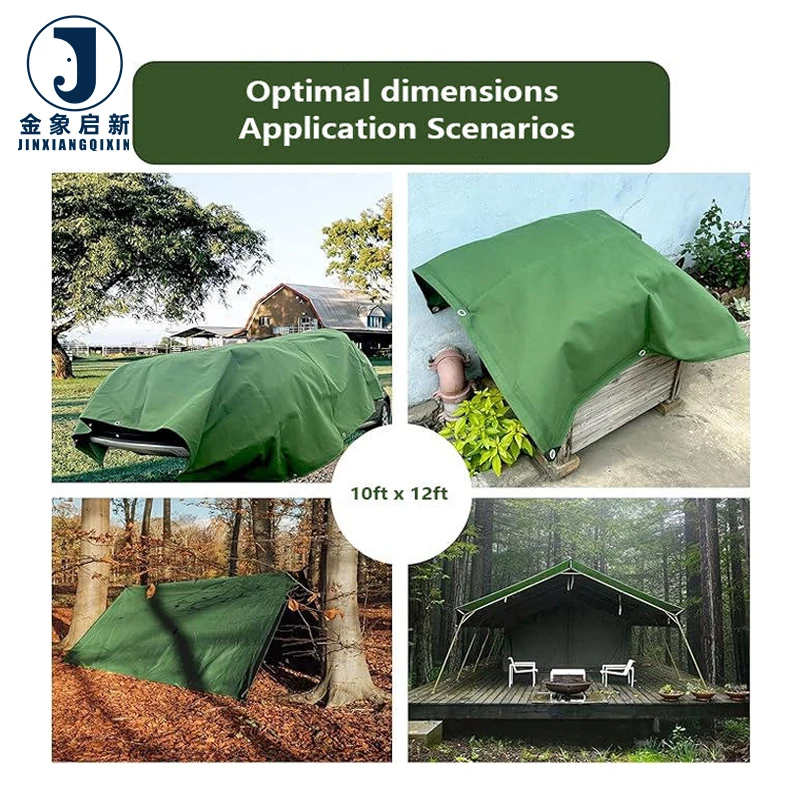
| Temporary industrial enclosures | Wind load, thermal cycling, rapid deployment and repeated folding |
Why Certified Fabric Documentation Matters More Than the Datasheet Claim
Fire-retardant or anti-static performance is only valid when a test report matches the exact standard your site inspector will check.
Ventilation duct fabric routinely arrives on mining or tunnelling sites with a datasheet that says "flame retardant" but no accompanying certificate referencing DIN 4102, NFPA 701, or M2. The compliance officer rejects the delivery, the contractor faces downtime, and the entire roll stock must be returned or re-tested at third-party cost. For PVC laminated canvas tarpaulin used in technical applications, the gap between a marketing claim and a verifiable grade is where project delays begin [NEED_CITE: DIN 4102 fire classification for building materials]. Specifying the exact standard at inquiry stage — and requiring the test report before dispatch — eliminates this failure point entirely.
Laminated Construction and Duct Fabrication Behaviour
PVC laminated canvas tarpaulin bonds the coating to the polyester-cotton base under heat and pressure, producing a fabric that holds its shape during duct spiral-forming and resists delamination at the fold lines. The 600gsm weight provides sufficient body for duct sections to maintain round profile without internal wire support over moderate spans. Fabricators working with this material report that laminated surfaces accept high-frequency welding more predictably than knife-coated alternatives, because the coating thickness is consistent across the full roll width.
Weld Integrity at Flex and Junction Points
Where ventilation ducts branch or change diameter, welded seams carry combined peel and shear loads every time the fan cycles. The poly rope reinforcement sewn into the hem distributes tie-down and suspension loads across a wider fabric area, reducing point stress that would otherwise initiate a tear. Aluminium eyelets placed at one-metre intervals match standard duct hanging bracket spacing, so load transfers directly into the reinforced hem rather than pulling through the base fabric.
Reading the Specification Sheet Beyond GSM
GSM tells you the mass per square metre but says nothing about how that mass is distributed between base fabric and coating. A 600gsm PVC laminated canvas tarpaulin with a heavier base weave and thinner laminate will tear differently than one with a lighter weave and thicker coating — even though both read the same on a scale. Base fabric denier and strand count (here, 8–12 strands of fine cotton yarn blended with polyester) govern tear propagation resistance, while the laminated PVC layer contributes waterproofing and weld receptivity [NEED_CITE: tensile and tear test methods for coated fabrics per ISO 1421]. Thickness options of 0.5mm, 0.6mm, and 0.7mm let you balance flexibility for folding against rigidity for self-supporting duct sections. Request the material specification sheet that breaks down coating weight separately from base fabric weight so you can compare products on engineering merit rather than a single number.
The Cost of Specifying on Marketing Language Alone
When a mining contractor accepts "flame retardant" without requiring the B1 or M2 certificate, the duct passes initial installation but fails the site safety audit weeks later — forcing removal, replacement, and ventilation shutdown during the rework window. Colour inconsistency between rolls in the same batch becomes visible once membrane panels are welded side by side on a temporary structure, triggering a full façade replacement at the contractor’s expense. PVC laminated canvas tarpaulin ordered without confirming anti-static surface resistance for aviation fuel-adjacent use can result in the entire duct system being flagged non-compliant during pre-commissioning inspection [NEED_CITE: anti-static surface resistance testing standards for aviation ground equipment].
What the Production Process Delivers for Technical Buyers
Three full production lines running dedicated coated fabric schedules mean roll-to-roll GSM consistency across your entire order — each roll weighed and measured before packing. The 10-person R&D team develops sample panels within days when you need to confirm weld parameters or colour match against an existing membrane structure. In-process quality checks at coating, laminating, and finishing stages catch adhesion or thickness deviation before the roll reaches slitting. One hundred percent pre-shipment inspection generates a record you can review against your purchase specification before the container leaves the factory. CE and ISO certified production provides the traceability framework your procurement system requires for approved supplier status.
Documentation & Verification
- Material specification sheet stating GSM, base fabric composition, coating method, and available thickness per roll batch
- Fire-retardant or anti-static test report referencing the specific standard required for your jurisdiction
- Pre-shipment inspection record confirming 100% roll-by-roll weight and visual check before dispatch
- Certificate of origin and customs documentation package for cross-border compliance clearance
- ISO and CE production certificates supporting approved vendor registration in your procurement portal
Fabrication, Handling & Storage
- Set high-frequency welder dwell time to suit the 0.5mm–0.7mm laminate thickness range to avoid burn-through or cold welds
- Sew poly rope into hems before eyelet pressing to distribute load across the 600gsm base fabric weave
- Store rolls upright on pallets in a shaded, ventilated area to prevent flat-spot creasing on the laminated surface
- Allow cold-stored rolls to acclimatise before unrolling to prevent coating micro-cracking in low temperatures
- Use mild detergent only for cleaning — solvents can soften the laminated PVC layer and reduce peel strength
- Plan cutting layout around the 2m roll width to minimise transverse welds and reduce seam count on large duct sections
What to Include in Your Inquiry
Provide the ventilation duct diameter, section length, and the fire-retardant or anti-static standard your site inspector will audit against. State whether you need roll stock for your own fabrication line or finished duct sections with welded flanges and hanging eyelets. Include your annual volume estimate and target colour so we can confirm lead time and minimum order for custom runs.
Frequently Asked Questions
Q: Which fire-retardant or anti-static certifications can be supplied for mining and tunnelling compliance?
A: We supply test reports matched to standards such as DIN 4102, NFPA 701, or M2 depending on your jurisdiction. Specify the exact standard at inquiry stage so the correct formulation is produced and the certificate accompanies your shipment documentation package.
Q: How is GSM verified on arrival against the quotation?
A: Every roll undergoes a weight check during the pre-shipment inspection and the recorded value is logged in the inspection report. On arrival you can cross-reference the roll label against this report to confirm the 600gsm specification was met before the material left the factory.
Q: What is the difference between laminated and knife-coated construction for duct and membrane use?
A: Laminated PVC bonds the coating to the base fabric under heat and pressure, giving consistent thickness and predictable high-frequency weld behaviour. Knife-coated fabric offers thicker single-layer coatings. The choice depends on your welding method, flexibility requirement, and the duct forming process used on your production line.
Q: How are welded seams tested for peel strength before shipment?
A: Sample welds are pulled on a peel tester during in-process quality checks to confirm adhesion meets the target threshold for the specified thickness. The pre-shipment inspection record includes these results so you can verify seam performance before accepting delivery.
Q: Can custom width, colour, and roll length be produced, and what are the minimums?
A: Custom colour matching and non-standard roll lengths are available through our R&D team with samples developed within days. Minimum order quantities depend on the specific colour and width requested — include these details in your inquiry so we can confirm production feasibility and lead time.