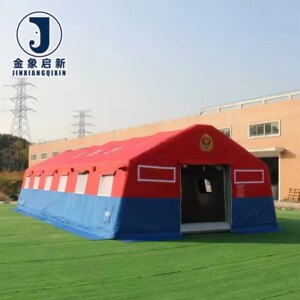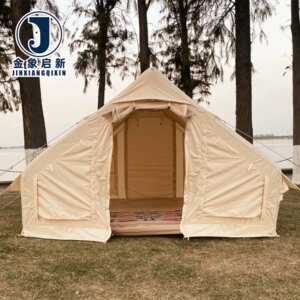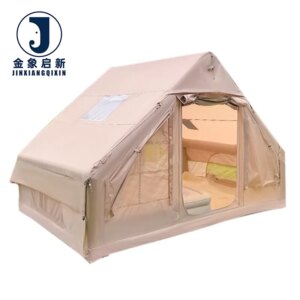
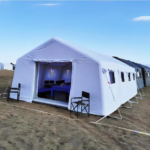

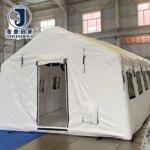
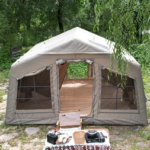
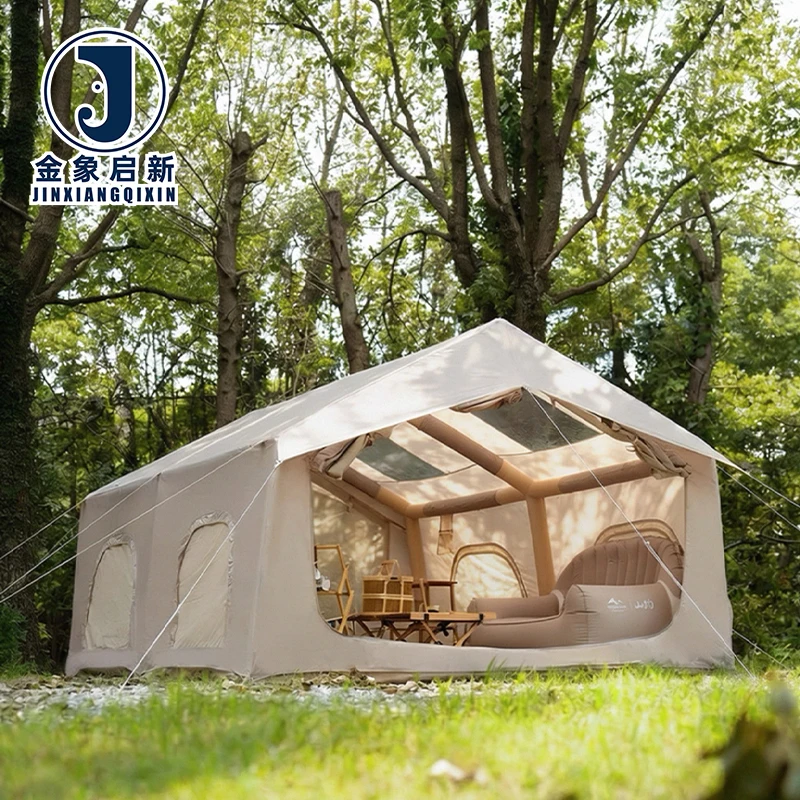
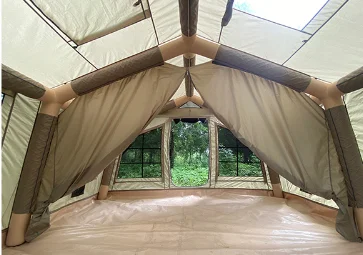
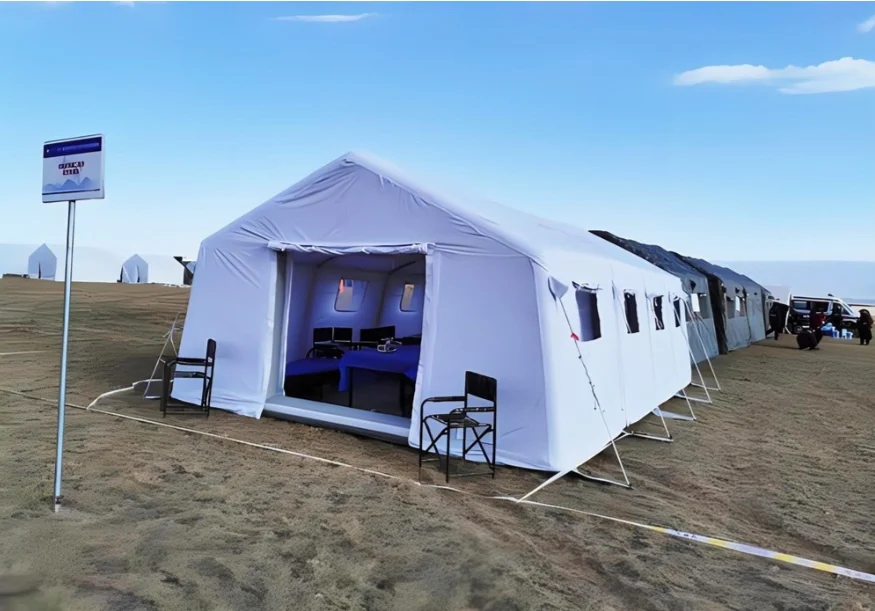
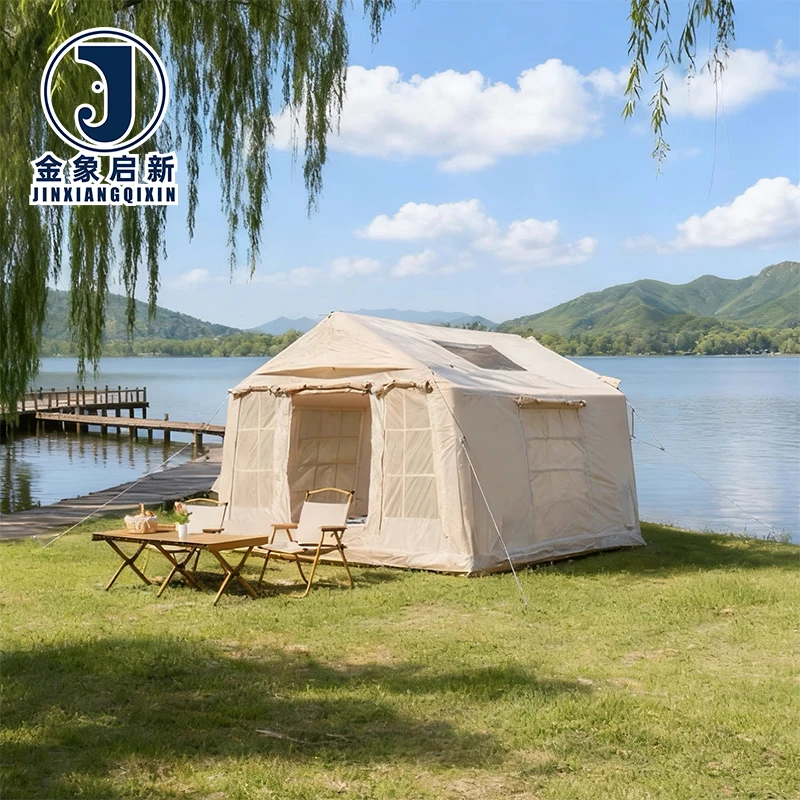
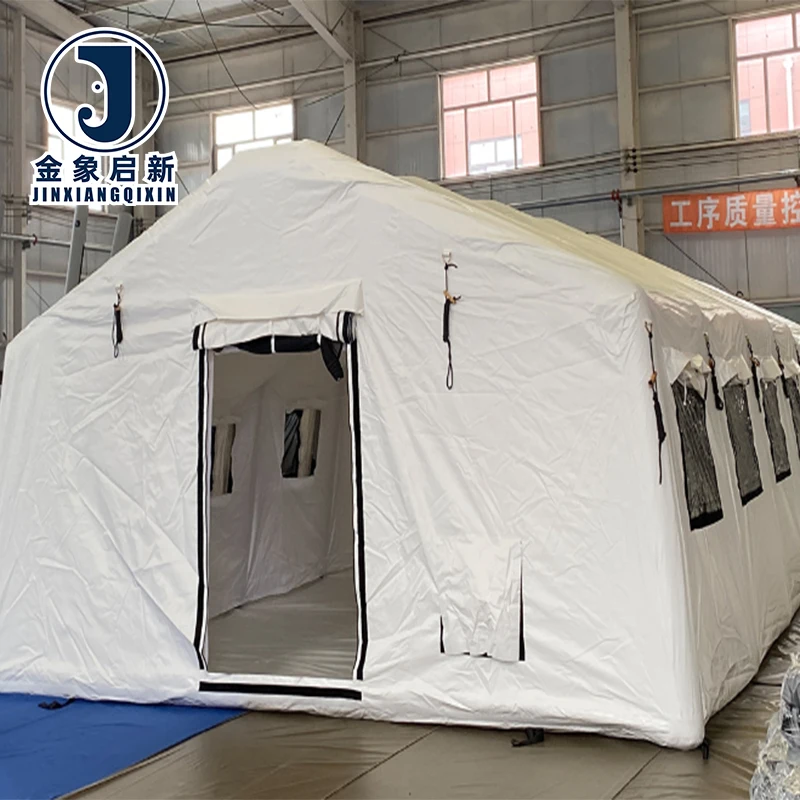
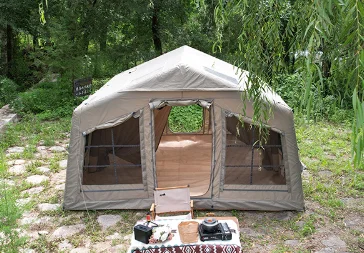
Material Consistency Engineered for Specialist Structures — our QA team inspects coating weight and adhesion at every production stage, ensuring inflatable tent fabric performs predictably across batches and projects.
Technical Specifications
| Parameter | Value |
|---|---|
| Product Type | Inflatable Tent |
| Core Material | PVC tarpaulin |
| Product Forms | Inflatable structure with automatic opening mechanism |
| Capacity | 1–12 Person |
| Construction | Single layer |
| Waterproof | Fully waterproof coated construction |
| UV Resistance | UV-resistant (test basis not stated in source — confirm grade required for your market) |
| Fire Retardancy | Fire-retardant (grade not stated in source — confirm grade required for your market) |
| Anti-Static | Anti-static (grade not stated in source — confirm grade required for your market) |
| Tear Resistance | Tear-resistant PVC membrane |
| Certification | ISO9001, ISO14001, ISO45001, CE |
| Customization | OEM & ODM with sample customization and pattern printing |
Application Suitability
| Application | Exposure & Requirement |
|---|---|
| Construction site operations | Continuous outdoor exposure, dust, mechanical abrasion, rapid deployment between phases |
| Emergency response preparedness | Immediate shelter deployment, unpredictable weather, remote logistics constraints |
| Mining and tunnelling ventilation zones | Proximity to electrical equipment, combustible atmosphere, fire-retardant and anti-static compliance |
| Outdoor event management | Frequent setup and teardown cycles, UV exposure, guest safety standards |
| Industrial storage in remote locations | Prolonged weathering, wind load on inflated structure, equipment protection |
| Temporary facility setup | Fast commissioning without permanent infrastructure, thermal and weather isolation |
Why Certified Fabric Matters More Than Tent Geometry for Disaster-Relief Shelters
An inflatable tent is only as reliable as the membrane it is made from.
Procurement teams sourcing shelters for disaster relief and remote-site operations often focus on capacity ratings and deployment speed, yet the fabric specification determines whether the structure survives its first storm or passes a site safety audit. I have reviewed too many project post-mortems where uncertified PVC tarpaulin failed a fire inspection on arrival, forcing an entire camp to be re-equipped at significant cost and delay. When fire-retardant and anti-static grades are claimed without supporting documentation, the risk transfers entirely to the buyer. [NEED_CITE: fire classification standards for temporary industrial shelters]
Fire-Retardant and Anti-Static Compliance in Hazardous Zones
Inflatable tent structures deployed near mining faces, tunnelling portals, or aviation fuel staging areas must meet the fire-retardant and anti-static standards enforced on those sites. The PVC tarpaulin membrane used in this inflatable tent manufacturer custom programme is available in treated grades designed to address these requirements, though the exact classification depends on the destination market and the enforcing authority. Buyers should confirm the specific standard—whether NFPA 701, DIN 4102, or a local mining regulation—before placing a production order.
Rapid Deployment Without Compromising Structural Integrity
The automatic opening mechanism reduces on-site manpower during commissioning, but the PVC tarpaulin must also tolerate the stresses of inflation and sustained internal pressure without seam creep or coating delamination. A single-layer construction keeps packed weight manageable for air-freight and remote logistics, while the waterproof coated surface prevents moisture ingress during extended occupation. This combination supports emergency response teams who need a functional shelter within hours rather than days. [NEED_CITE: tensile and tear test methods for coated fabrics per ISO 1421]
Membrane Material Science Behind Inflatable Performance
PVC tarpaulin achieves its waterproof and tear-resistant characteristics through the interaction of the base fabric weave and the coating applied to both faces. The base fabric denier and thread count determine how a puncture or tear propagates under load—a tightly woven high-denier yarn resists tear extension far better than a loosely woven alternative at the same weight. Coating adhesion to the base fabric is equally important for inflatable structures: if the PVC layer separates from the yarn under sustained pressure, the membrane loses its airtight integrity and the structure deflates. Glossy or matte surface finishes are available, and the choice affects cleaning behaviour, print adhesion, and how the membrane responds to prolonged UV exposure. Buyers specifying an inflatable tent for harsh environments should request the base fabric specification alongside the coating weight to assess overall membrane durability.
The Hidden Cost of Specifying Without Verification
When fire-retardant treatment is claimed on a quotation but no test report accompanies the shipment, the inflatable tent may be rejected at the site gate—delaying an entire relief operation or forcing a last-minute replacement at premium freight cost. Similarly, anti-static properties that are not verified can create ignition hazards in environments with combustible dust or vapour. Batch-to-batch colour variation in the PVC tarpaulin membrane also becomes visible when multiple shelters are erected side by side at a base camp, undermining a professional appearance and suggesting inconsistent material sourcing. These failures trace back to a supplier who did not integrate quality verification into every production stage. [NEED_CITE: DIN 4102 fire classification for building materials]
Why Source Inflatable Tent Fabric Through This Programme
Nearly 30 years focused on coated fabric production means our coating weight and adhesion processes are controlled from the first metre to the last, keeping inflatable tent membrane performance consistent across large orders. A 10-technician R&D team handles material selection, pattern printing, and custom sizing, developing samples within days so you can validate the design before committing to bulk production. Three full production lines with 36 sets of professional equipment provide the capacity to fulfil large-scale disaster-relief tenders without sacrificing the in-process QA checks that catch defects early. Dedicated QA and QC staff conduct 100% pre-shipment inspection, generating a batch-specific report so you know the fire-retardant, anti-static, and physical properties of the exact rolls you receive.
Documentation & Verification
- Material specification sheet stating base fabric denier, coating weight, and PVC tarpaulin construction details
- Fire-retardant and anti-static test reports matching the grade required by your site authority
- Batch-specific quality inspection record covering coating adhesion and visual defects per roll
- ISO9001, ISO14001, ISO45001, and CE certificates supporting international procurement and compliance audits
- Certificate of origin and customs documentation for cross-border shipment clearance
- Roll packing list with dimensions and weights for container loading planning
Fabrication, Handling & Storage
- Heat-weld seams using temperature and dwell settings validated for the specific PVC tarpaulin coating weight to prevent delamination under inflation pressure
- Reinforce air-inlet and anchor-point zones with additional PVC tarpaulin patches to distribute stress across the single-layer membrane
- Store inflated or deflated shelters away from sharp objects and direct ground contact to protect the waterproof coated surface
- Avoid folding the PVC tarpaulin membrane at the same crease line repeatedly to prevent coating crack propagation over time
- Use mild, non-solvent cleaners on the membrane surface to preserve the fire-retardant and anti-static treatment integrity
- Allow the PVC tarpaulin to acclimatise to ambient temperature before inflation in cold climates to reduce low-temperature stiffness
Request a Project-Specific Quotation
Provide your intended application environment, the fire-retardant or anti-static standard enforced at the deployment site, and the required capacity and dimensions so we can recommend the appropriate PVC tarpaulin specification. If colour matching or pattern printing is needed for branding or site identification, share reference samples or Pantone values early in the process. Let us know whether you require finished inflatable tent units or roll-stock fabric for your own fabrication line, and whether a pre-production sample is needed for engineering approval.
Frequently Asked Questions
Q: Does the tent fabric carry valid fire-retardant and anti-static certification for my site?
A: The PVC tarpaulin membrane is available in fire-retardant and anti-static treated grades. The specific test standard and classification depend on the enforcing authority at your site. Share your compliance requirements during the inquiry stage so we can confirm the applicable grade and provide the matching test report with your shipment documentation.
Q: Can size, capacity, and colour be customized for a specific project?
A: Yes. Our 10-technician R&D team supports full OEM and ODM customization including dimensions, capacity layout, colour, and pattern printing. We develop a physical sample for your approval before mass production begins, ensuring the inflatable tent meets your engineering and visual requirements.
Q: What documentation is included for customs clearance and compliance verification?
A: Each shipment includes a material specification sheet, batch-specific inspection report, ISO9001, ISO14001, ISO45001, and CE certificates, certificate of origin, and a detailed roll packing list. Additional documentation can be arranged to meet specific import regulations in your destination market.
Q: How long does sample development take before bulk production?
A: Customized samples are typically developed within days once the PVC tarpaulin specification, dimensions, and any printing requirements are confirmed. This rapid turnaround allows procurement teams to validate design and performance before committing to full production volumes.
Q: What is the recommended storage and handling procedure to preserve material performance?
A: Store the PVC tarpaulin membrane in a dry, shaded environment away from sharp objects and chemical solvents. Avoid repeated folding at identical crease lines. Before deployment in cold conditions, allow the material to reach ambient temperature to maintain coating flexibility and inflation reliability.