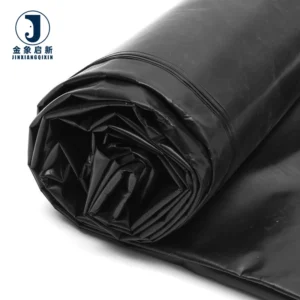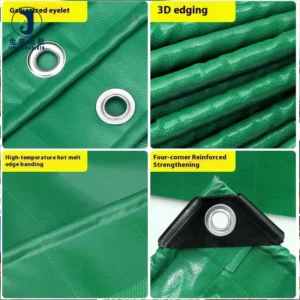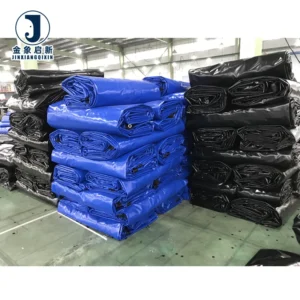
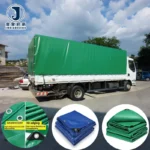

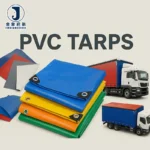
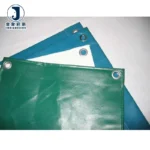
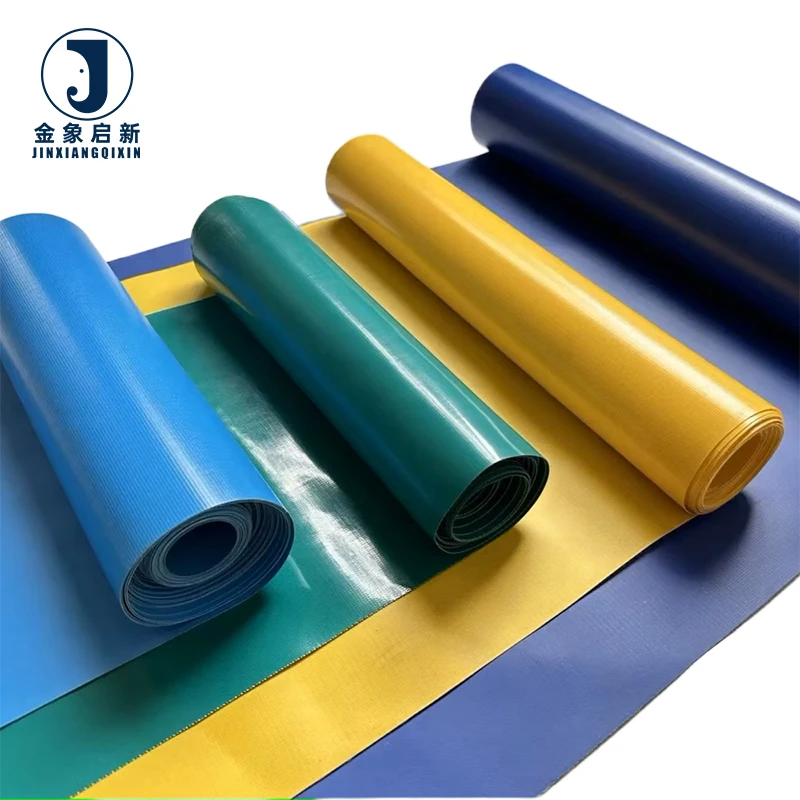
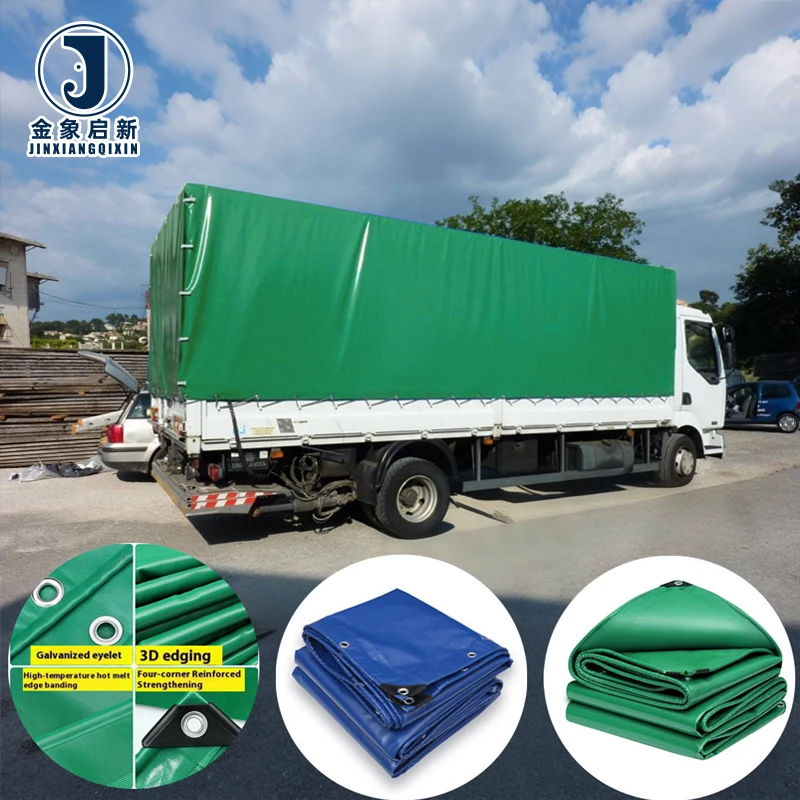
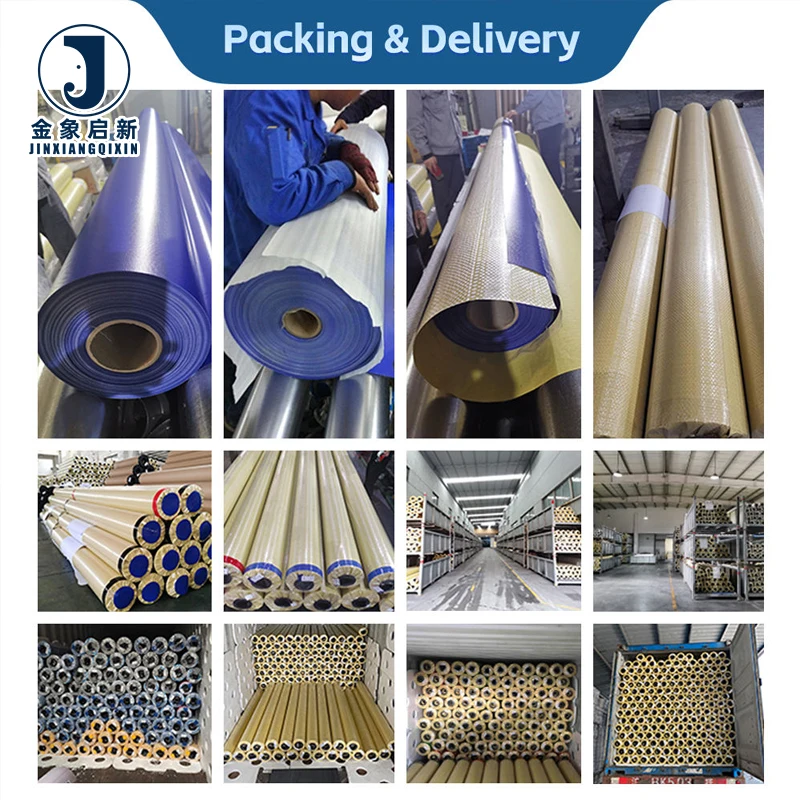
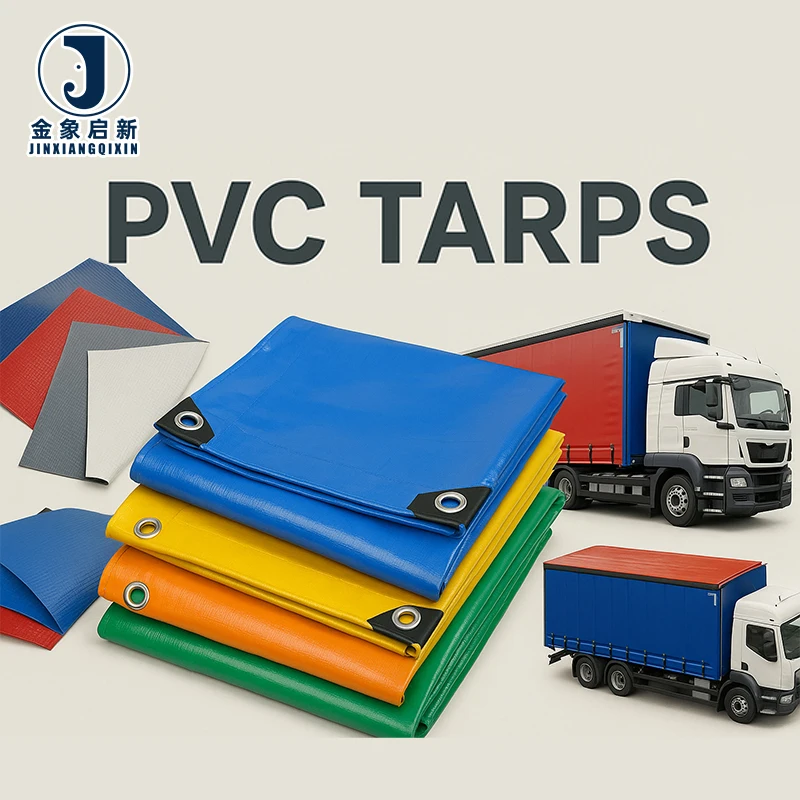
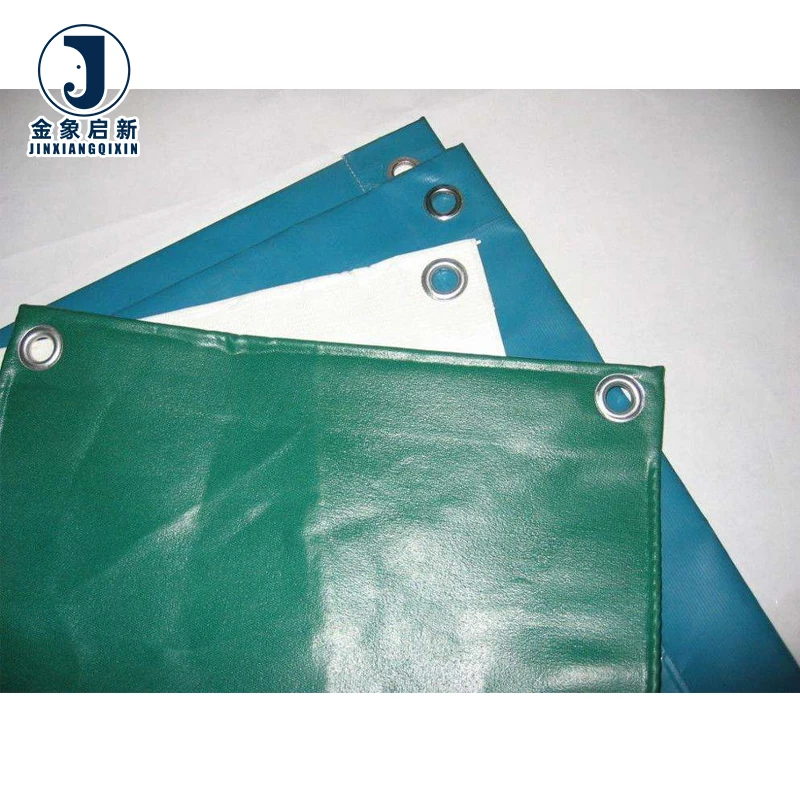
Deep Process Control on Coating — every roll of fire retardant PVC tarpaulin we produce carries a test report matched to your site specification, verified before dispatch.
Technical Specifications
| Parameter | Value |
|---|---|
| Product Type | PVC Coated Tarpaulin |
| Weight (GSM) | 250gsm-1500gsm |
| Base Fabric Denier | 200DX300D / 500DX500D / 840DX840D / 1000DX1000D |
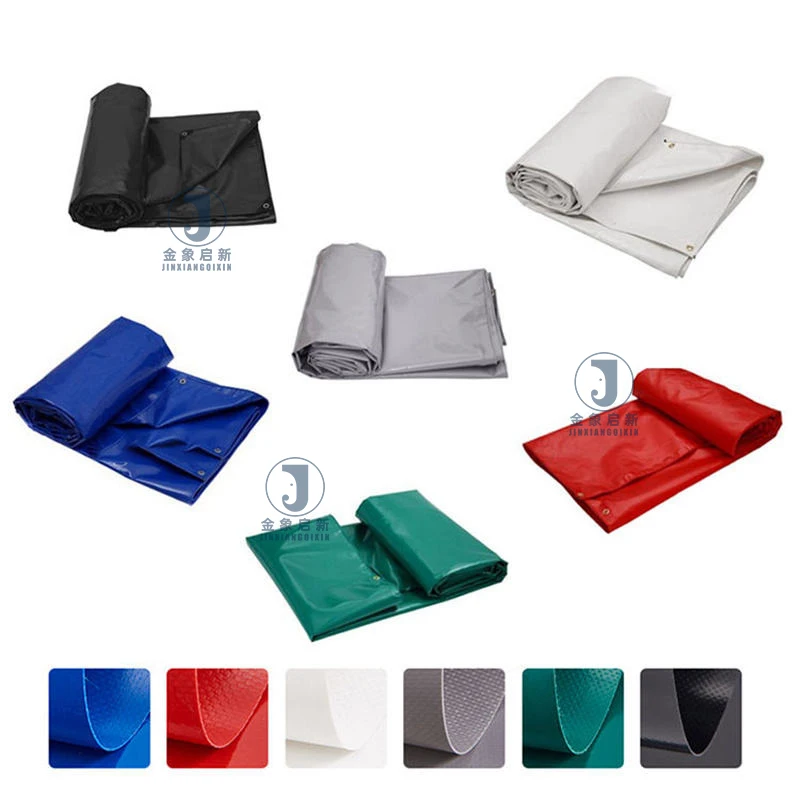
| Surface Finish | Glossy or matte (available per project) |
| Temperature Range | -15°C to 70°C |
| Treatment Options | Waterproof, UV treated (test basis not stated in source — confirm standard required), flame retardant (grade not stated — confirm with engineering), anti-fungal |
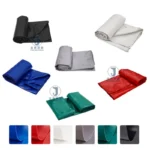
| Available Colors | Blue, yellow, black, green, white, and custom colours |
| Custom Sizing | Rolls supplied in custom width and length; cut sizes available |
| OEM / ODM | Accepted |
| Certifications | ISO, CE |
Application Suitability
| Application | Exposure & Requirement |
|---|---|
| Mining and tunnelling ventilation duct | Continuous airflow, dust loading, fire safety compliance underground |
| Aviation hangar temporary ducting | High-volume air movement, fuel-proximate environment, documented FR certification |
| Inflatable and membrane structures | Biaxial tension, UV exposure, aesthetic finish requirements |
| Heavy-duty industrial air duct | Positive and negative pressure cycling, flex fatigue at joints and bends |
| Specialist containment barriers | Chemical splash resistance, site safety inspection compliance |
Why a Fire Retardant PVC Tarpaulin Roll Without Certification Is a Liability on Site
Fabric that arrives without a matching test report is fabric your site inspector will reject.
Ventilation duct and membrane fabric are among the most frequently rejected materials at pre-commissioning inspection. The specification calls for a fire retardant PVC tarpaulin roll, but the documentation package is missing the test certificate or carries a grade that does not align with the local fire code. The result is a halted installation, a delayed handover, and a procurement team scrambling for replacement material. [NEED_CITE: common fire safety compliance standards for industrial ventilation materials]
The core issue is not the fabric itself — it is the gap between what was quoted and what can be proven. A material may carry flame retardant treatment during production, yet without a test report referencing an identifiable standard, the treatment is an unverified claim. Technical buyers specifying for aviation, mining, or tunnelling projects cannot accept verbal assurance. The fire retardant PVC tarpaulin roll must ship with documentation that names the standard, the grade achieved, and the test laboratory.
Duct Fabrication Demands More Than a Generic Coated Roll
Industrial ventilation duct operates under conditions that generic tarpaulin was never designed to handle. The fabric must survive continuous pressure cycling, resist flex fatigue at every welded seam, and maintain dimensional stability across temperature swings. A fire retardant PVC tarpaulin roll intended for duct fabrication must therefore be selected not only for its flame performance but for its base fabric construction and coating adhesion.
The denier of the base yarn — ranging from 200DX300D for lighter duct applications up to 1000DX1000D for heavy mining ventilation — determines how the fabric behaves under tensile load and how it resists tear propagation once a puncture occurs. Coating weight and the bond between coating and base fabric control whether a heat-welded seam holds or peels under sustained airflow pressure. [NEED_CITE: relationship between base fabric denier and coated fabric tensile performance per ISO 1421]
Selecting the Right Grade for Your Compliance Environment
Different project environments demand different fire performance grades. A mining ventilation duct in Australia references a different test standard than an aviation hangar duct in Europe. The fire retardant PVC tarpaulin roll you specify must align with the exact standard your compliance authority requires — and the test report must name that standard explicitly, not a loosely equivalent one.
Beyond fire performance, anti-fungal treatment matters in duct applications where condensed moisture accumulates on internal surfaces. Fungal growth on the interior face of a ventilation duct reduces airflow efficiency and creates hygiene concerns in occupied spaces. Available treatments can be confirmed with the engineering team to match your project’s environmental conditions. Our 10-person R&D team handles material selection and sample development, typically turning around samples within days so you can verify colour, finish, and hand feel before committing to a production run. [NEED_CITE: anti-fungal treatment standards for ventilation duct fabrics]
What Base Fabric Denier and Coating Weight Actually Control
GSM alone tells you how much material is on the roll, but it does not tell you how that weight is distributed between base fabric and coating. A roll with a heavier coating but a lighter base yarn will feel substantial yet tear more easily than a roll with a balanced construction. The 200DX300D option suits lighter duct and membrane work where flexibility and handling speed matter. The 840DX840D and 1000DX1000D constructions serve high-pressure mining and tunnelling ducts where tensile load and tear resistance are non-negotiable.
Coating method influences weld behaviour. Knife-coated fabrics typically show stronger coating-to-yarn adhesion, which translates to heat-welded seams that fail at the fabric body rather than peeling at the joint. This matters directly in duct fabrication, where every longitudinal seam carries continuous stress. The temperature range of -15°C to 70°C sets the operating envelope: below the lower limit, the PVC coating stiffens and becomes susceptible to crack propagation; above the upper limit, the coating softens and seam strength drops.
Finish selection — glossy or matte — affects both fabrication and end use. Glossy surfaces shed dust and condensation more readily inside duct runs, while matte finishes reduce glare and accept printed markings more effectively on membrane structures.
The Cost of Specifying Without Verifying
A duct fabric that passes initial visual inspection but fails fire performance testing on site does not just cost the price of replacement material. It costs the downtime of an installation crew standing idle, the rescheduling of a commissioning window, and the reputational damage of a failed inspection recorded against your project. [NEED_CITE: project delay costs from non-compliant material delivery]
Colour inconsistency between rolls in the same shipment creates a secondary problem on membrane and inflatable structures, where panels sit side by side and any shade variation is immediately visible once installed. Batch consistency is not an aesthetic preference — it is a condition of acceptance on most specialist structure projects.
Welded seams that fail before the fabric body does represent the most common field failure in fabricated duct. The root cause is frequently a mismatch between welding temperature and coating formulation, something that can only be resolved when the supplier controls both coating and fabrication parameters and provides test-verified guidance.
What Jinan Jinxiang Brings to Technical Fabric Supply
Nearly 30 years of focused production on coated fabric gives us process control over coating weight and adhesion that newer operations cannot replicate. Each fire retardant PVC tarpaulin roll is produced on one of three full production lines supported by 36 sets of professional equipment, providing the capacity to fulfil bulk orders without sacrificing consistency.
Our dedicated QA and QC function inspects at every production stage, with 100% pre-shipment inspection recorded before any roll leaves the facility. The 10-person R&D team works directly with your specification, handling material selection, sample development, and custom sizing. For technical buyers, this means the material you test and approve is the material you receive — verified by documented inspection, not assumption.
Documentation & Verification
- Material specification sheet stating GSM, base fabric denier, and coating type for each roll
- Fire retardant test report with applicable standard and grade supplied per batch
- Anti-fungal and UV treatment confirmation aligned to your project specification
- Pre-shipment inspection record with roll-by-roll weight verification before dispatch
- ISO and CE certificates included in the shipping documentation package
- Roll packing list and certificate of origin for customs clearance support
Fabrication, Handling & Storage
- Heat-weld seams at temperatures matched to the specific GSM and coating formulation of your roll
- Store rolls upright on cores to prevent flat-spot creasing on glossy or matte surfaces
- Allow cold-stored rolls to reach ambient temperature before unrolling to avoid coating crack
- Use compatible PVC-based adhesives for field repairs on coated surfaces
- Plan cut patterns to maximise roll width utilisation and minimise welded seam count
- Handle 840DX840D and 1000DX1000D rolls with mechanical lifting due to roll weight
Before You Enquire — What We Need From You
Provide the specific fire performance standard and grade your project requires, along with the applicable test method. Confirm whether you need rolls only or fabricated duct sections, the required roll width and length, and the annual volume to align production scheduling. If your application demands anti-static surface resistance for mining or explosive atmosphere compliance, state the required ohm range so we can confirm treatment availability and testing scope.
Frequently Asked Questions
Q: What fire retardant standard does the fabric meet, and can you provide the test certificate?
A: Available flame retardant grades depend on the specific formulation and target market. We supply a test report referencing the applicable standard with each batch. Confirm the standard required by your project — such as a local building code or mining regulation — and our engineering team will match the grade and provide documentation before dispatch.
Q: Can the duct fabric be supplied with anti-static treatment and certified surface resistance?
A: Anti-static treatment is available for applications in mining, tunnelling, and explosive atmosphere environments. Surface resistance testing can be arranged to verify compliance with your site specification. Provide the required ohm range and applicable standard in your enquiry so we can confirm treatment availability and include the test certificate in your documentation package.
Q: How is GSM verified before shipment against the quotation specification?
A: Every roll undergoes 100% pre-shipment inspection, including weight verification measured against the stated GSM on the material specification sheet. Inspection records are documented and available for review. This ensures the material arriving at your facility matches the grade you approved during sample confirmation.
Q: What roll widths and lengths are available for duct fabrication production runs?
A: Custom widths and lengths are produced to your fabrication requirements. Our production lines support a range of roll dimensions to minimise waste and reduce welded seam count in your duct layout. Provide your required width, length, and annual volume so we can confirm lead time and production scheduling.
Q: How do you control colour consistency across multiple rolls in the same order?
A: Colour matching is managed through controlled pigment formulation and in-process inspection at the coating stage. Rolls within the same production batch are compared side by side before packing. For membrane and inflatable structure applications where panels are installed adjacent, we recommend confirming the colour reference with a physical sample before full production.