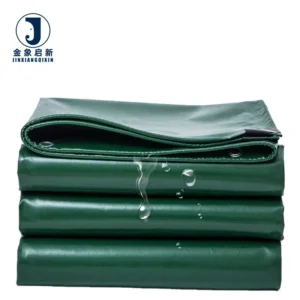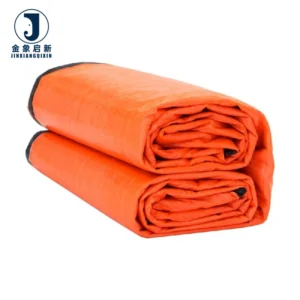
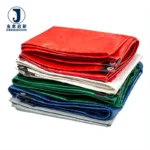
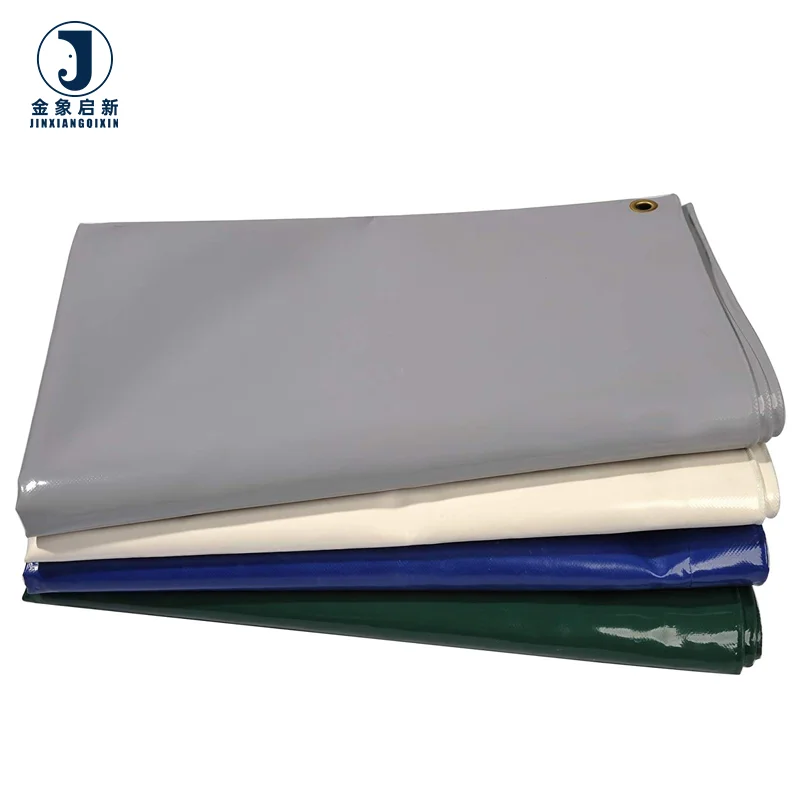
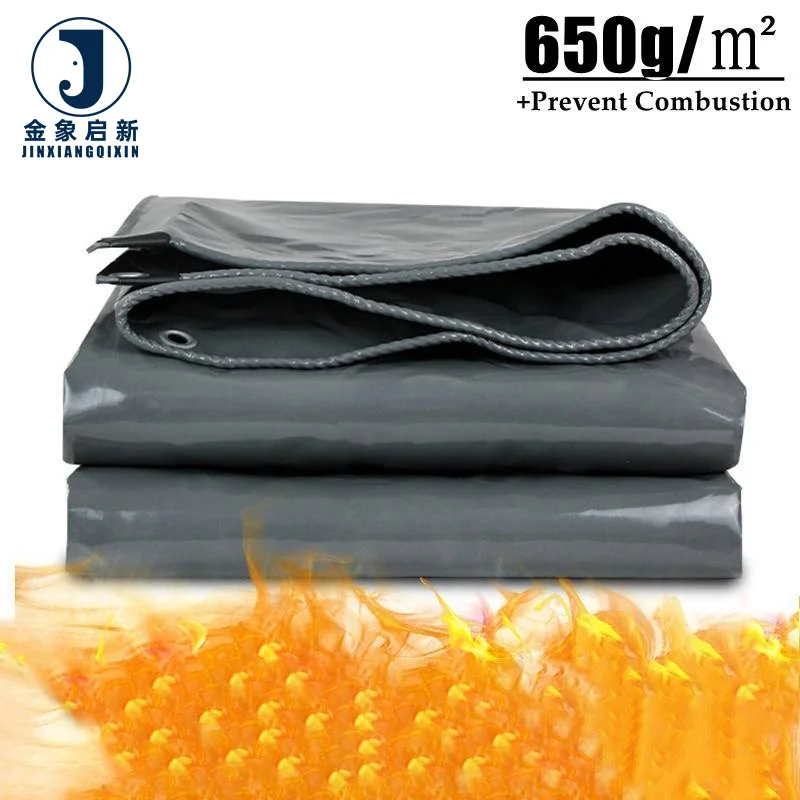
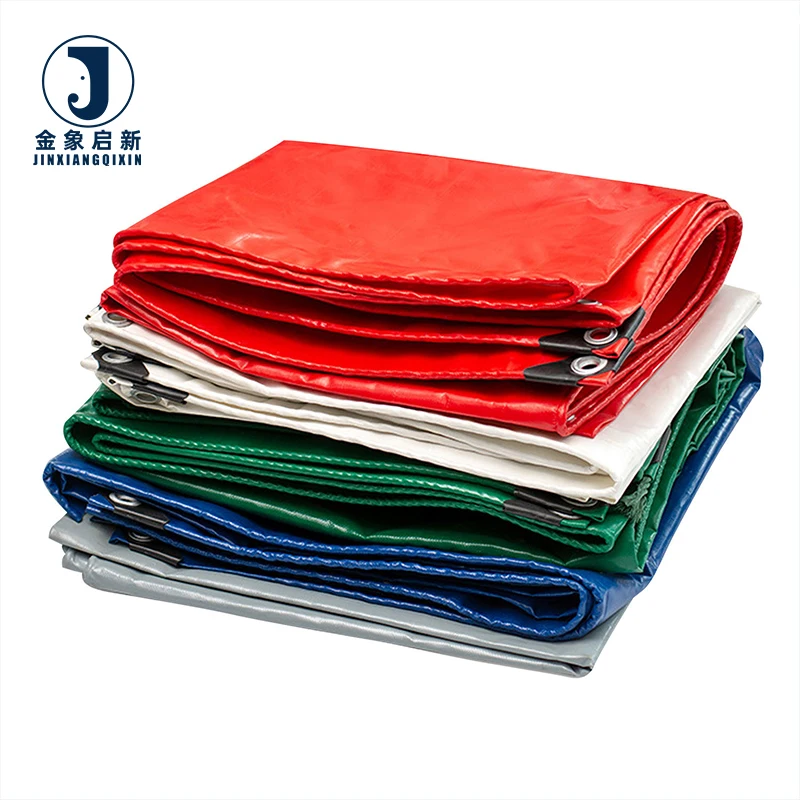
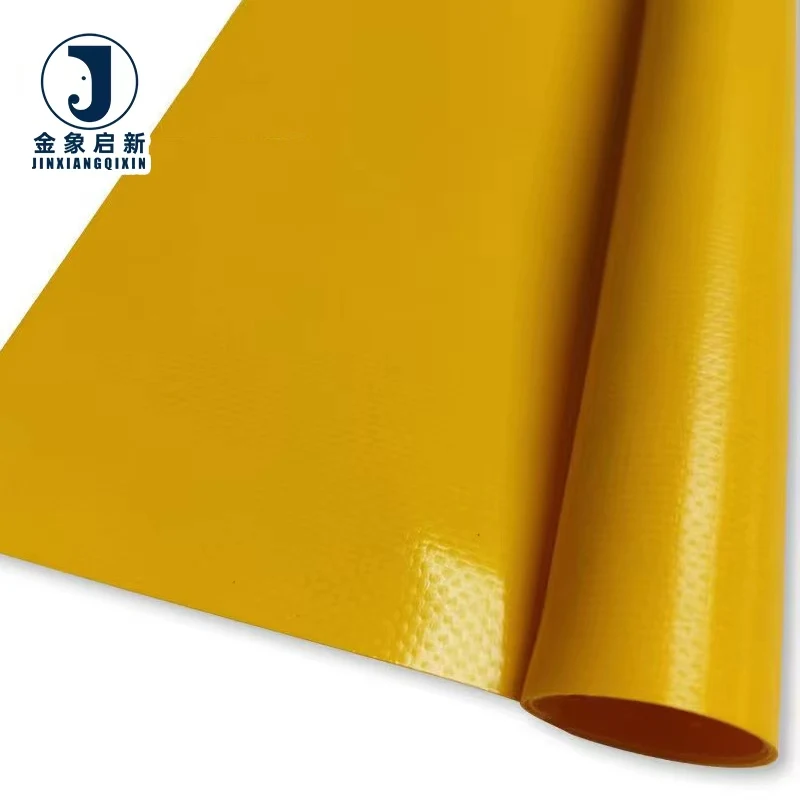
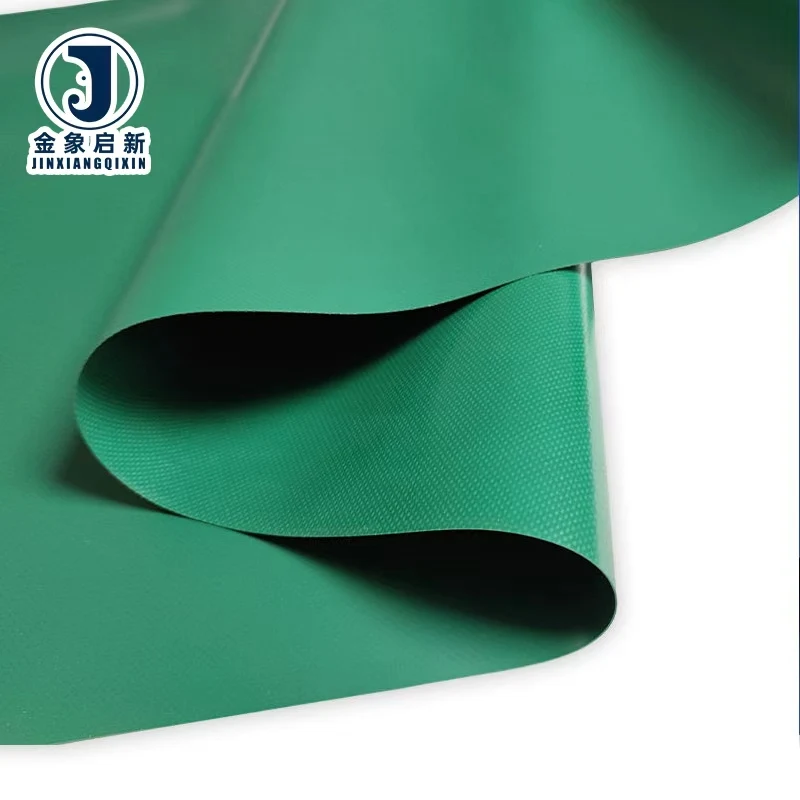
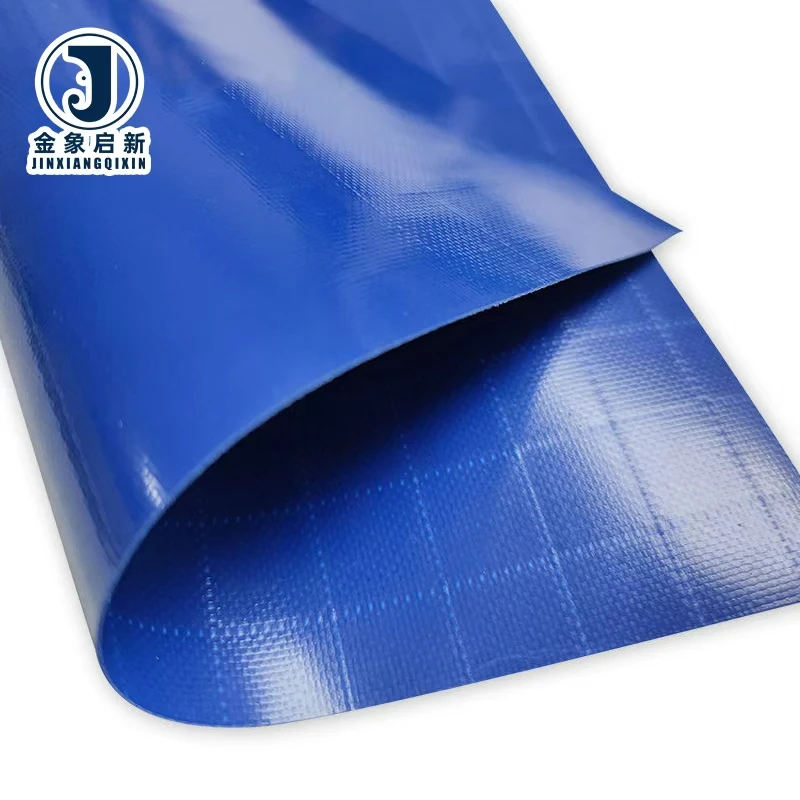
Coated Fabric Expertise — nearly three decades of PVC coating process control applied to every roll of this flame-retardant tarpaulin, verified stage by stage before dispatch.
Technical Specifications
| Parameter | Value |
|---|---|
| Product Type | PVC Coated Tarpaulin |
| Base Yarn Options | 500D×500D / 500D×840D / 500D×1000D / 1000D×1000D / 1000D×1300D / 1300D×1300D / 1000D×2000D |
| Weight Range | 350 g/m² ~ 900 g/m² (confirm the grade for your application) |
| Total Thickness | 0.29 mm ~ 0.65 mm |
| Mesh Count | 30×19 / 20×20 / 30×15 |
| Coating Material | PVC & Polyester |
| Tensile Strength (Warp) | 1650 N ~ 3900 N (test standard to be confirmed) |
| Tensile Strength (Weft) | 1600 N ~ 3500 N (test standard to be confirmed) |
| Flame Retardant Grade | Available in flame-retardant grades — confirm the grade required for your market (e.g. M2, B1, NFPA 701, DIN 4102) |
| UV Treatment | Available with UV stabilisation — confirm test basis for your specification |
| Waterproof Rating | Fully waterproof coated construction (hydrostatic rating to be confirmed) |
| Brittle Temperature | ≤ −50 ~ −60 ℃ |
| Softening Temperature | ≥ 80 ℃ |
| Melting Point | 212 ℃ |
| Edge Treatment | High-temperature heat-sealed seamless edge wrapping |
| Eyelet | 3 cm enlarged aluminium alloy buttonhole |
| Rope | 5 mm thick rope, continuous without splicing |
| Corner Reinforcement | Reinforced corners on all sides |
| Key Features | Water resistant, flame retardant, anti-UV, waterproof |
| Certifications | ISO / CE |
Application Suitability
| Application | Exposure & Requirement |
|---|---|
| Mining & tunnelling ventilation ducts | Continuous airflow, fire-safety compliance, anti-static surface resistance |
| Aviation facility air duct construction | Strict flame-retardant certification, large-span duct forming |
| Membrane & inflatable structures | Permanent tension, certified flame performance, weather exposure |
| Truck and trailer covers | Road abrasion, flex fatigue at tie-down points, weather resistance |
| Tent and canopy fabrication | Flame code compliance for public assembly, UV and rain exposure |
| Machine and equipment covers | Dust ingress, outdoor weathering, abrasion from handling |
What a Flame-Retardant Claim Really Costs Without a Test Report
A fire classification on paper only matters when it matches the inspector’s checklist.
Buyers of industrial ventilation fabric routinely receive quotations that state "flame retardant" without naming the grade or the test method behind it. When the site safety officer asks for a DIN 4102 or NFPA 701 certificate at handover, the paperwork does not exist, and the entire duct installation faces rejection. This is one of the most frequent disputes in technical fabric procurement [NEED_CITE: DIN 4102 fire classification for building materials]. PVC Coated Tarpaulin fire retardant specifications must be tied to the exact standard the project demands, not a vague marketing term. Without that link, the fabric may pass a basic ignition test in the lab yet fail the classification the building code or mining regulation actually requires.
Ventilation Duct Compliance Starts at the Coating Stage
Flame-retardant behaviour in a PVC Coated Tarpaulin is determined during compounding, not after coating. The additive package must be integrated into the plastisol before it contacts the base fabric, so the retardant is distributed through the full coating thickness rather than sitting on the surface. This PVC Coated Tarpaulin is produced with that in-mind formulation approach, allowing the flame-retardant chemistry to remain effective even after the fabric is heat-welded, cut, or flexed repeatedly in a duct installation.
Anti-Static Performance for Underground and Sensitive Environments
In mining and tunnelling, ventilation ducts accumulate static charge from high-velocity airflow carrying dust particles. An anti-static surface treatment keeps the resistance within the range the site safety plan specifies. Because anti-static and flame-retardant requirements can conflict at the formulation level, both properties must be balanced during coating rather than added in separate passes. Confirm the surface resistance value your regulation calls for so the correct grade can be matched [NEED_CITE: tensile and tear test methods for coated fabrics per ISO 1421].
Reading the Specification Sheet Beyond Weight Alone
GSM tells you how much material is on the roll, but tensile and tear resistance come from the interplay of base fabric denier, mesh count, and coating adhesion. A 650 g/m² fabric woven at 1000D×1000D with a 30×19 mesh will behave very differently under duct tension than a 650 g/m² fabric at 500D×1000D with a 20×20 mesh, even though both carry the same weight label. The heavier denier yarns resist tearing once a puncture starts, while a tighter mesh count limits the distance a tear can propagate before hitting the next crossover point. Coating weight then fills the gaps between yarns, adding stiffness and peel strength at welded seams. Selecting the right combination matters more than chasing the highest GSM number [NEED_CITE: relationship between base fabric denier and tear propagation in coated textiles]. Temperature range is equally practical: the brittle point of ≤ −50 ℃ means the fabric can be handled and installed in deep-winter mining sites without cracking, while the softening point of ≥ 80 ℃ sets the upper limit for heat-welding parameters and hot-air ducting near engine bays.
The Hidden Cost of Choosing the Wrong Grade
Specifying a flame-retardant PVC Coated Tarpaulin without locking the grade to a project standard leads to rework costs that dwarf the original fabric savings. An aviation hangar duct that fails the local fire marshal’s inspection must be torn down, discarded, and replaced — labour, downtime, and disposal costs all compound. Similarly, a mining ventilation duct that lacks the required anti-static surface resistance reading will not be signed off by the site safety officer, stalling production until compliant material arrives. Batch inconsistency makes the problem worse: if one roll passes and the next does not, the entire run may need re-testing, delaying the project schedule and damaging contractor credibility.
Why Source This Fabric Here
Three full production lines and dedicated coating equipment allow bulk orders of this flame-retardant PVC Coated Tarpaulin to ship on schedule without splitting a single batch across machines. A ten-person R&D team handles grade matching, custom width, and sample development, sending swatches within days so you can run your own flame and peel tests before committing to volume. Every roll passes stage-by-stage QA during coating, lamination, and finishing, with a full pre-shipment inspection before dispatch. The coating formulation is adjusted per order to balance flame-retardant and anti-static additives for the target market standard, rather than relying on a single stock compound.
Documentation & Verification
- Material spec sheet stating base fabric denier, mesh count, coating weight, and GSM for each roll
- Flame-retardant test report matched to the specific grade (M2 / B1 / NFPA 701 / DIN 4102) required by your project
- Anti-static surface resistance test certificate where mining or aviation safety regulations demand it
- Pre-shipment inspection record confirming 100 percent roll-by-roll QA before dispatch
- ISO and CE certificates included with shipping documentation
- Certificate of origin and customs support paperwork for export clearance
Fabrication, Handling & Storage
- Heat-weld at temperatures compatible with the PVC softening point of ≥ 80 ℃; test a sample strip before full production to confirm seam peel strength
- Use the 3 cm aluminium alloy eyelets with reinforced corner patches at all tie-down and suspension points to spread the load
- Store rolls upright on pallets in a dry, shaded area to avoid permanent creasing across the coated surface
- Allow cold-stored rolls to warm to ambient temperature before unrolling to prevent coating micro-cracking below the brittle point of −50 ℃
- Clean with mild detergent and soft cloth; avoid solvent-based cleaners that can attack the flame-retardant compound in the PVC layer
- When cutting panels for duct sections, plan the nesting layout to minimise off-cuts and reduce the number of welded seams in high-flex zones
How to Structure Your Enquiry
Provide the ventilation duct diameter, length, and operating environment — underground, aviation hangar, or surface structure — along with the fire classification and anti-static standard your site requires. Confirm whether you need rolls at a specific width for your own fabrication, or finished cut panels with eyelets and reinforced hems. If colour consistency across multiple rolls is critical for a membrane structure, request a production sample before the full batch runs so you can verify shade and surface finish under the lighting conditions where the fabric will be installed.
Frequently Asked Questions
Q: Which flame-retardant grade should I specify for my market?
A: The grade depends on your local fire code and the installation environment. European building projects often require classification to DIN 4102 (B1 or B2), while public assembly tents may need NFPA 701. Provide your project specification or the inspector’s requirement sheet, and the matching test report will be supplied with the shipment.
Q: How is anti-static performance verified for mining ventilation ducts?
A: Anti-static surface resistance is measured and reported as a value in ohms. If your mine safety plan specifies a maximum resistance threshold, share that figure during the enquiry stage. The coating formulation is then adjusted, and a test certificate is issued for each production batch before dispatch.
Q: How do I confirm GSM matches what was quoted?
A: Each roll is weighed and recorded during pre-shipment inspection, and the results are documented on the packing list. You can verify on arrival by cutting a measured sample and calculating the weight per square metre. Any discrepancy flagged at this stage is addressed before the container is sealed.
Q: What welding parameters work best with this coated fabric?
A: Hot-air welding temperature, speed, and pressure depend on the specific GSM grade and coating thickness you select. We recommend running test welds on sample pieces first, then recording the parameters that produce consistent peel strength. This ensures the welded seam holds as long as the base fabric under duct flexing.
Q: Can I order custom widths or finished duct sections?
A: Custom widths and finished cut-to-size panels are both available. Share the required width, panel dimensions, eyelet spacing, and any printing or labelling needs. Samples are developed within days so you can confirm fit and finish before full production begins.