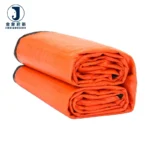
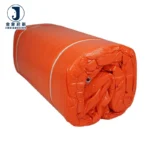
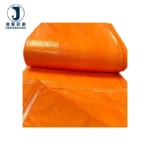
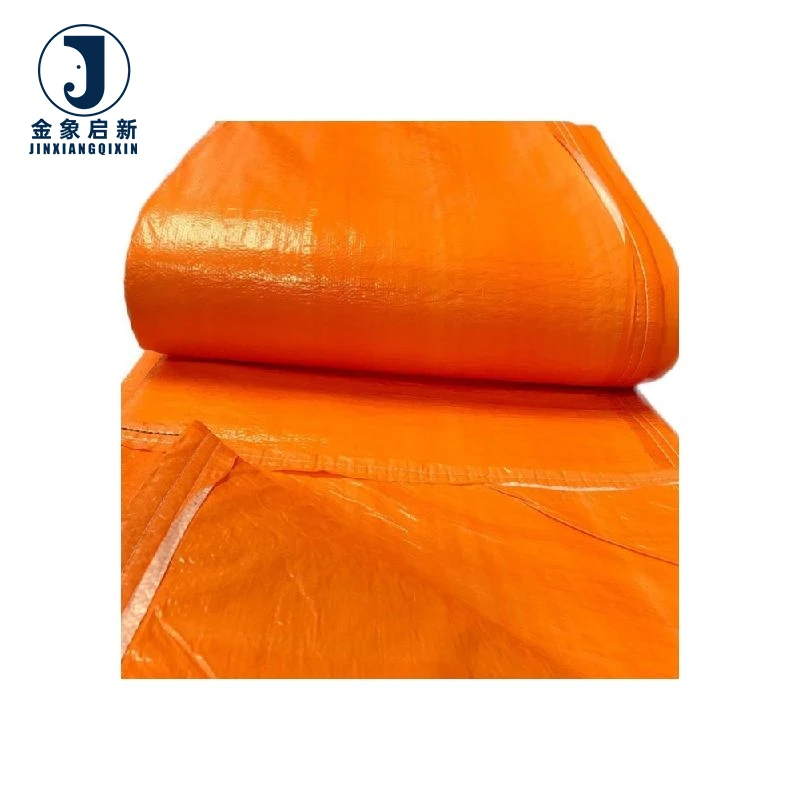
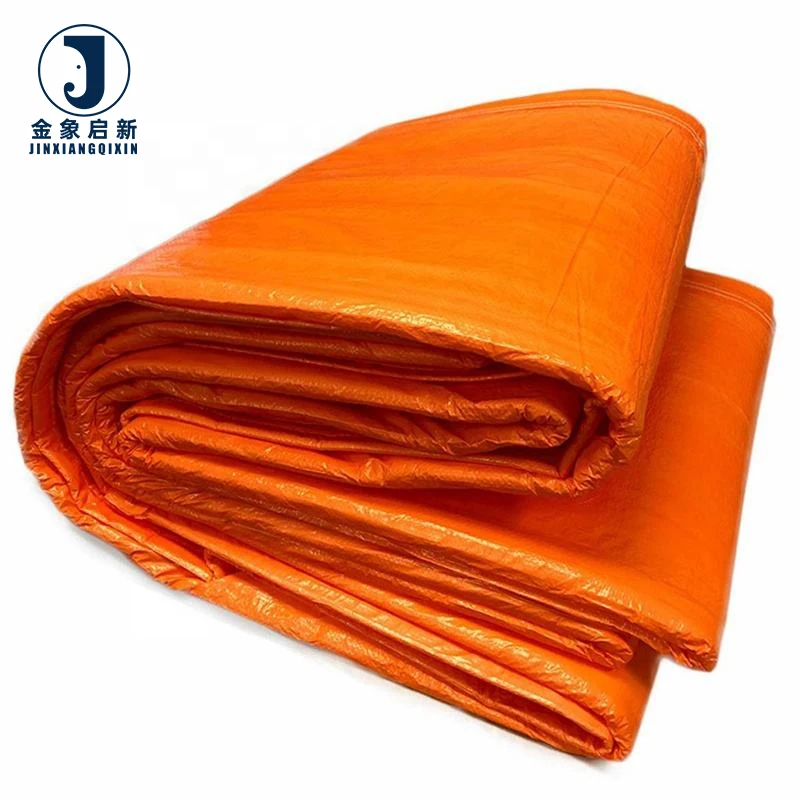
Specification-driven insulated PE tarpaulin supply — every roll shipped with a material specification sheet stating structure, thickness, and coating type so procurement teams verify compliance before site deployment.
Technical Specifications
| Parameter | Value |
|---|---|
| Product Type | Insulated PE Tarpaulin |
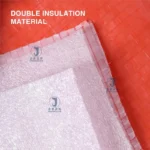
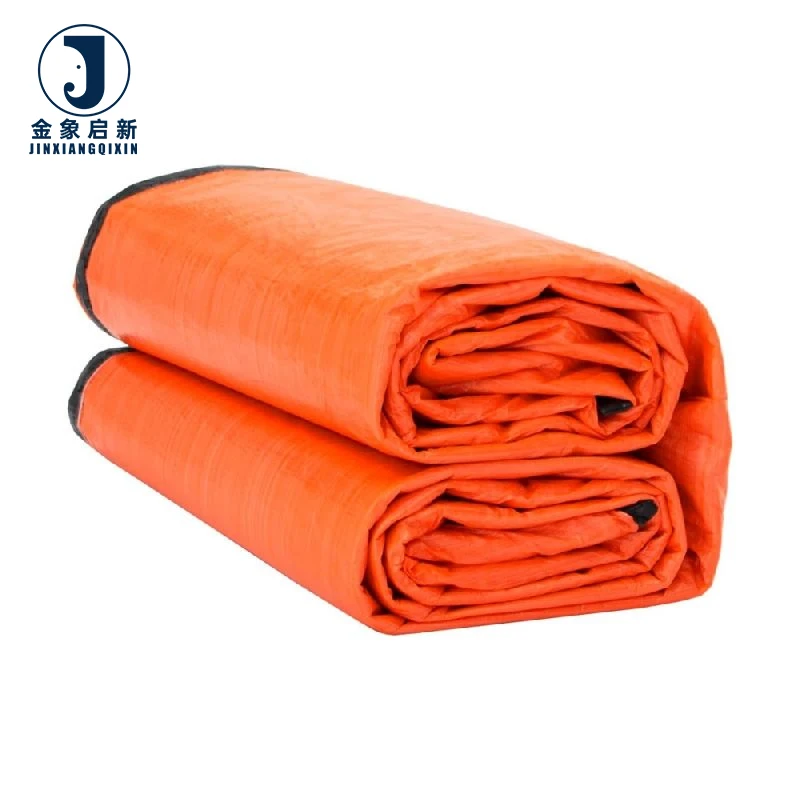
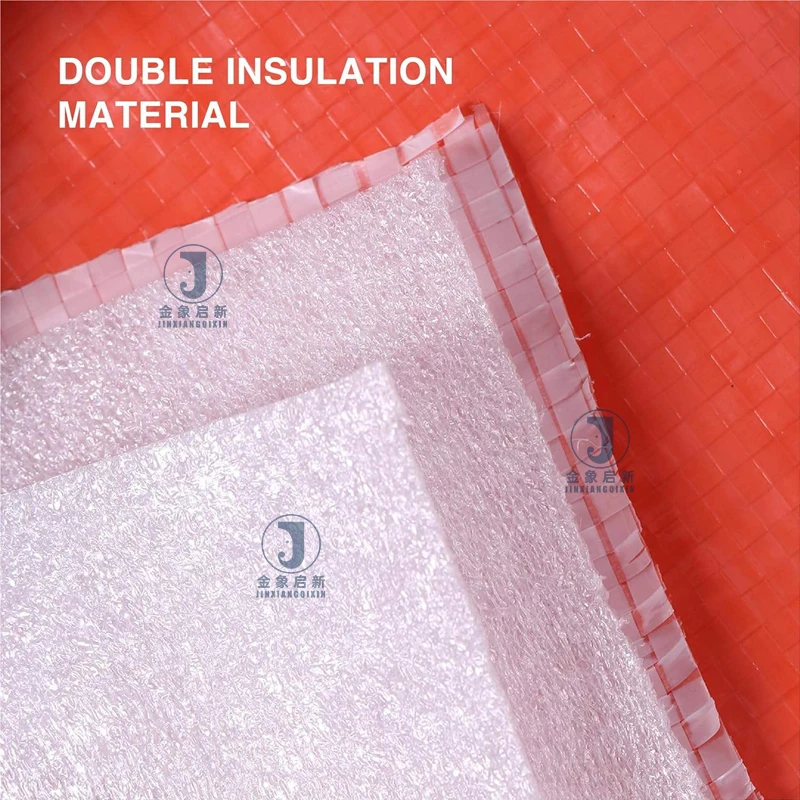
| Structure | PE cloth + closed cell PE foam core + PE cloth |
| Thickness Options | 2x2mm, 3×1.5mm, 1x4mm, 5mm, 6mm, 8mm, 12mm |
| Size Options | 6ft x 24ft, 8ft x 25ft, 12ft x 20ft, 12ft x 24ft |
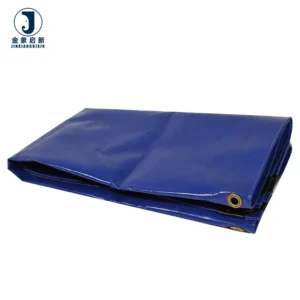
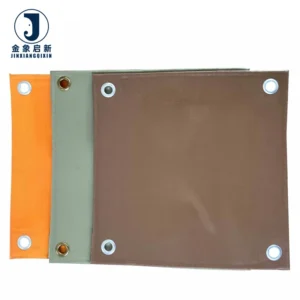
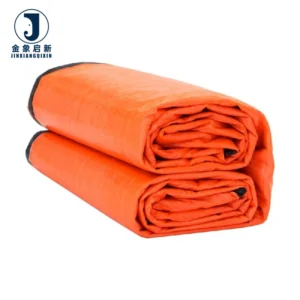
| Color Options | Orange, Black, White, Silver, Customized color |
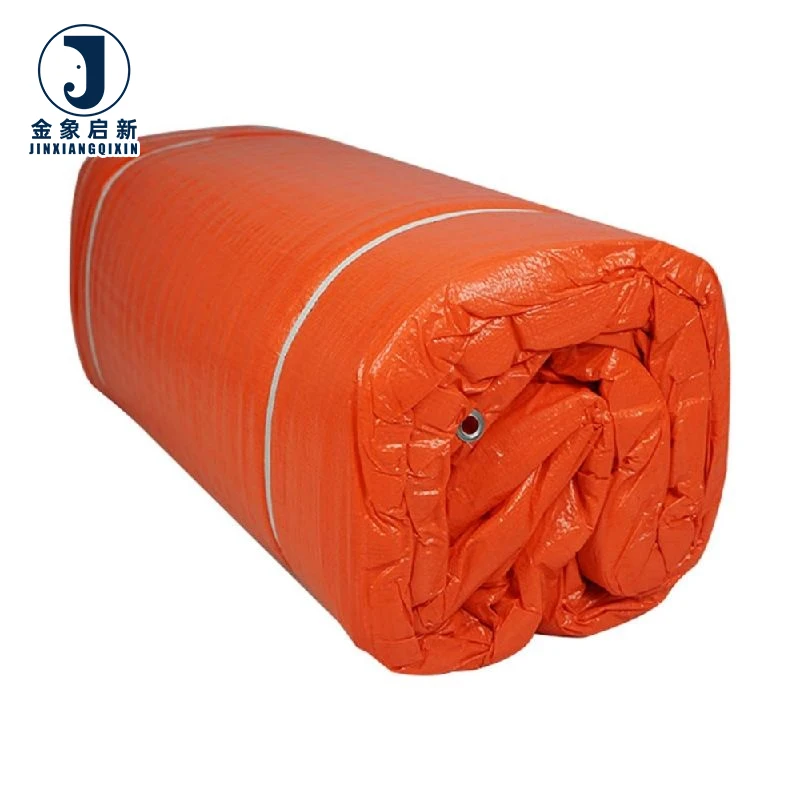
| Grommet Configuration | Aluminum holes, spacing 61cm and 91.5cm |
| Edge Finish | Stitched edges with rust-proof brass grommets |
| UV Treatment | Anti-UV treatment (test basis not stated in source — confirm grade required for your market) |
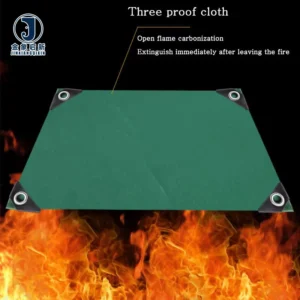
| Flame Retardant | Available in flame retardant grades — confirm the grade required for your market |
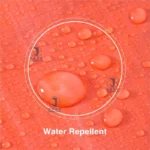
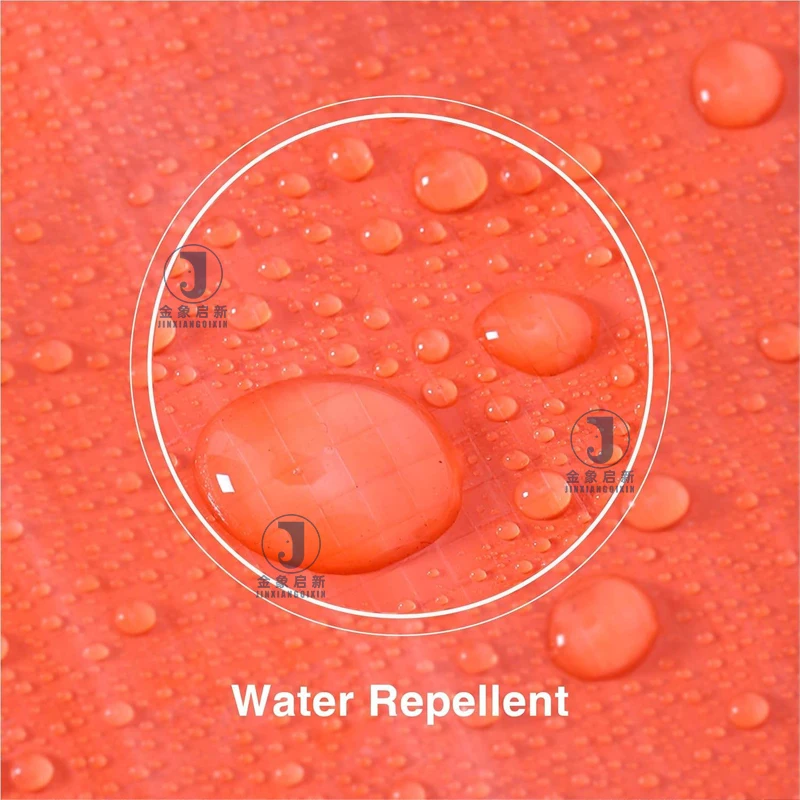
| Waterproof | Waterproof PE outer layers |
Application Suitability
| Application | Exposure & Requirement |
|---|---|
| Heated enclosure insulation | Continuous thermal cycling, internal heat retention, repeated panel removal and reinstallation |
| Cold-weather concrete curing blankets | Direct ground contact, sub-zero ambient temperatures, moisture exposure during curing cycles |
| Vertical wind block and building enclosure | Sustained wind load, lateral stress on grommets, prolonged outdoor UV and rain exposure |
| Mining and tunnelling site enclosures | High-humidity environments, mechanical abrasion from site traffic, potential fire safety compliance requirements |
Why Insulated Tarps Fail When Specifications Are Left Unverified
Insulation performance depends on core structure and verified thickness — not just the outer fabric weight.
Procurement teams routinely specify insulated PE tarpaulin for heated enclosures and concrete curing, only to receive material where the closed-cell foam core is thinner than quoted or where the outer PE layers lack the claimed treatment. On a regulated site, an insulated enclosure panel that cannot demonstrate compliance documentation delays the entire operation. The consequence is not a simple return — it is a failed inspection, idle crews, and a compressed timeline that forces unsafe workarounds [NEED_CITE: site compliance audit requirements for temporary enclosure materials].
Thermal Barrier Construction for Enclosure Integrity
The multi-layer structure pairs two waterproof PE cloth faces around a closed-cell PE foam core. This configuration traps still air within the foam cells, reducing conductive heat transfer across the panel. For heated enclosures on mining or construction sites, the Insulated PE Concrete Curing Blanket certified grade maintains internal temperature differentials that single-layer fabrics cannot achieve. Thickness selection directly determines the insulation value — a 12mm panel provides substantially higher thermal resistance than a 5mm option under identical conditions.
Grommet and Edge Reinforcement Under Wind Load
Site enclosures face sustained lateral pressure. The stitched edge finish distributes load across the perimeter, while rust-proof brass grommets at 61cm and 91.5cm spacing provide secure attachment points that resist pull-through under tension. Aluminum grommet holes offer corrosion resistance in humid or coastal site conditions. When panels are repeatedly removed and reinstalled during phased construction, the edge reinforcement prevents the fraying that leads to premature grommet loss [NEED_CITE: tensile and tear test methods for coated fabrics per ISO 1421].
Reading the Thickness Specification Correctly
The available thickness range — 2x2mm through 12mm — reflects different insulation strategies. A 2x2mm construction typically indicates dual foam layers separated by a bonding interface, offering balanced flexibility and thermal performance. A single 12mm core prioritises maximum insulation for extreme cold-weather curing where panel rigidity is acceptable. Selecting the wrong thickness for the application means either paying for unnecessary insulation capacity or deploying a panel that cannot hold the required temperature differential overnight. The closed-cell structure resists moisture absorption, which would otherwise degrade insulation value over successive freeze-thaw cycles.
The Cost of Undocumented Insulation Claims
When an insulated PE tarpaulin arrives on site without a material specification sheet confirming the foam core thickness and outer layer treatment, the procurement team has no basis for compliance verification. A heated enclosure in a mining operation may require fire-retardant documentation before the safety officer signs off. If the flame-retardant grade was claimed at inquiry but no test report accompanies the shipment, the panels cannot be installed. The delay compounds: concrete pours scheduled behind the enclosure are postponed, curing timelines slip, and the contractor absorbs liquidated damages [NEED_CITE: DIN 4102 fire classification for building materials].
Why Procurement Teams Source Insulated Enclosure Fabric Here
Nearly 30 years of coated fabric production provides process control over coating weight and lamination adhesion — the bond between PE cloth and foam core is verified at each production stage, not assumed.
Three full production lines and 36 sets of professional equipment support bulk orders with consistent thickness and colour across every panel in the shipment.
A 10-person R&D team handles custom sizing, thickness selection, and sample development within days, so buyers confirm the exact construction before committing to volume production.
Dedicated QA/QC at every stage with 100% pre-shipment inspection means each Insulated PE Concrete Curing Blanket certified order ships with verified thickness measurements and a complete inspection record.
ISO and CE certified production provides the compliance framework that regulated sites in mining, aviation, and construction require for temporary enclosure materials.
Documentation & Verification
- Material specification sheet stating PE foam core thickness, outer layer type, and structure for each panel
- Pre-shipment inspection record with measured thickness values against the quoted grade
- UV treatment test report provided where anti-UV performance is specified at inquiry
- ISO and CE certificates available to support site compliance audits and procurement records
- Roll and panel packing list with size, colour, and quantity breakdown for receiving verification
Fabrication, Handling & Storage
- Stitch along panel seams using UV-stable thread matching the PE outer layer to prevent degradation at stitch lines
- Reinforce grommet attachment points with additional PE patches where panels face sustained wind load above standard spacing
- Store folded panels flat and avoid compression stacking that permanently deforms the closed-cell foam core
- Deploy panels above 5°C to maintain PE cloth flexibility and prevent edge cracking during unfolding in cold conditions
- Clean surfaces with mild detergent only; solvent-based cleaners compromise the PE outer layer treatment
What to Include in Your Insulated Enclosure Inquiry
Specify the application — heated enclosure, concrete curing, or wind block — along with the temperature differential the panel must maintain and the duration of each deployment cycle. State any fire-retardant or anti-static compliance requirements your site safety officer requires before installation. Confirm panel dimensions, grommet spacing preferences, and whether standard sizes or custom cuts are needed. Request samples if the thickness grade has not been previously validated on your sites.
Frequently Asked Questions
Q: What fire-retardant or anti-static certifications are available for insulated enclosure tarpaulins on regulated sites?
A: Flame-retardant and anti-static grades are available — confirm the specific standard your site requires at inquiry stage. We supply test reports matching the grade specified, and our documentation package supports compliance audits on mining, tunnelling, and aviation sites where enclosure materials must demonstrate verified fire performance before installation.
Q: How is thickness selected for different insulation and cold-weather curing requirements?
A: Thicker closed-cell PE foam cores provide higher thermal resistance for sub-zero concrete curing operations, while thinner constructions offer greater flexibility for panels that are repeatedly folded and redeployed. We recommend specifying the overnight temperature differential your curing operation must maintain, and our R&D team will match the appropriate thickness grade to that requirement.
Q: Can custom sizes and grommet spacing be specified for non-standard enclosure dimensions?
A: Yes. Custom panel dimensions, grommet spacing, and colour are available with sample development before bulk production. Our production lines handle non-standard cuts, and the 10-person R&D team develops samples within days so you can validate fitment and attachment geometry before committing to the full order quantity.
Q: What documentation ships with each order for site compliance audits?
A: Every shipment includes a material specification sheet confirming structure and thickness, a pre-shipment inspection record, ISO and CE certificates, and a detailed packing list. Where flame-retardant or anti-static grades are specified, the corresponding test reports accompany the documentation package to support on-site safety officer verification and procurement audit requirements.