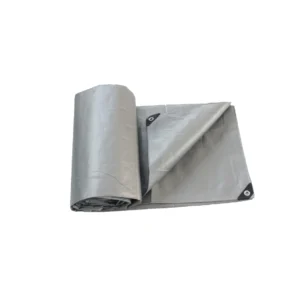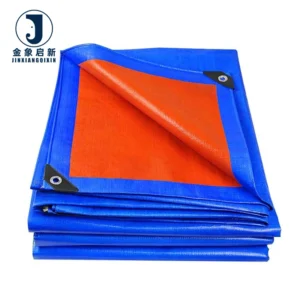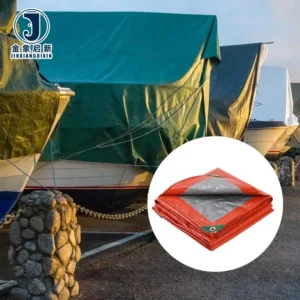
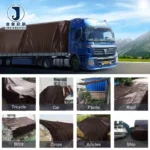


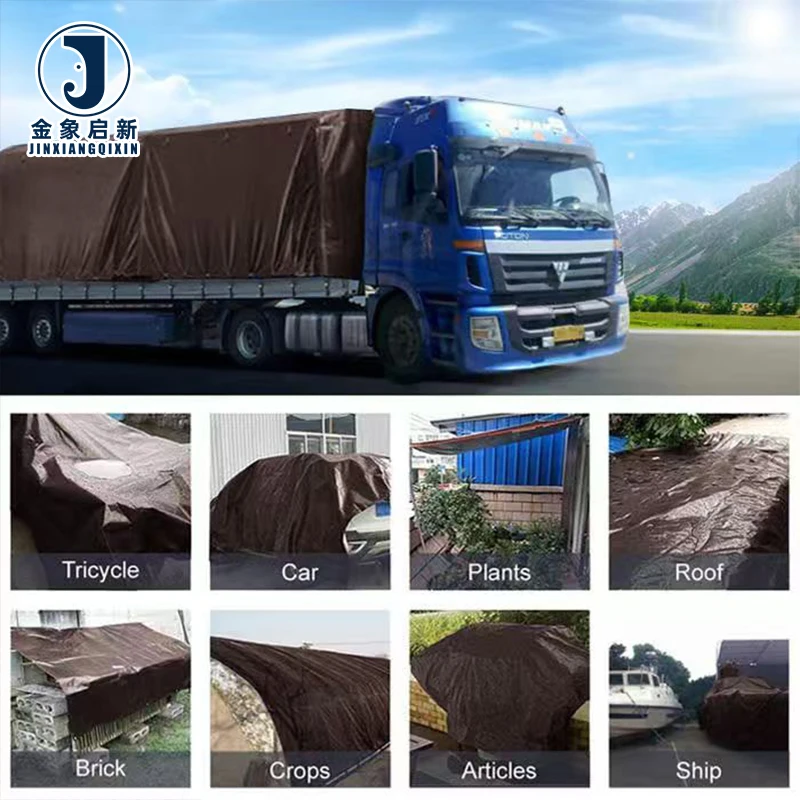
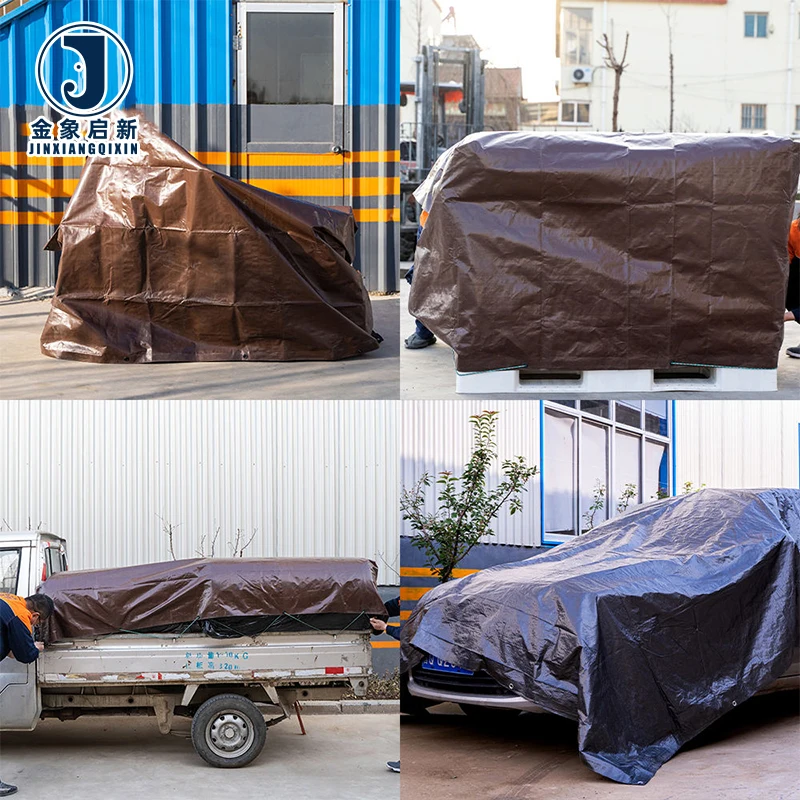
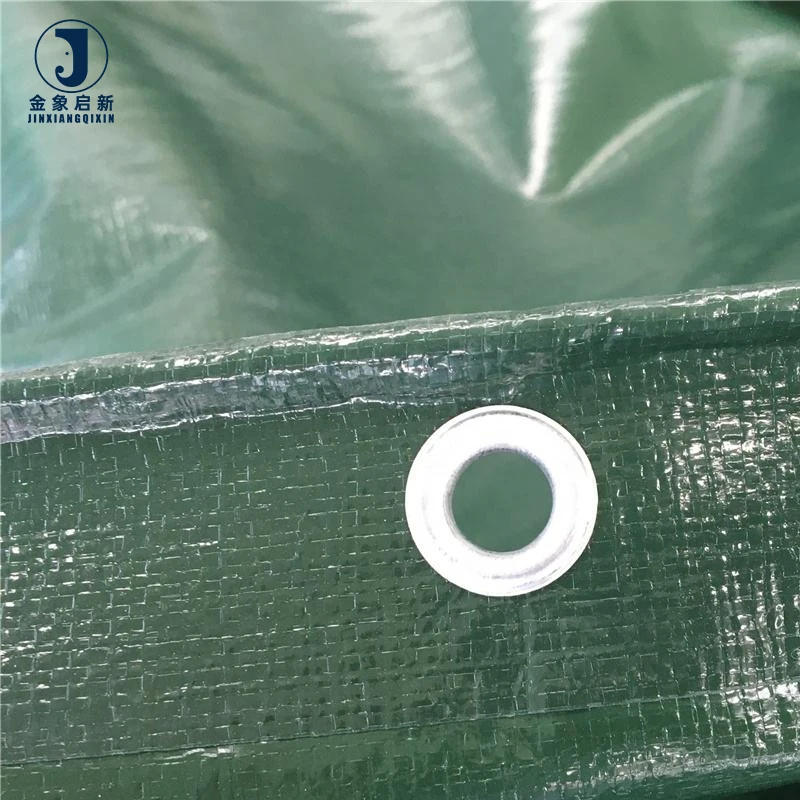
Proven Process Control — Three full production lines and 36 sets of equipment deliver batch-consistent PE coated woven fabric with documented GSM verification at every roll before dispatch.
Technical Specifications
| Parameter | Value |
|---|---|
| Product Type | PE Tarpaulin |
| Material | Polyethylene (PE) |
| Weight Range | 40g~500g/m² |
| Thickness (Lightweight) | 0.18–0.22 mm |
| Thickness (Medium) | 0.22–0.28 mm |
| Thickness (Heavy-duty) | 0.30–0.35 mm |
| Knitting Density (Lightweight) | 8×8 |
| Knitting Density (Medium) | 10×10 |
| Knitting Density (Heavy-duty) | 12×12 |
| Mesh Count Range | 5×5 to 20×20 |
| Tensile Strength (Lightweight) | Meridian 300–500 / Latitude 250–450 N/5cm |
| Tensile Strength (Medium) | Meridian 500–800 / Latitude 400–700 N/5cm |
| Tensile Strength (Heavy-duty) | Meridian 900–1200 / Latitude 700–1000 N/5cm |
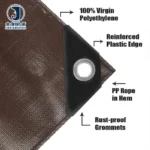
| Surface | Double waterproof surfaces |
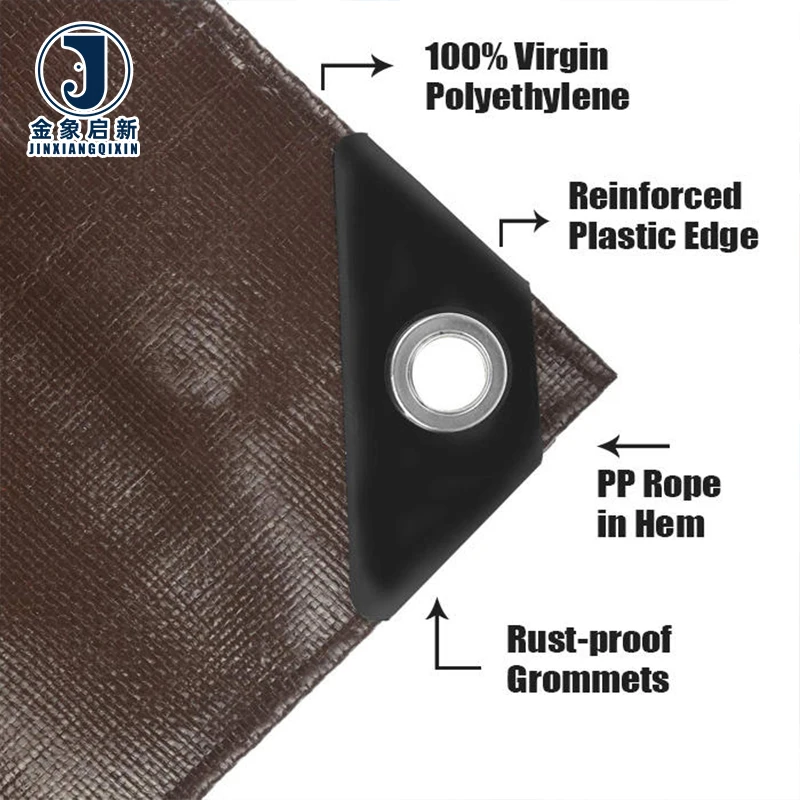
| Corner | Reinforced corner |
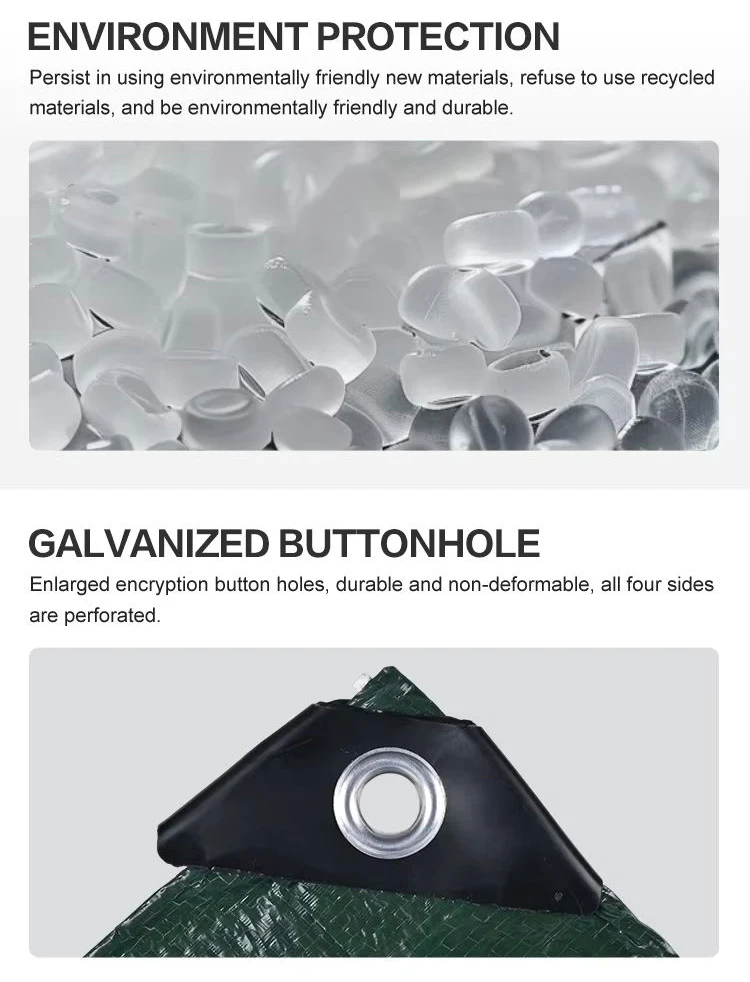
| Eyelet Spacing | 39.4 Inches |
| Treatment | UV resistant, mildew proof, anti-aging (test basis not stated — confirm grade required for your market) |
| Size | Custom size |
| Color | Custom color |
| Standards | ISO, CE |
Application Suitability
| Application | Exposure & Requirement |
|---|---|
| Mining and tunnelling ventilation duct | Continuous airflow pressure, underground moisture, fire-retardant and anti-static compliance required on site |
| Temporary enclosure for construction sites | Wind load, dust containment, UV exposure, frequent installation and removal cycles |
| Aviation ground support protective covers | Fuel and chemical splash, outdoor weathering, flame-retardant specification at airfield |
| Inflatable and membrane structure fabric | Internal air pressure stress, seam integrity under flex, long-term UV and mildew exposure |
| Industrial equipment stockpile covers | Abrasion from contact with machinery, water ingress prevention, tear resistance at tie-down points |
Why Ventilation Duct Projects Fail When the Fabric Certificate Does Not Match the Site Requirement
Certified PE tarpaulin for mining and tunnelling must carry a fire-retardant or anti-static test report that matches the regulatory framework of the project jurisdiction.
Ventilation duct and specialist covers are often ordered with a flame-retardant or anti-static claim on the quotation, but the roll that arrives has no test documentation to support it. On a mining or tunnelling site, compliance officers check the certificate before the duct is hung. If the report is missing or references a standard that the local authority does not recognise, the entire installation is rejected and the contractor absorbs the downtime cost. PE Tarpaulin for industrial and agricultural ventilation and specialist cover must be specified not just by weight and tensile data but by the exact compliance grade the site demands. [NEED_CITE: fire classification standards for underground ventilation materials]
Selecting the Right Grade for Airflow and Pressure Load
Mining and tunnelling ventilation ducts operate under continuous positive or negative pressure, and the fabric must resist ballooning, collapse and flex fatigue at every joint. The mesh count and knitting density directly determine how the material behaves under these cyclic loads. A lightweight 8×8 knit may suffice for short-run temporary ventilation, but permanent underground installations typically require a 12×12 heavy-duty construction with meridian tensile strength above 900 N/5cm to hold the duct shape across long runs without sagging between hanging rings.
Compliance Documentation That Travels With the Roll
On specialist projects, the PE Tarpaulin for industrial and agricultural ventilation and specialist cover is only as acceptable as the paperwork that accompanies it. Fire-retardant and anti-static grades must be referenced to a recognised test standard so that the site safety officer can cross-check the certificate against local mining or aviation regulations. We supply test reports for flame-retardant and UV grades where applicable, and each roll ships with a pre-shipment inspection record that ties the physical material back to the original specification. [NEED_CITE: anti-static test methods for coated fabrics in explosive atmospheres]
How Knitting Density and Coating Weight Interact to Define Duct Performance
The tensile and tear behaviour of PE woven tarpaulin is governed by the interplay between base fabric knitting density and the coating weight applied to both surfaces. A higher knitting density, such as 12×12, provides more yarn intersections per unit area, which limits the propagation path of a tear once initiated. However, if the coating weight is too low relative to the base fabric, the coating may crack at flex points before the yarn structure is stressed, exposing the weave to moisture ingress. Conversely, a heavy coating on a low-density base creates a stiff panel that resists folding and hanging in duct applications. The three weight tiers — lightweight at 0.18–0.22 mm, medium at 0.22–0.28 mm and heavy-duty at 0.30–0.35 mm — represent calibrated balances between these two variables. Selecting the correct tier depends on whether the duct will be hung horizontally across long spans or routed vertically through shafts, as the gravitational load and flex frequency differ substantially between the two configurations.
The Hidden Cost of Specifying by GSM Without Checking the Knit
A buyer who selects a ventilation duct fabric solely on GSM may receive a material that tests correctly on a scale but fails in the field because the knitting density is too open for the coating to bridge. This mismatch shows up first at welded seams, where the heat-affected zone concentrates stress on fewer yarns. The weld line fails before the body of the fabric does, and the duct leaks at every joint. On a tunnelling project, that leak reduces face ventilation and forces a shutdown while the duct is re-hung. Matching the knitting density and tensile data to the actual airflow pressure and hanging configuration prevents this sequence. [NEED_CITE: tensile and tear test methods for coated fabrics per ISO 1421]
Why Procure PE Woven Tarpaulin Through This Supply Chain
Nearly 30 years of focused coated fabric production means the coating weight and adhesion process is controlled from raw yarn to finished roll, not outsourced at intermediate stages. Three full production lines and 36 sets of professional equipment support bulk roll output with documented on-time delivery for project-scheduled shipments. A 10-person R&D team handles material selection, custom width and colour development, and sample turnaround within days for duct and membrane structure specifications. Dedicated QA and QC inspection at every production stage ensures that each roll is checked against the stated GSM, knitting density and treatment requirement before it leaves the facility. Samples are developed in days rather than weeks, allowing compliance-critical projects to verify fire-retardant or anti-static grades before committing to full production volume.
Documentation & Verification
- Material specification sheet listing GSM, base fabric knit and coating weight per roll
- Test report for UV and flame-retardant grades where applicable to the project specification
- Pre-shipment inspection record with measured GSM against the quoted value
- Roll packing list with lot and batch traceability for site receiving
- ISO and CE certificates with certificate of origin for customs clearance
Fabrication, Handling & Storage
- Heat-weld seams using temperature and dwell settings matched to the selected coating thickness tier
- Reinforce eyelet zones at the 39.4-inch spacing to distribute tie-down load across the PE weave
- Store rolls vertically on pallets to prevent permanent creasing of the double waterproof surfaces
- Allow cold-stored rolls to reach ambient temperature before unrolling to avoid coating micro-cracking
- Clean with neutral detergent only to preserve the mildew-proof and anti-aging surface treatment
- Lay flat and avoid dragging across abrasive ground to protect the reinforced corner zones during installation
What to Include in Your Enquiry
Provide the ventilation duct diameter, run length and hanging configuration so we can recommend the knitting density and tensile tier that matches the airflow pressure and flex cycle. Specify the fire-retardant or anti-static grade required by your local mining or aviation authority, along with any colour or branding requirement for project identification. Indicate whether you need finished cut-to-size panels with welded seams or roll stock for on-site fabrication, and confirm the total linear metres and target delivery window for production scheduling.
Frequently Asked Questions
Q: Can you supply PE tarpaulin with a fire-retardant test report for underground mining use?
A: Yes. We offer PE Tarpaulin for industrial and agricultural ventilation and specialist cover in flame-retardant grades with a test report referencing the applicable standard. Confirm the specific fire classification required by your mining authority so we can match the grade and include the report with the shipment documentation.
Q: How do you verify GSM on each roll before dispatch?
A: Every roll is weighed and measured during the 100% pre-shipment inspection. The measured GSM is recorded against the quoted specification on the inspection record. If the value falls outside tolerance, the roll is held and re-coated or replaced before the batch is released for packing and dispatch.
Q: Is UV treatment documentation available for long-term outdoor structure applications?
A: UV-resistant treatment is available across the weight range. The test basis for the UV claim should be confirmed against the exposure duration and latitude of your project site. Request the UV test report during the sample approval stage so the performance data is on file before full production begins.
Q: What custom widths and sizes are available for duct and membrane fabrication?
A: Custom width and length are available for PE Tarpaulin for industrial and agricultural ventilation and specialist cover applications. Provide the panel dimensions or roll width required for your duct or membrane structure, and the R&D team will confirm the feasible range, minimum order and lead time for sampling and production.
Q: How do welded seams perform under the flex cycles typical of ventilation duct use?
A: Welded seam strength depends on the coating thickness and the heat-weld parameters used. The double waterproof PE coating supports thermal welding, but the weld temperature and dwell time must be matched to the selected thickness tier — lightweight, medium or heavy-duty — to ensure the seam does not become the failure point under repeated duct flexing and pressure cycling.