

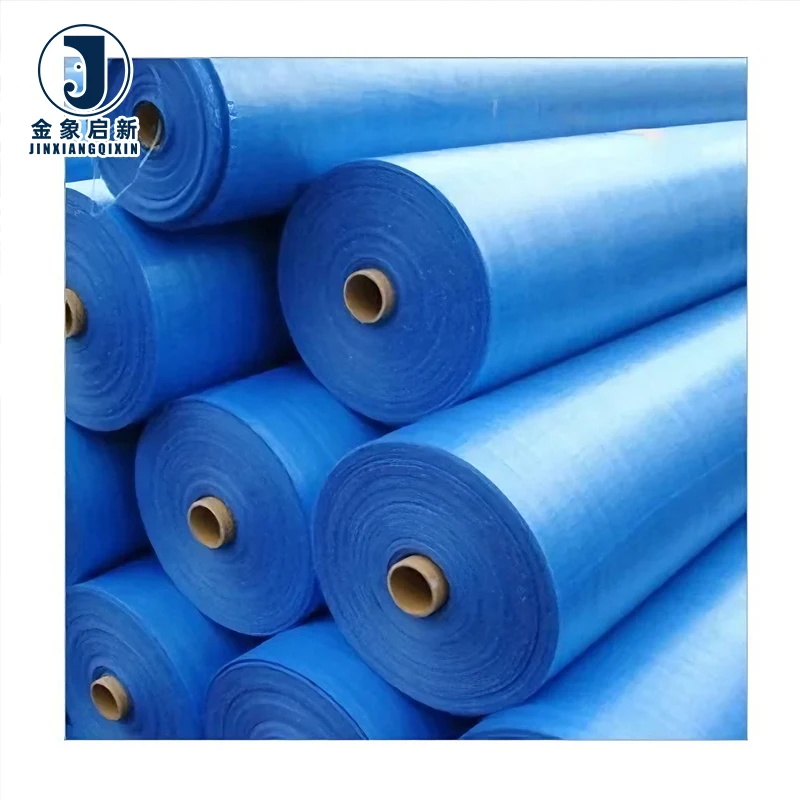
Deep Process Control Over Coated Fabric — verified through 100% pre-shipment inspection on every roll of PE tarpaulin fire retardant / anti-static / certified material, ensuring the specification you order is the specification you receive.
Technical Specifications
| Parameter | Value |
|---|---|
| Product Type | PE Tarpaulin |
| Material | Polyethylene |
| Weight Range | 40g~500g/m² |
| Thickness (Lightweight) | 0.18-0.22 mm |
| Thickness (Medium) | 0.22-0.28 mm |
| Thickness (Heavy-duty) | 0.30-0.35 mm |
| Knitting Density (Lightweight) | 8×8 |
| Knitting Density (Medium) | 10×10 |
| Knitting Density (Heavy-duty) | 12×12 |
| Tensile Strength (Lightweight) | Meridian 300-500 / Latitude 250-450 N/5cm (test standard not stated) |
| Tensile Strength (Medium) | Meridian 500-800 / Latitude 400-700 N/5cm (test standard not stated) |
| Tensile Strength (Heavy-duty) | Meridian 900-1200 / Latitude 700-1000 N/5cm (test standard not stated) |
| Mesh Count Range | 5×5~20×20 |
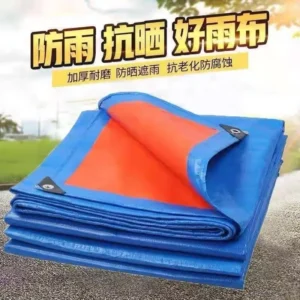
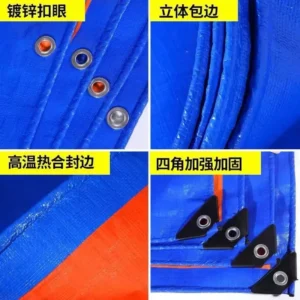
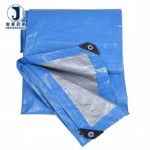
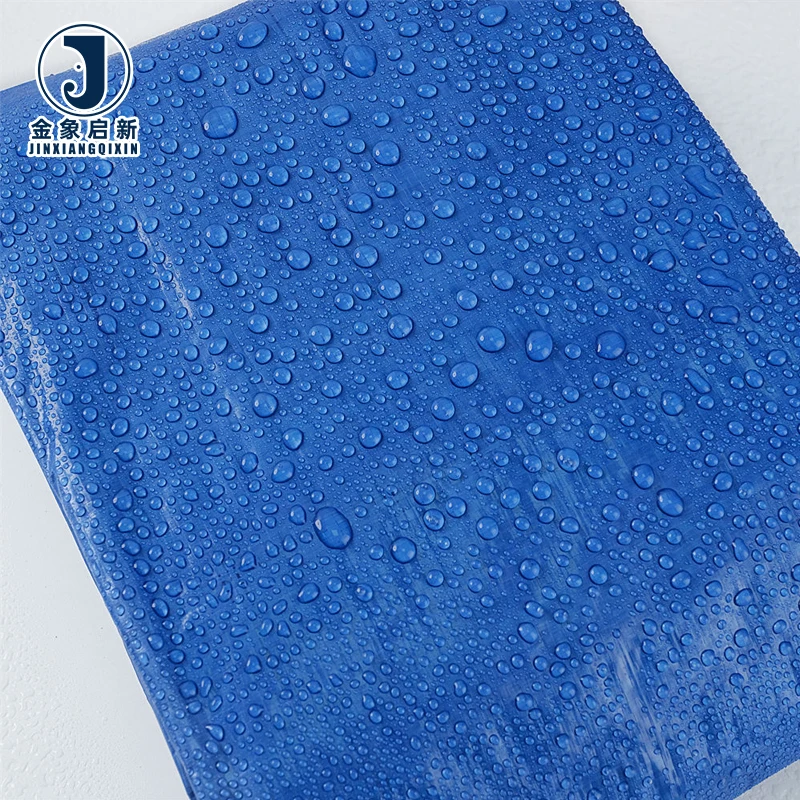
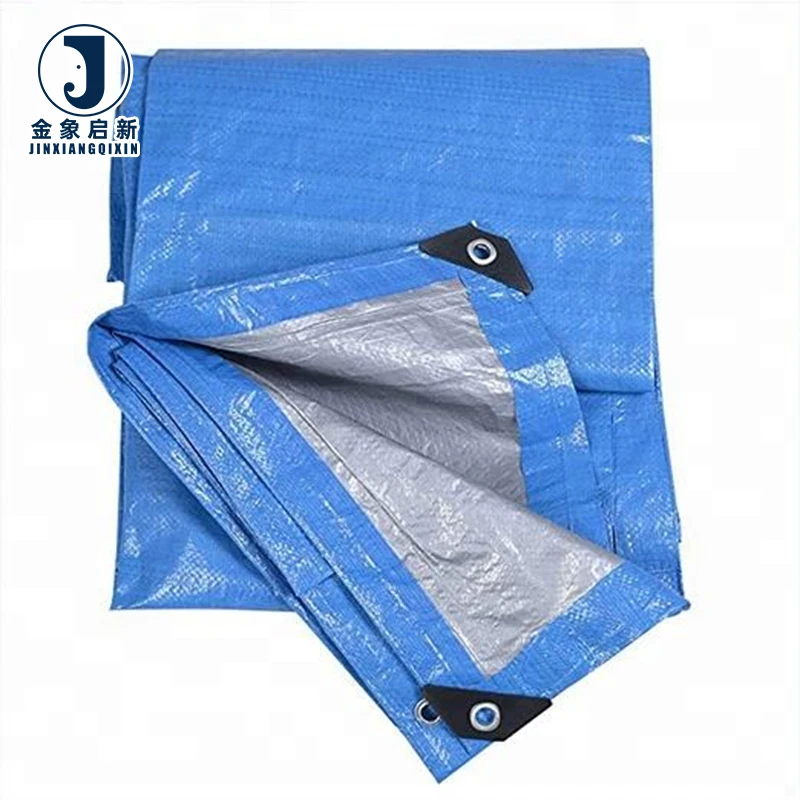
| Water Resistance | Double waterproof surfaces, reinforced corners |
| UV Treatment | Available (test basis not stated) |
| Fire Retardant / Anti-static | Available (grade and test basis to be confirmed per site requirement) |
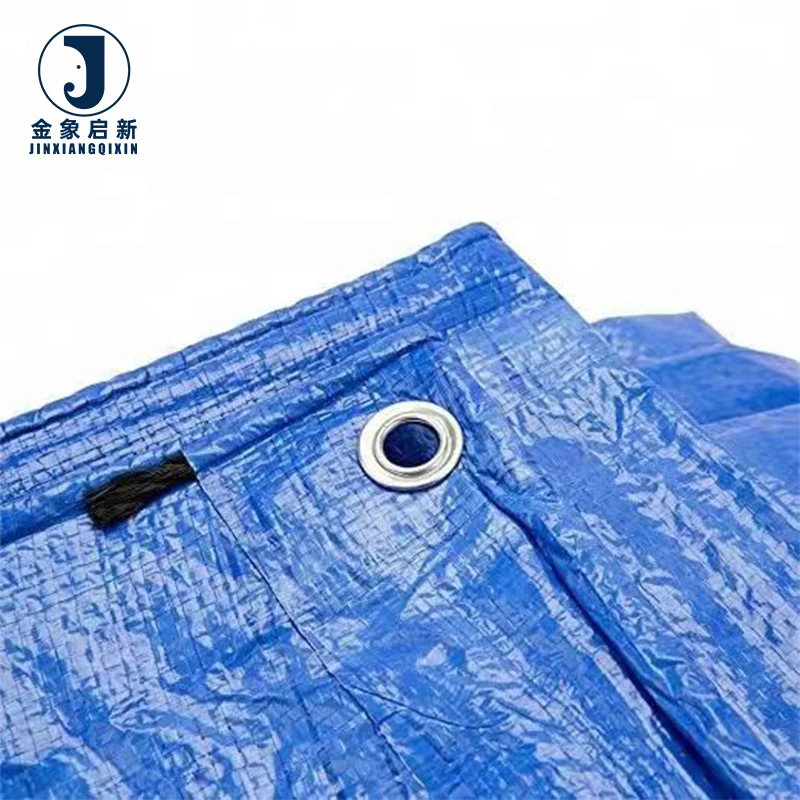
| Eyelet Spacing | Center to center 39.4 Inches |
| Surface Properties | Tear-resistant, washable, mildew proof, anti-aging |
| Certifications | ISO, CE |
Application Suitability
| Application | Exposure & Requirement |
|---|---|
| Mining and tunnelling ventilation enclosures | Continuous airflow, underground humidity, mandatory fire-retardant and anti-static certification for site compliance |
| Aviation and construction temporary ductwork | High-velocity air movement, flexing at joints, flame-retardant specification required by site safety protocols |
| Membrane and inflatable structure covers | Tension loading across large spans, UV exposure, colour consistency across multiple panels |
| Industrial protective and transport covering | Abrasion from load movement, weather exposure, puncture risk at tie-down points |
| Agricultural stock covering | Moisture ingress, UV degradation, mildew formation in humid environments |
Why PE Tarpaulin Without Verified Certification Fails at the Gate
A fire-retardant claim without a test report is a liability, not a feature.
Mining, tunnelling and aviation sites enforce strict material compliance. When PE tarpaulin fire retardant / anti-static / certified documentation does not match the batch delivered, the entire installation can be rejected at inspection. I have seen contractors forced to strip and replace full ventilation duct runs because the supplier provided a generic certificate that did not cover the specific grade shipped. [NEED_CITE: fire-retardant and anti-static compliance requirements for underground ventilation materials]
Compliance Documentation Tied to the Batch Supplied
Specialist applications demand more than a product description. The PE tarpaulin fire retardant / anti-static / certified grades we supply ship with test reports matched to the production batch. This means the fire classification and anti-static reading on paper correspond to the rolls installed on site. When your project specification calls for a particular standard, we confirm the available grade and provide the supporting documentation before production begins, closing the gap between quotation and delivery.
Ventilation Duct and Enclosure Fabrication Requirements
Fabricating ventilation ducts or temporary enclosures from PE tarpaulin requires attention to seam behaviour under continuous air pressure. Welded joints on PE material must hold under flexing without delamination or cracking. Our production process controls coating weight and adhesion at every stage, so the weld integrity at high-stress flex points matches the base fabric strength. [NEED_CITE: tensile and tear test methods for coated fabrics per ISO 1421]
Reading the Specification Sheet Beyond the GSM Number
GSM tells you the weight per square metre, but it does not tell you how that weight is distributed between base fabric and coating. A PE tarpaulin with a high GSM achieved through heavy coating but a low-density base fabric will tear more easily than a lighter product with a tighter weave. The knitting density — 8×8 for lightweight, 10×10 for medium, 12×12 for heavy-duty — determines how the load transfers across the weave when a puncture or tear starts. The tensile strength values in our specification table reflect the combined performance of base fabric and coating, measured in both meridian and latitude directions. This dual-axis reading matters because ventilation ducts experience circumferential and longitudinal stress simultaneously, and a fabric weak in one direction will fail along that axis first.
The Hidden Cost of Specifying Without Verification
When a site requires certified PE tarpaulin fire retardant / anti-static / certified material and the delivered product lacks matching documentation, the consequences extend beyond rejection. Contractors face project delays, re-procurement costs, and potential safety audit failures. I have seen entire membrane structure installations delayed because colour varied between rolls in the same shipment, forcing the fabricator to source replacement panels at short notice. Batch-to-batch consistency in both colour and weight is a production discipline, not a finishing step, and it requires inspection at every stage rather than sampling at the end. [NEED_CITE: batch colour consistency standards for coated fabric in architectural membrane applications]
Why Specialist Contractors Source PE Tarpaulin Here
Nearly 30 years of focused coated fabric production gives us process control over coating weight and adhesion that generic suppliers cannot match. Three full production lines and 36 sets of professional equipment support bulk capacity with reliable on-time delivery, even for custom widths and colours. Our 10-person R&D team handles material selection, custom sizing and sample development, producing samples within days for specialist requirements. Dedicated QA/QC runs at every production stage with 100% inspection before shipment — every roll is weighed and checked against the specification, not sampled from a batch. The result is PE tarpaulin fire retardant / anti-static / certified material that arrives matching the documentation you submitted for site approval.
Documentation & Verification
- Material specification sheet confirming GSM, base fabric denier, coating type and colour reference for every roll shipped
- Test reports for fire-retardant and anti-static grades matched to the specific batch supplied, confirming site compliance
- ISO and CE certificates included with dispatch documentation for regulatory submission
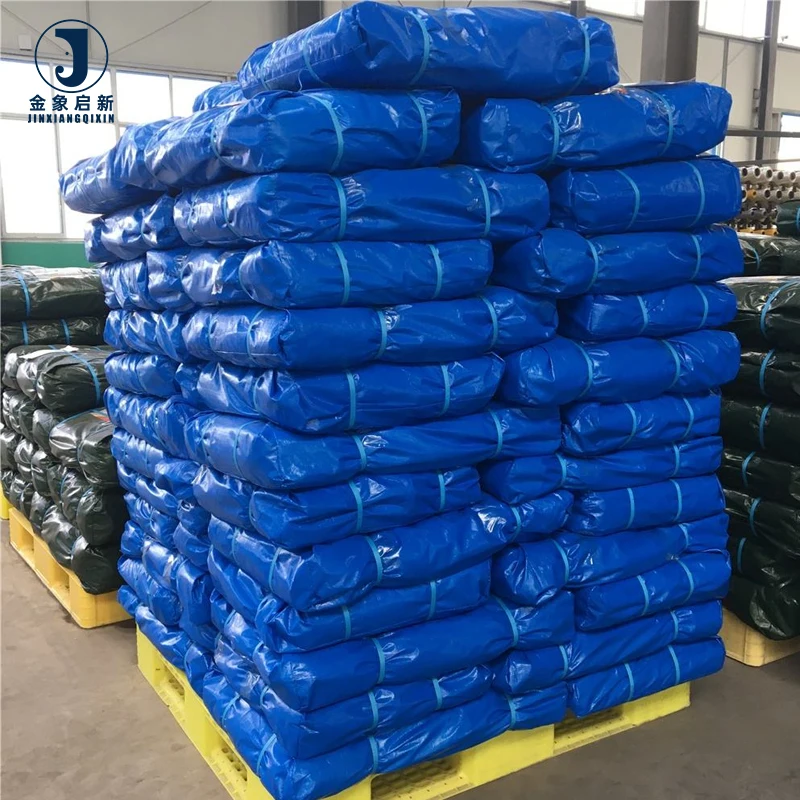
- Pre-shipment inspection record showing weight verification and visual check per roll before loading
- Certificate of origin and roll packing list included for customs clearance and receiving inspection
- Colour reference sample retained on file for reorder matching across future production runs
Fabrication, Handling & Storage
- Heat weld PE tarpaulin surfaces using temperature settings matched to the coating grade to avoid delamination at flex points
- Reinforce eyelet positions at 39.4-inch spacing with additional fabric patches to distribute tie-down load across the weave
- Store rolls horizontally on racking to prevent permanent creasing through the coating layer, particularly on heavy-duty grades above 0.30 mm thickness
- Allow cold-stored rolls to reach ambient temperature before unrolling to prevent coating micro-cracking on the PE surface
- Clean mildew-proof treated surfaces with mild detergent only — solvent-based cleaners degrade the anti-aging coating finish
- Plan cutting layouts to minimise cross-weave seams on heavy-duty 12×12 density grades where tear propagation risk is highest at joint lines
What to Include with Your Enquiry
To specify the correct PE tarpaulin grade for your project, share the application environment and any fire-retardant or anti-static standards your site enforces. Confirm the required roll width, colour reference and whether you need cut-to-size panels or full rolls. Annual volume estimates help us plan production scheduling and hold colour-matched stock for repeat orders.
Frequently Asked Questions
Q: Can you supply PE tarpaulin with certified fire-retardant or anti-static treatment for mining or tunnelling use?
A: Yes. We supply fire-retardant and anti-static PE tarpaulin grades for regulated environments. The specific grade and test standard available depend on your site requirements. We confirm the applicable certification and provide the matching test report with each batch before production begins, so documentation aligns with site safety audits.
Q: How do you guarantee the GSM on the quotation matches the material that arrives?
A: Every roll undergoes weight verification during our 100% pre-shipment inspection. We check the actual GSM against the specification sheet and record the result before dispatch. If a roll falls outside tolerance, it is held and replaced — the inspection record ships with your order so you can verify on receipt.
Q: What documentation ships with each order?
A: Each dispatch includes a material specification sheet per roll, test reports for fire-retardant or anti-static grades where applicable, ISO and CE certificates, a pre-shipment inspection record, roll packing list and certificate of origin. This documentation package supports customs clearance, receiving inspection and site compliance submission.
Q: How do you ensure colour consistency across multiple rolls in the same order?
A: Colour is controlled at the coating stage and verified visually during 100% pre-shipment inspection. Rolls within the same production run are checked side by side before packing. We retain a colour reference sample on file so future reorders match the original batch, preventing visible panel differences on installed membrane structures.
Q: What custom sizing and eyelet spacing options are available for specialist applications?
A: We produce PE tarpaulin in custom widths, lengths and colours to your drawings. Standard eyelet spacing is 39.4 inches center-to-center, but this can be adjusted. Reinforced corners and hem treatments are applied based on the load and tie-down requirements you specify during the enquiry stage.