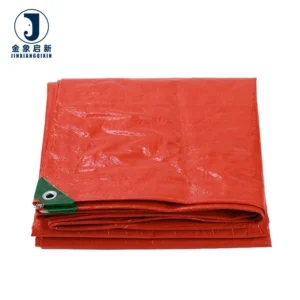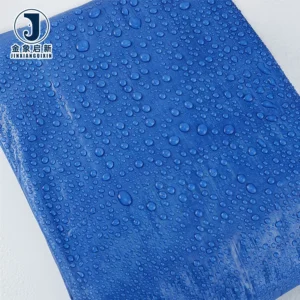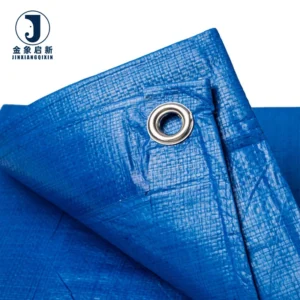
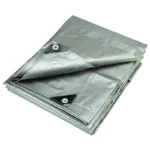
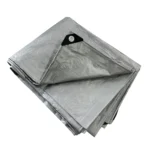
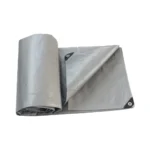
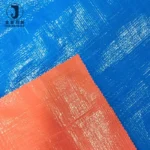
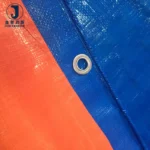
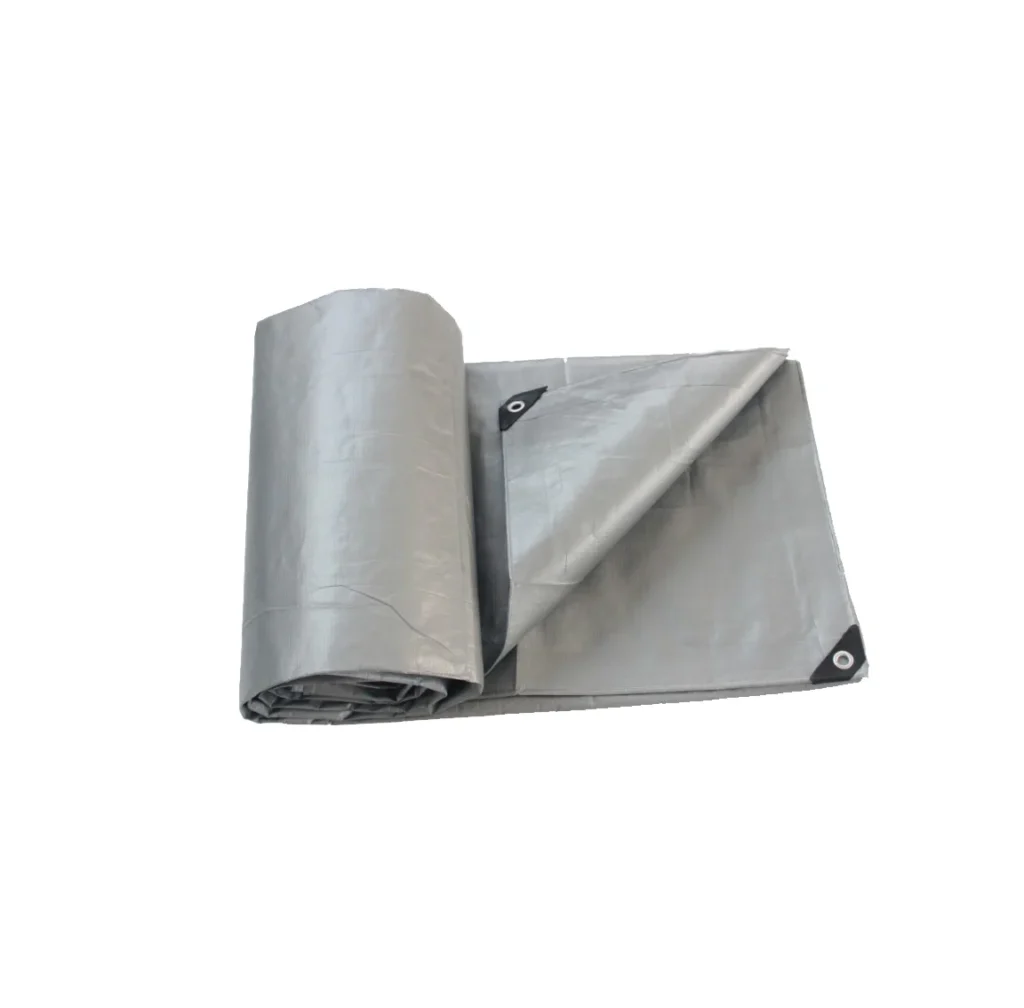
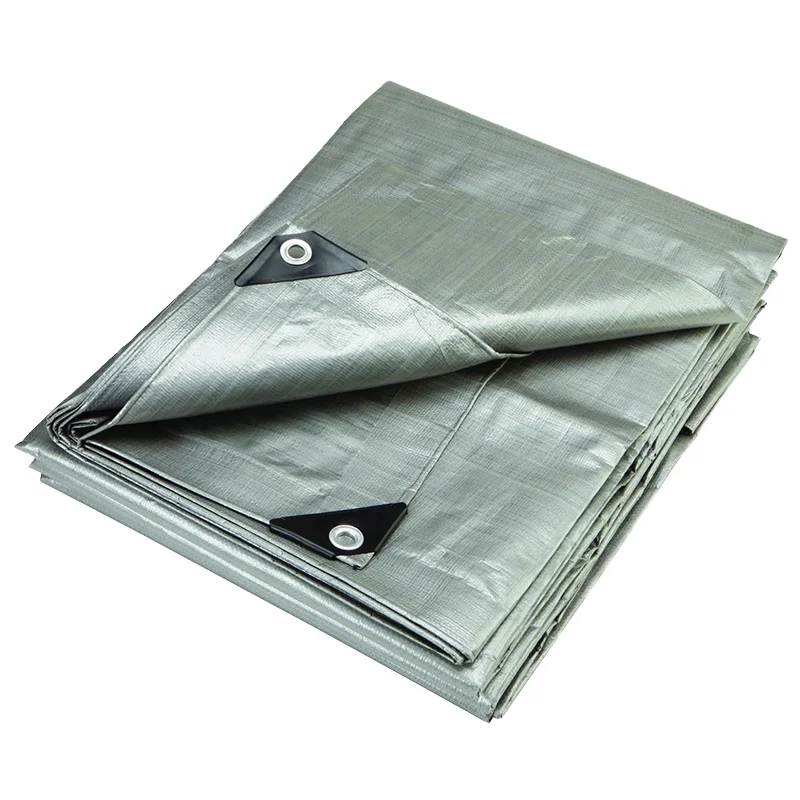
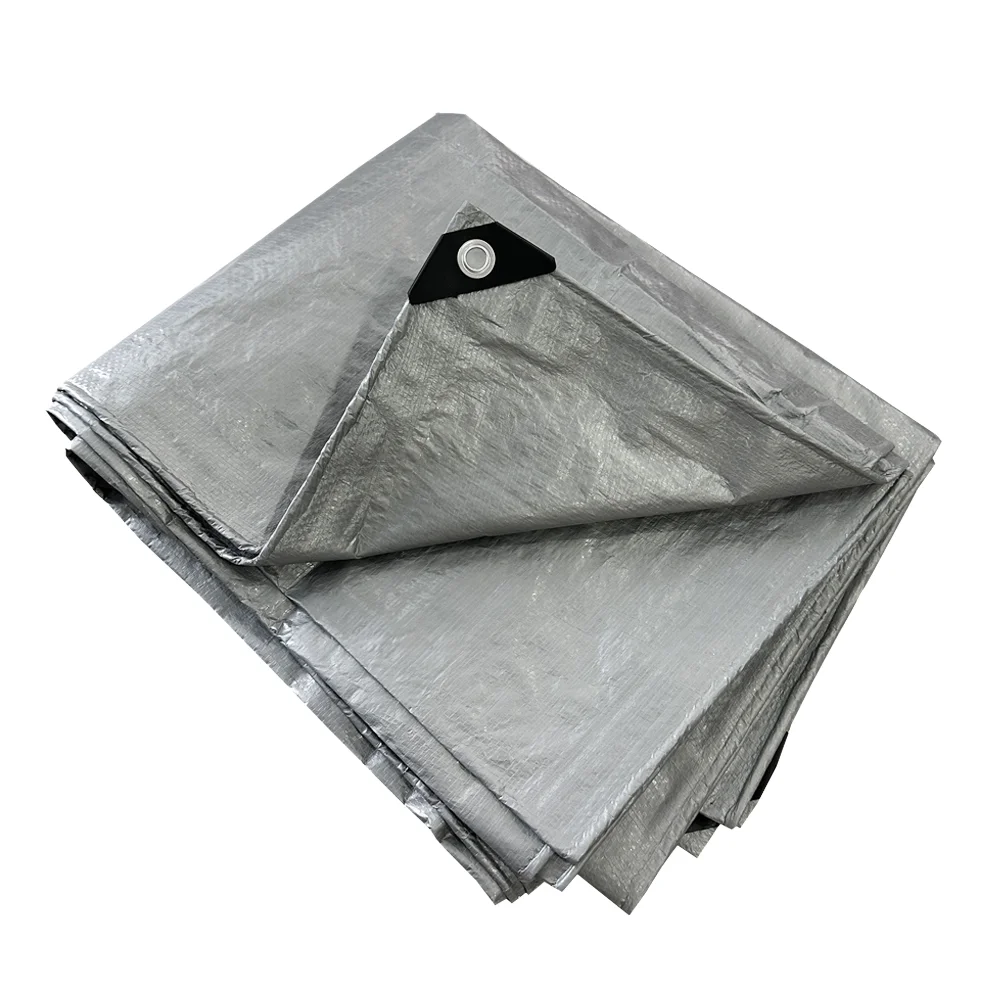
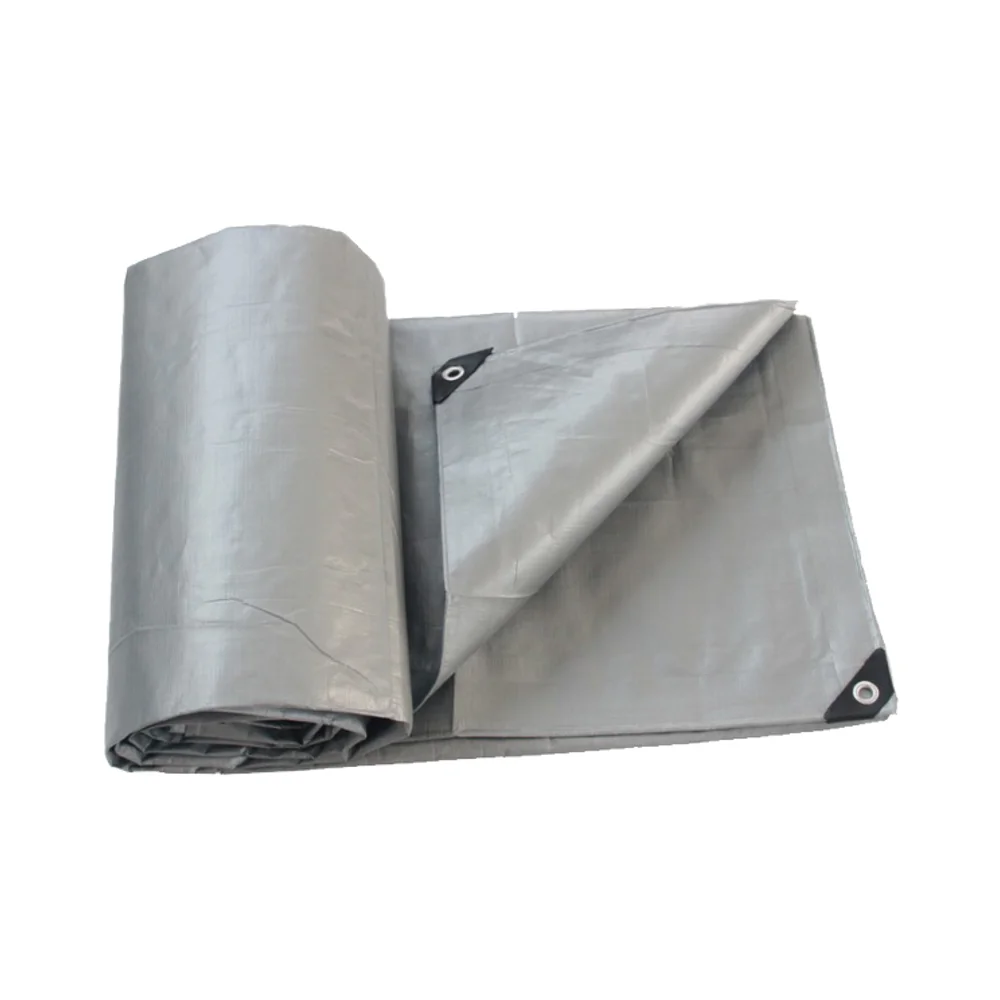
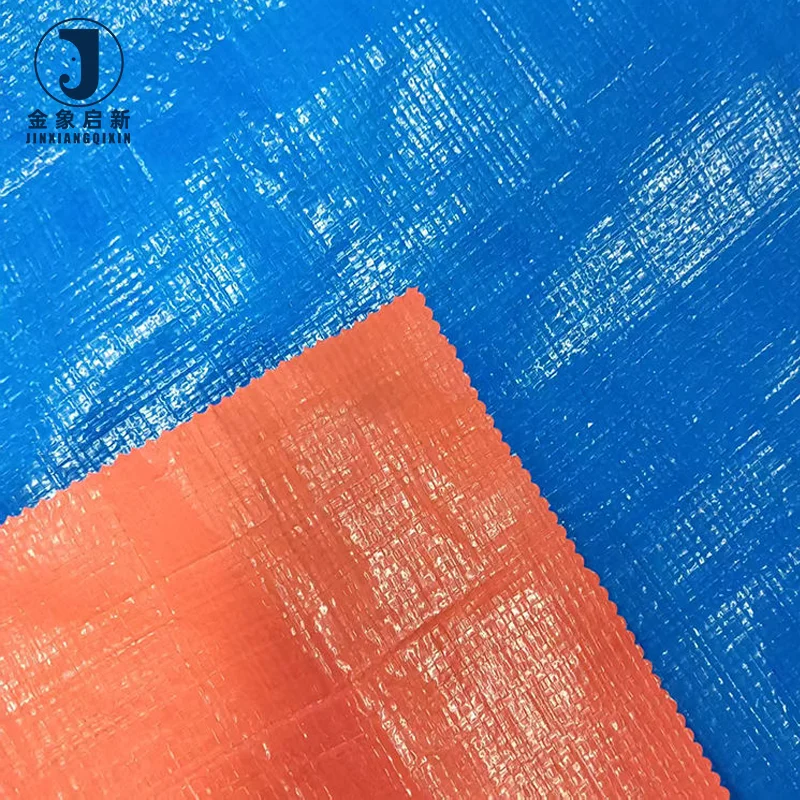
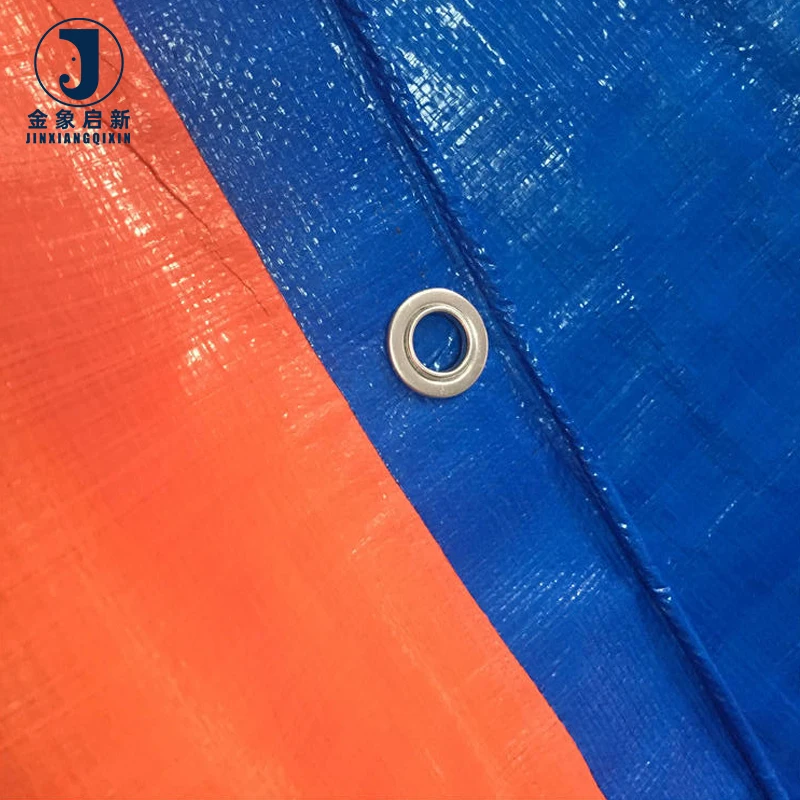
Proven Coating Control — dual-side LDPE lamination on HDPE woven base ensures consistent waterproof barrier across every roll of PE tarpaulin produced.
Technical Specifications
| Parameter | Value |
|---|---|
| Product Type | PE Tarpaulin Roll / Finished PE Tarpaulin |
| Material | HDPE weaving with LDPE lamination on both sides |
| Weight (GSM) | 50 gsm – 300 gsm (confirm grade for your application) |
| Thickness | 0.2 mm – 0.4 mm |
| Weave Density Options | 6×6, 7×7, 8×8, 9×9, 8×10, 10×10, 12×12, 14×14, 14×16 |
| Roll Width Options | 6 ft, 8 ft, 10 ft, 12 ft, 2 m, 4 m, 6 m |
| Roll Length Options | 100 yards, 100 meters, or custom |
| Coating Material | LDPE |
| Coating Method | Laminated |
| Key Features | Waterproof, washable, tear resistant, mildew proof, anti-aging |
| UV Treatment | Available (confirm test basis for your compliance requirement) |
| Finished Edges | All four edges reinforced with PP rope in hem |
| Eyelets | Galvanized eyelets every 3 ft or 1 meter interval |
| Corner Reinforcement | Reinforced plastic corners |
| Color Options | Blue, Blue/Orange, Green, Grey, Black, Clear, Grey/Green, Orange, or custom |
| Printing Option | Custom brand printing available |
| Standards | ISO, CE |
Application Suitability
| Application | Exposure & Requirement |
|---|---|
| Mining and tunnelling site surface protection | Constant ground contact, equipment abrasion, dust and debris containment |
| Ventilation duct perimeter covers and temporary enclosures | Airborne particulate exposure, wind load, UV exposure in open sites |
| Specialist inflatable and membrane structure ground sheets | Puncture risk from subgrade, moisture ingress, repeated deployment |
| Construction scaffolding wrap and material covers | Wind-driven rain, UV degradation, scaffold tube abrasion |
| Agricultural crop, hay and timber covers | Prolonged sun exposure, moisture, fungal and mildew risk |
| Truck, trailer and container load covers | Road vibration, tie-down stress at eyelets, weather exposure |
Why Certified Documentation Matters When Specifying PE Tarpaulin for Site Compliance
A PE tarpaulin that lacks the fire-retardant or anti-static certification your site mandates will fail inspection regardless of its physical performance.
Mining, tunnelling and aviation ventilation projects routinely demand documented proof of compliance before any fabric is deployed on site. A supplier who quotes "flame retardant" without naming the test standard or grade is asking you to take a risk that your site safety officer will not accept [NEED_CITE: fire classification standards for temporary fabrics on construction and mining sites]. The same applies to anti-static requirements in confined or explosive atmospheres. Requesting the test report before you place the order — not after the material arrives — is the only reliable way to protect your project timeline and compliance standing.
Matching Fabric Density to Ventilation Site Exposure Conditions
On mining and tunnelling projects, temporary covers and perimeter enclosures face abrasion from particulate-laden airflow, repeated handling during duct relocation, and sustained UV exposure in open-cut environments. Selecting a PE tarpaulin with a weave density aligned to the severity of these conditions — rather than defaulting to the lowest available GSM — prevents premature failure at stress points. Higher mesh counts such as 12×12 or 14×16 deliver greater tear resistance where the fabric is frequently folded, dragged or clamped.
Lamination Integrity Under Repeated Deployment
Dual-side LDPE lamination bonded to the HDPE woven base creates a continuous waterproof barrier that resists delamination through multiple deploy-and-stow cycles. When ventilation ducts are relocated as tunnel faces advance, the perimeter covers and protective sheeting move with them. Coating adhesion at the laminate interface must hold under flex and fold without cracking or peeling [NEED_CITE: lamination adhesion test methods for coated technical fabrics]. Requesting a pre-shipment peel strength check gives you confidence that the lamination will perform through the service life of the project.
How Weave Count and Coating Weight Interact to Determine Real-World Strength
GSM alone is an incomplete indicator of how a PE tarpaulin will perform under load. The base fabric weave density — from 6×6 to 14×16 — determines the structural skeleton, while the LDPE lamination weight on each side contributes waterproof integrity and surface abrasion resistance. A fabric with a tight 14×16 weave at moderate GSM can outperform a loosely woven fabric at higher GSM in tear propagation resistance because the denser yarn grid arrests tear growth. Thickness from 0.2 mm to 0.4 mm reflects the combined build of both weave and lamination. Specifying both weave count and GSM together — and verifying both on arrival — gives you a reliable picture of tensile and tear capability.
What Happens When the Spec Does Not Match the Site Requirement
Deploying a PE tarpaulin that is too light for the actual exposure leads to predictable failures: eyelets pull through thin fabric under tie-down tension, lamination cracks at fold lines after repeated handling, and UV degradation becomes visible as chalking and embrittlement within the first season. On regulated sites, the consequence goes beyond replacement cost — a cover or enclosure that lacks the specified fire-retardant grade will be rejected at audit, halting work until compliant material arrives [NEED_CITE: site audit rejection of non-certified temporary fabric enclosures]. Colour inconsistency between batches compounds the problem when adjacent panels must present a uniform appearance for client-facing enclosures.
Why Sourcing PE Tarpaulin Here Reduces Specification Risk
Three full production lines and 36 sets of professional equipment support bulk output without sacrificing lamination consistency across rolls. A dedicated 10-person R&D team handles material selection, custom sizing and sample development, producing samples within days when your project demands a non-standard width or colour. QA/QC inspection runs at every production stage, with 100 percent pre-shipment checking against the stated GSM, weave density and lamination integrity. Nearly 30 years of focused coated fabric production means process parameters for LDPE lamination adhesion are controlled from experience, not guesswork. Full documentation — from material specification sheets to certificates of origin — ships with every order.
Documentation & Verification
- Material specification sheet stating exact GSM, HDPE weave count and LDPE lamination weight for the grade ordered
- UV treatment and flame-retardant test reports provided where the specified grade requires site compliance evidence
- Pre-shipment inspection record confirming 100 percent roll or finished-sheet check before dispatch
- Roll packing list detailing width, length, colour and batch reference for each unit shipped
- Certificate of origin and customs documentation supporting international project procurement
Fabrication, Handling & Storage
- Hot-air welding parameters should match the LDPE lamination thickness — confirm temperature and speed on a scrap piece before production seams
- Galvanized eyelets at 3 ft intervals require PP rope-reinforced hems to distribute tie-down load and prevent pull-through
- Store rolls horizontally on pallets, avoid stacking beyond two high to prevent permanent creasing of the LDPE coating surface
- Unroll and allow PE tarpaulin to relax in ambient temperature before tensioning, especially after cold transport
- Clean with mild detergent and soft brush to preserve the anti-aging surface treatment — avoid solvent-based cleaners
- When cutting finished panels from roll stock, plan layout to minimise offcuts and align eyelet positions with structural tie-down points
What to Include in Your Enquiry
To receive an accurate specification recommendation, provide the application environment, exposure conditions and any site-specific compliance requirements such as fire-retardant grade or anti-static certification. Confirm the roll width, length and GSM range you need, along with colour and any custom printing requirements. State whether you require finished cut-to-size panels with hemmed edges and eyelets, or roll stock only. Request samples for approval before bulk production if your project demands a non-standard grade.
Frequently Asked Questions
Q: How do I verify the GSM of PE tarpaulin on arrival matches the quoted specification?
A: Request a pre-shipment inspection record that documents the measured GSM per roll or batch. On arrival, cut a measured sample from the roll and weigh it to cross-check against the stated value. Discrepancies should be reported immediately with the batch reference number so the supplier can trace the production run.
Q: What fire-retardant or anti-static certifications are available for site compliance?
A: Availability depends on the specific grade selected. Some PE tarpaulin grades can be produced with fire-retardant or anti-static treatment — confirm the test standard and grade required for your market before placing the order. Request the test report in advance to ensure it satisfies your site safety officer and audit requirements.
Q: How is UV treatment validated and what supports outdoor service life claims?
A: UV treatment is available on request, but the test basis should be confirmed for your target climate and exposure duration. Ask the supplier for the test method and results applicable to the grade you are ordering so you can evaluate whether it meets your project’s outdoor deployment requirements.
Q: What roll width and length options are available for project-specific dimensions?
A: Roll widths include 6 ft, 8 ft, 10 ft, 12 ft, 2 m, 4 m and 6 m, with lengths of 100 yards, 100 meters or custom. Custom widths and lengths can be developed through the R&D team — request samples to confirm the specification before committing to bulk production.
Q: How is batch-to-batch colour consistency maintained across multiple orders?
A: Colour consistency is controlled through in-process QA checks at the lamination stage and 100 percent pre-shipment inspection. If your project requires multiple rolls or finished panels installed side by side, specify the colour reference clearly and request batch samples for visual approval before full production runs.