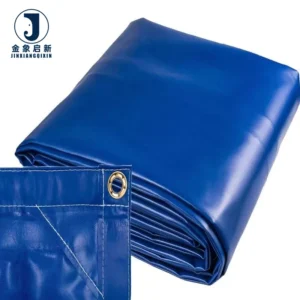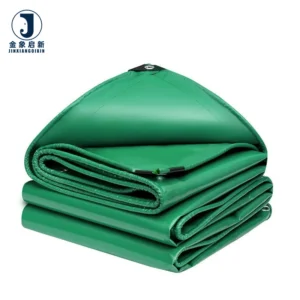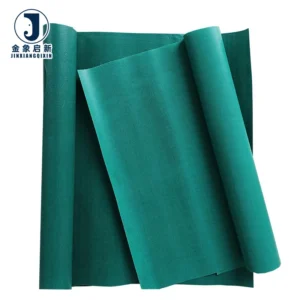

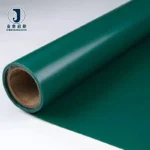
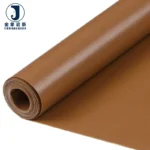
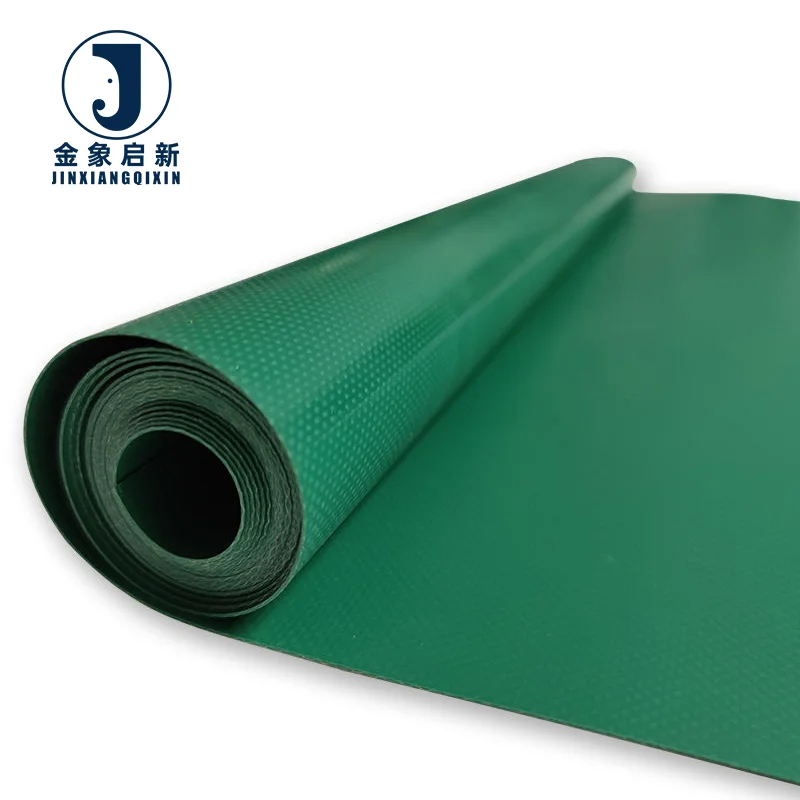

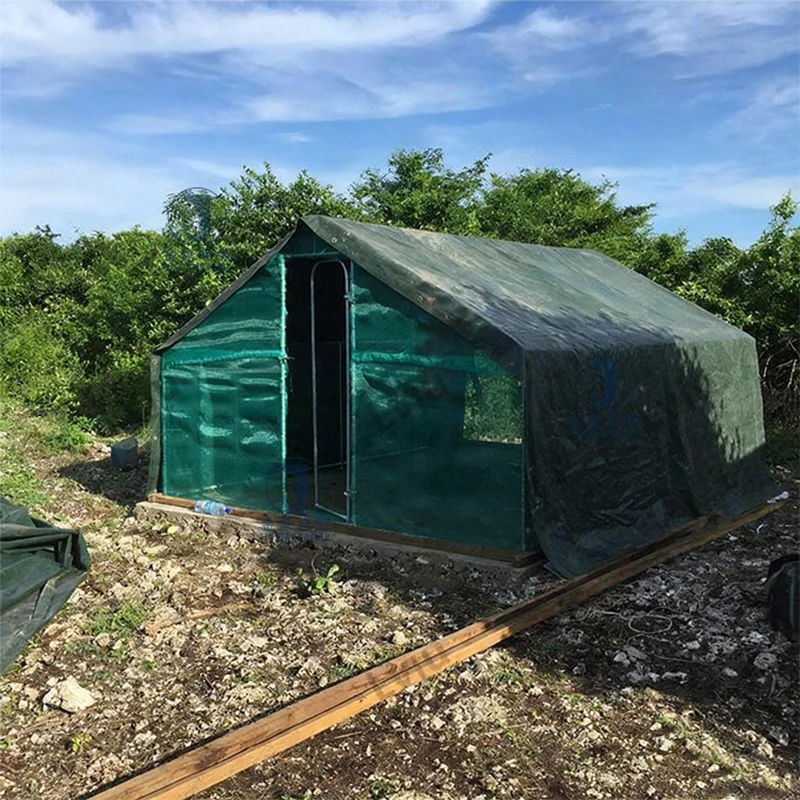
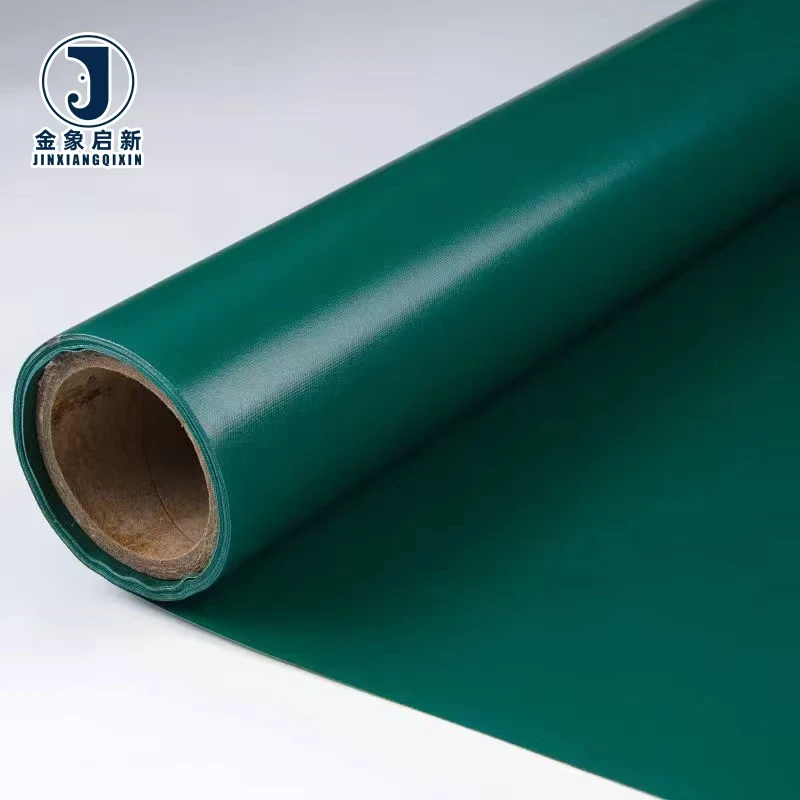
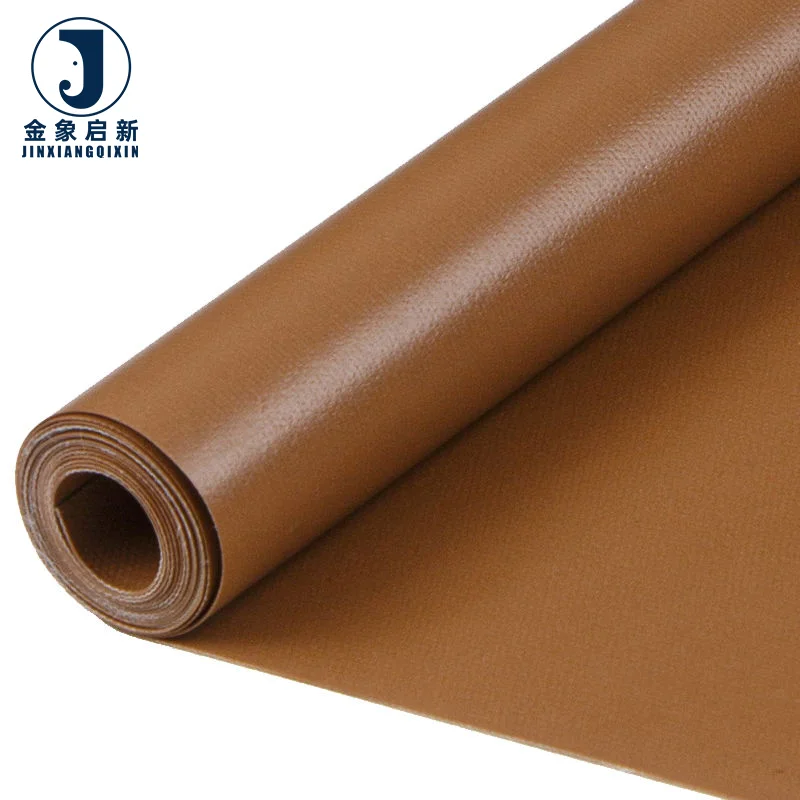
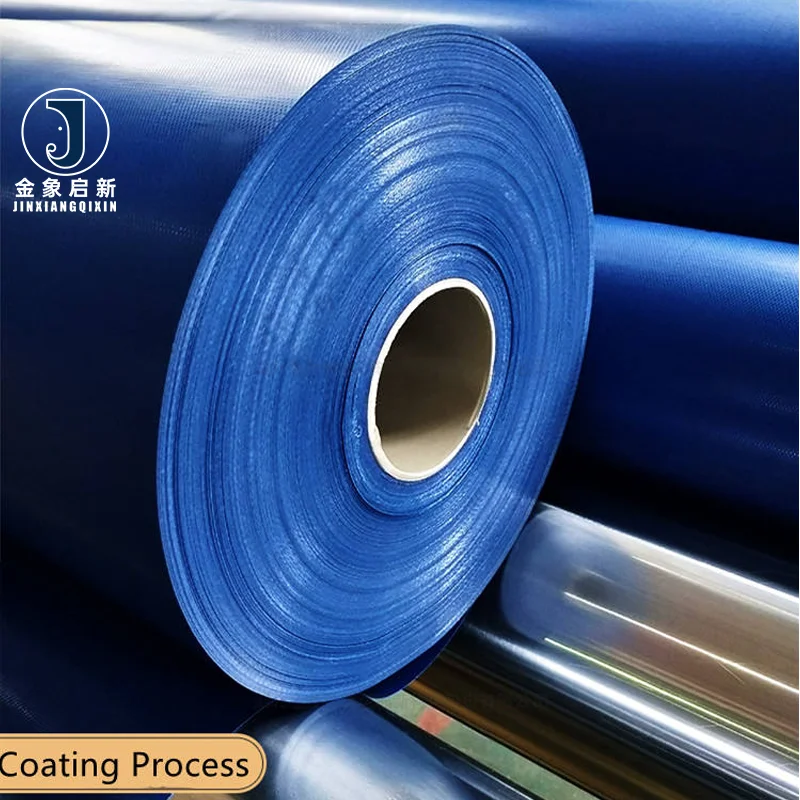
PVC Coated Tarpaulin Roll for Membrane Structures – Technical Grade
Coating adhesion mastery — Nearly 30 years of PVC coating process control applied to technical fabric applications, ensuring every roll meets stated GSM and adhesion requirements for hot-air welding and membrane structure fabrication.
Technical Specifications
| Parameter | Value |
|---|---|
| Product Type | PVC Coated Tarpaulin |
| Material | PVC & Polyester base fabric |
| Yarn Count | 500D×500D / 500D×840D / 500D×1000D / 1000D×1000D / 1000D×1300D / 1000D×2000D / 1300D×1300D |
| GSM Range | 350 / 400 / 420 / 500 / 600 / 650 / 750 / 900 |
| Thickness | 0.29mm / 0.32mm / 0.38mm / 0.44mm / 0.46mm / 0.55mm / 0.65mm |
| Mesh Density | 20×20 / 30×15 / 30×19 |
| Warp Tensile Strength | 1650N – 3900N (grade dependent) |
| Weft Tensile Strength | 1600N – 3500N (grade dependent) |
| Tensile Strength | 50–80 MPa |
| Density Parameter | 1.15–2.00 g/cm³ |
| Brittle Temperature | ≤ -50°C to -60°C |
| Softening Temperature | ≥ 80°C |
| Melting Point | 212°C |
| Key Features | Water resistant, flame retardant, waterproof, anti-UV (grades available — confirm the grade required for your market) |
| Edge Finishing | 5mm rope, high temperature heat sealed seamless edge wrapping |
| Reinforcement | Reinforced corners on all sides |
| Package | Roll packing, bale packing, carton |
Application Suitability
| Application | Exposure & Requirement |
|---|---|
| Membrane structure envelopes | Biaxial tension, sustained solar exposure, hot-air welded panel seams, colour consistency across adjacent panels |
| Inflatable buildings | Internal positive pressure, repeated inflation cycles, rapid deployment folding and unfolding |
| Mining ventilation ducts | Fire-retardant compliance, anti-static surface requirements, abrasive particulate in airflow, confined-space installation |
| Tunnelling air distribution | Continuous mechanical stress from fan pressure, chemical exposure from blasting residues, flame certification on-site |
| Aviation hangar partitions | Aircraft movement proximity, jet fuel mist resistance, fire compartmentalisation codes |
What "Fire-Rated Fabric" Means When the Certificate Does Not Match the Batch
A roll labelled fire-retardant is only compliant if the test report covers your specific production batch and the flame-retardant grade matches the regulation in your jurisdiction.
Too many contractors receive PVC coated tarpaulin roll stock labelled "flame retardant" only to discover the accompanying certificate is a generic document covering a different product family. The site inspector flags the mismatch, work stops, and the duct or membrane panel fails acceptance. The cost is not just the replacement material — it is the idle crew, the delayed handover, and the credibility loss with the main contractor [NEED_CITE: fire classification verification on coated fabrics for building interiors]. When you specify PVC coated tarpaulin for a technical application, the test report must name the grade, the standard, and the batch.
Coating Formulation and Hot-Air Weld Compatibility
Membrane structures live and die at the seam. The PVC coated tarpaulin roll must support consistent hot-air weld bonds across the entire panel length, which depends on coating formulation, plasticiser type, and surface condition. Rolls designed with controlled adhesion between base fabric and PVC layer allow fabricators to dial in weld temperature and speed without delamination risk. This PVC coated tarpaulin range is produced with process-controlled coating weight, giving fabricators a predictable thermal window for welding — critical when panels span tens of metres and a failed seam means full replacement.
Tensile Architecture for Inflatable and Pressurised Structures
Inflatable buildings place every square metre of fabric under constant positive pressure. The base fabric denier and weave density determine how the material handles biaxial stress without deformation or creep. Yarn counts from 500D×500D up to 1300D×1300D allow specifiers to match the base fabric to the internal pressure and span of the structure. Higher denier selections deliver the tensile reserve needed for large-clearance inflatable envelopes, while lighter grades suit temporary shelters with modest pressure differentials [NEED_CITE: tensile and tear test methods for coated fabrics per ISO 1421].
Reading GSM and Base Fabric Density as a System, Not a Single Number
GSM alone tells a buyer almost nothing about real-world performance. A 500 GSM roll woven at 30×19 mesh with 500D×1000D yarns behaves very differently from a 500 GSM roll at 20×20 mesh with heavier, fewer yarns. The denser weave resists tear propagation because each yarn intersection acts as a crack-arrest point, while the heavier-yarn, lower-count construction may show similar tensile on a strip test but splits rapidly once punctured. Coating weight must also be factored in: two rolls at the same GSM can have vastly different base fabric weights depending on how much PVC sits on the surface. A heavy coating masks a light base fabric — a common reason why a roll feels substantial in hand but tears easily under site loads.
The Hidden Cost of Ignoring Batch-Level Colour and Weld Consistency
When adjacent membrane panels come from different production runs, colour drift becomes visible once the structure is erected and sunlight hits the façade. The entire panel may need replacement to restore a uniform appearance — a rework cost that dwarfs the savings from buying cheaper roll stock [NEED_CITE: colour consistency standards for architectural membrane panels]. Similarly, inconsistent coating thickness between rolls causes hot-air weld parameters that work on one panel to fail on the next, forcing fabricators to stop, recalibrate, and scrap welded test pieces before resuming production.
Why Fabricators Source This PVC Coated Tarpaulin Range
Three full production lines with 36 sets of professional equipment support bulk roll output with maintained batch consistency, reducing the colour and coating variation that plagues multi-source procurement. The 10-person R&D team develops custom width, colour, and treatment combinations in-house, producing samples within days rather than weeks. Dedicated QA/QC at every production stage verifies coating weight, adhesion, and GSM before the roll is cleared for packing. 100% pre-shipment inspection means the roll you receive matches the specification sheet you approved — not a "close enough" substitute. Full material traceability from base fabric lot to finished roll supports the documentation chain that site inspectors and compliance auditors demand.
Documentation & Verification
- Material specification sheet stating GSM, base fabric denier, weave density, and coating weight per roll
- Flame-retardant and anti-UV test reports issued against the specific batch, not a generic product family certificate
- ISO and CE certificates covering the treatment grade specified for your ventilation or membrane project
- Pre-shipment inspection record confirming roll-to-roll GSM and colour consistency
- Roll packing list with net weight, gross weight, and linear metre count per roll for customs and logistics
Fabrication, Handling & Storage
- Hot-air weld temperature should be calibrated per GSM grade — test a 300mm sample before full-panel welding
- High-temperature heat-sealed edge wrapping prevents fraying during fabrication of heavy-grade rolls
- Store rolls upright on pallets to avoid flat-spot deformation that affects downstream cutting accuracy
- Reinforced corner patches should be applied before eyelet installation on cut-to-size panels
- Avoid solvent-based cleaners on anti-UV treated surfaces — confirm chemical compatibility with the coating formulation first
- Allow cold-stored rolls to acclimatise before unrolling to prevent coating micro-cracking at low temperature
Start Your Technical Specification
To match the right PVC coated tarpaulin grade to your project, share the application type, expected structural loads, and the fire-retardant or anti-static standard your site requires. Include your target roll width, annual volume, and whether you need raw roll stock or pre-cut panels. If membrane colour consistency is critical, request a production-range sample before committing to the full order.
Frequently Asked Questions
Q: What test reports accompany flame-retardant PVC coated tarpaulin rolls?
A: Each treated batch ships with a test report stating the flame-retardant grade and the test standard applied. We do not issue generic certificates covering multiple product families. If your project requires compliance with a specific national fire code, state the standard at inquiry so the correct treatment grade is selected and tested before dispatch.
Q: How is GSM verified before shipment?
A: Every roll undergoes 100% pre-shipment inspection where GSM is measured and recorded against the specification sheet. The inspection log is available for buyer review. This eliminates the common problem of receiving material lighter than quoted, which undermines tensile performance and weld integrity in membrane and duct fabrication.
Q: Can this fabric be hot-air welded for membrane structure panels?
A: Yes. The coating formulation is designed to support consistent hot-air weld bonds. We recommend fabricators run a weld parameter test on a sample piece from each production batch before full-panel welding. The R&D team can advise on temperature ranges based on the specific GSM and coating weight of your selected grade.
Q: What certifications are available for mining ventilation duct applications?
A: Fire-retardant and anti-static treatment grades are available for ventilation duct fabric, with test reports matching the applicable mining or tunnelling standard. Specify your jurisdiction and the compliance code at inquiry. Documentation includes ISO and CE certificates alongside batch-specific test results for site inspector review.
Q: What is the minimum order for custom width or colour on roll stock?
A: Custom widths, colours, and surface finishes are supported across the PVC coated tarpaulin roll range. Minimum order quantities vary by the degree of customisation — standard stock grades carry lower minimums, while bespoke colour or width runs require a dedicated production slot. Request a quotation with your target dimensions and annual volume for a precise minimum.