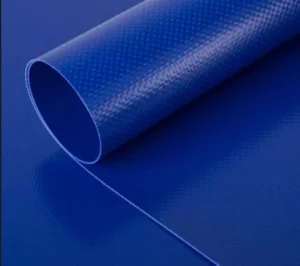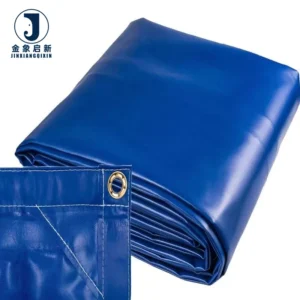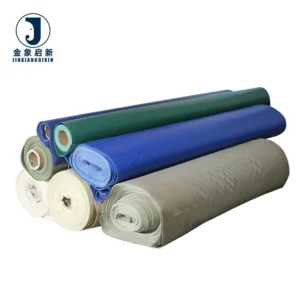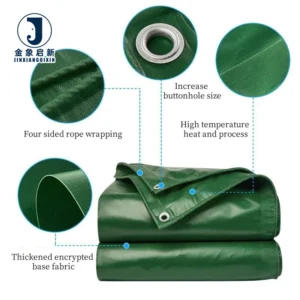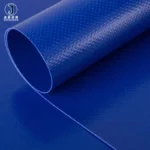
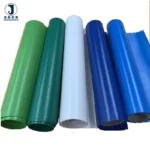
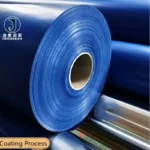
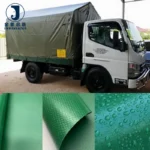
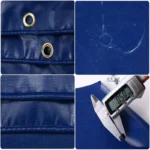
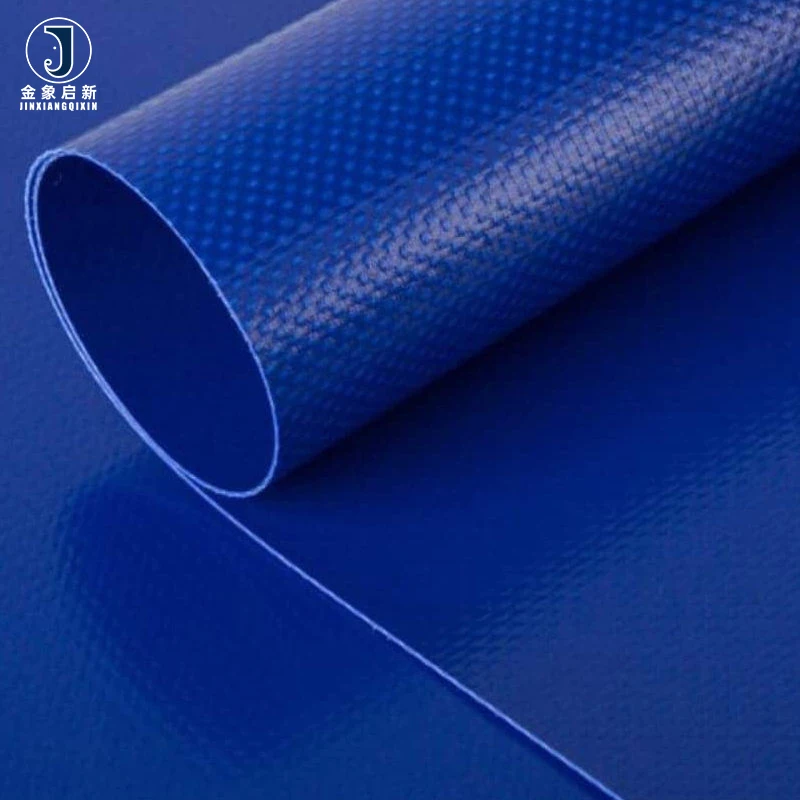
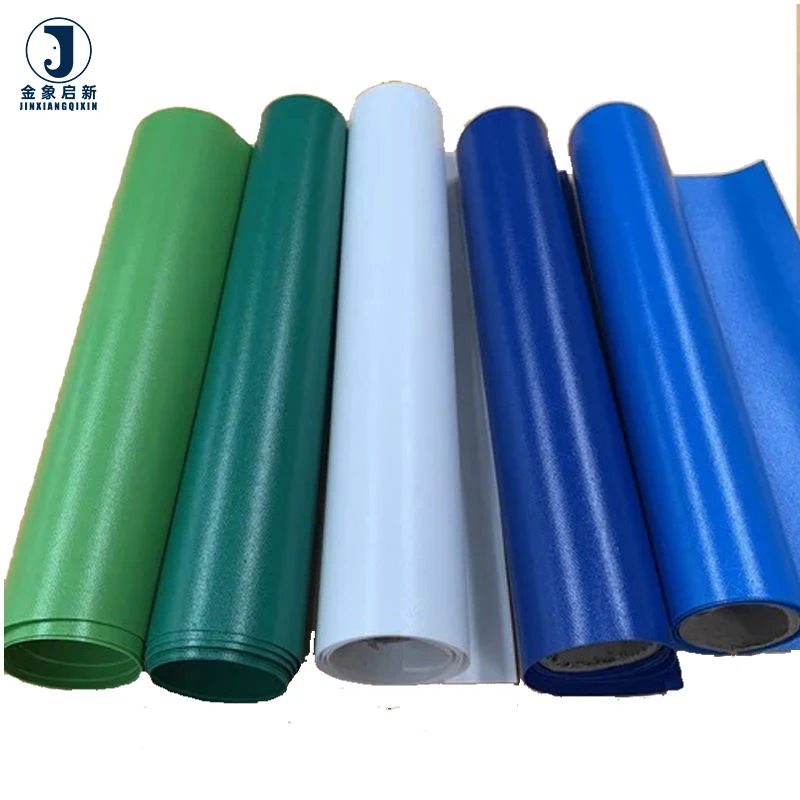
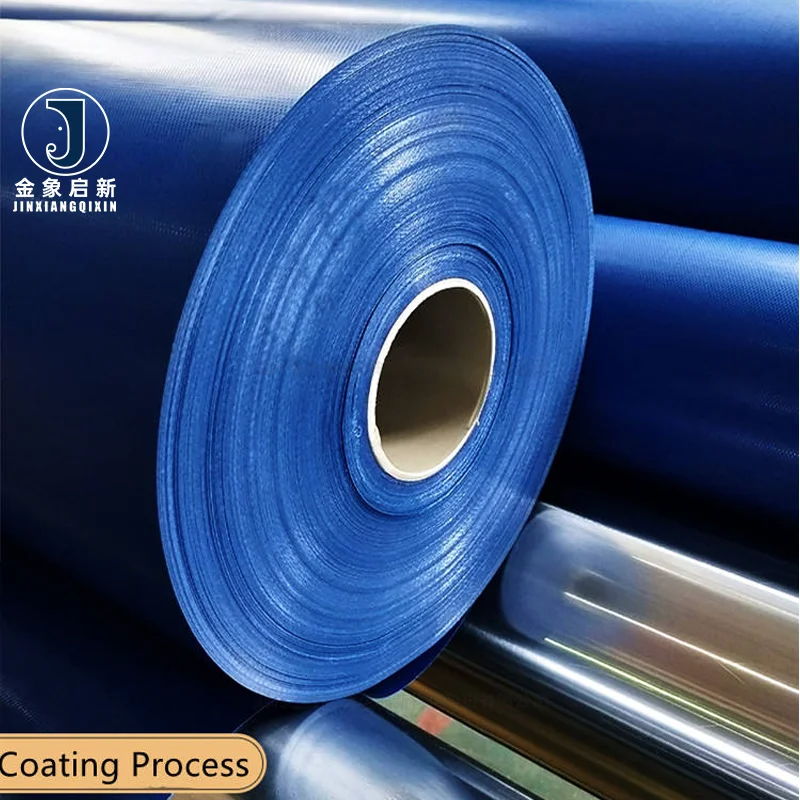
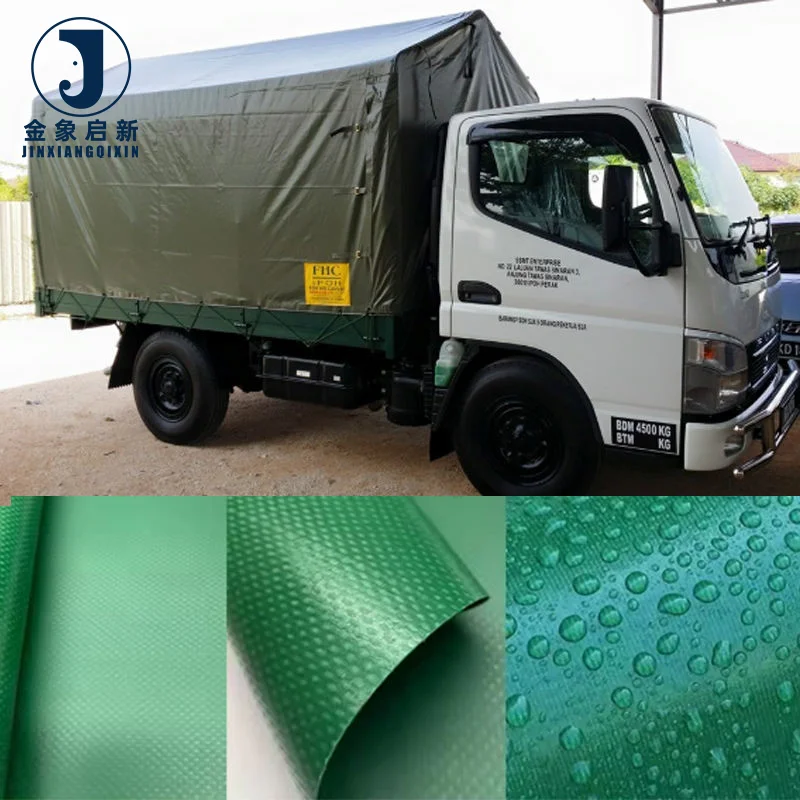
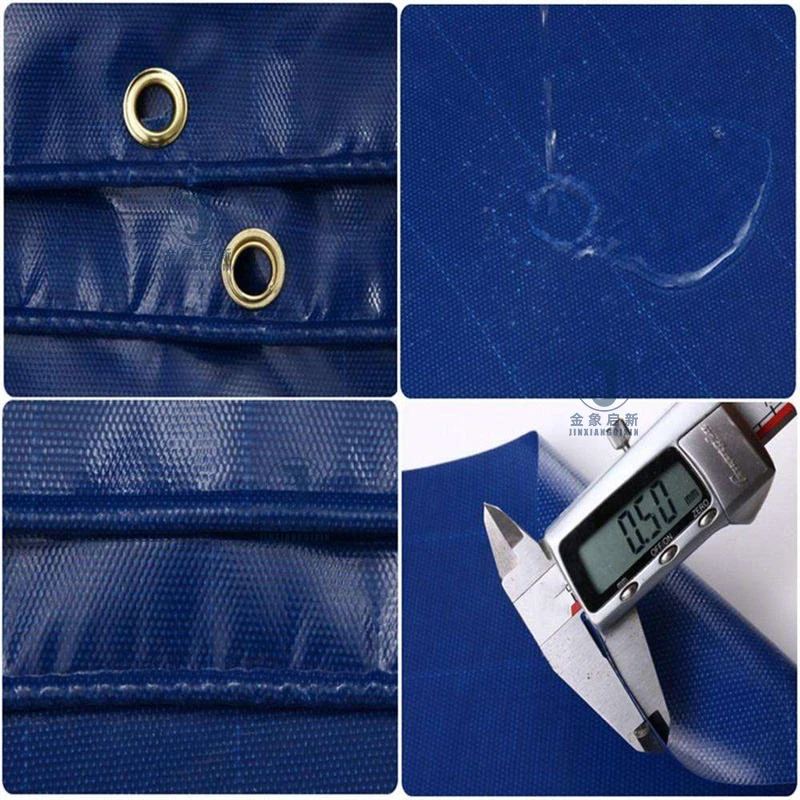
Process-Controlled Coating — PVC tarpaulin rolls with verified GSM consistency across the batch, supported by dedicated QA at every production stage before dispatch.
Technical Specifications
| Parameter | Value |
|---|---|
| Product Type | PVC Coated Tarpaulin Roll |
| Material Composition | Polyester Base Fabric + Double-Sided PVC Coating |
| Weight Options | 610gsm, 650gsm, 800gsm |
| Treatment | High frequency hot melt, Hot air, Sewing |
| Printing | Printable, Customized |
| Key Features | Waterproof, Fire Retardant (grade not stated), Anti UV (test basis not stated), Heavy Metal Free, Anti Mildew, Flexible, Heavy Duty, Tensile, Self Clean |
| Density Parameter | 1.15-2.00g/cubic centimeter |
| Tensile Strength | 50-80MPa |
| Brittle Temperature | ≤ -50~-60°C |
| Softening Temperature | ≥ 80°C |
| Melting Point | 212°C |
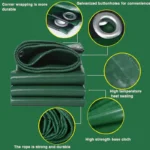
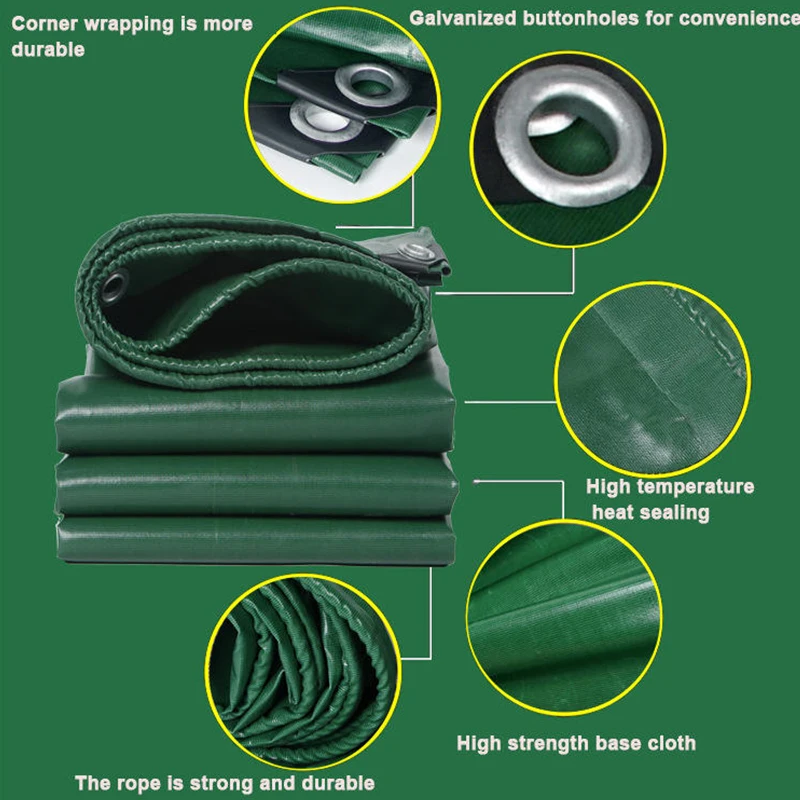
| Eyelets | Brass eyelets every 1 meter with reinforced edges |
| Standards | ISO, CE |
Application Suitability
| Application | Exposure & Requirement |
|---|---|
| Mining Ventilation Duct | Continuous airflow pressure, particulate abrasion, mandatory fire-retardant compliance underground |
| Aviation Air Duct | Temporary environmental control, strict flame-safety certification, rapid deployment and removal |
| Tunnel Construction Duct | High static pressure, suspended over active plant, potential chemical exposure from blasting residue |
| Inflatable Industrial Structure | Cyclic inflation and deflation, weld seam integrity under bending stress, UV exposure when installed outdoors |
Why Ventilation Duct Failures Rarely Start with the Fabric Itself
Most air duct failures in mining and tunnelling trace back to specification mismatches — the fabric may be adequate, but the coating adhesion, the weld parameters, or the GSM actually delivered does not match the conditions the duct faces underground. Specifying a PVC Coated Tarpaulin Roll for ducting means looking beyond the stated GSM to how the coating bonds to the base fabric and how the seams will hold under sustained positive or negative pressure.
I have reviewed field reports where ducts split along the weld line while the surrounding fabric remained intact [NEED_CITE: field performance data on welded seam integrity in coated technical textiles]. The coating formulation and its melting behaviour at the weld zone determine whether the joint fails before the body of the duct does. Fire retardant PVC Tarpaulin Roll selection must account for the specific welding method — high frequency, hot air, or thread-and-tape — that your fabrication shop uses.
Thermal Boundaries That Define Duct Performance in Extreme Environments
The brittle temperature of ≤ -50~-60°C and softening temperature of ≥ 80°C define the operational envelope for this PVC Coated Tarpaulin Roll in ventilation applications. In deep-level mining, ambient rock temperature can push intake air well above surface norms, while high-altitude tunnelling exposes stored and deployed ducts to sub-zero conditions before installation.
A duct that becomes brittle during cold storage or transport may develop micro-cracks at fold lines, which then propagate under airflow pressure once the system is running [NEED_CITE: low-temperature embrittlement behaviour in plasticised PVC coatings]. The stated melting point of 212°C provides a reference for high-frequency welding calibration, but the practical softening threshold at ≥ 80°C is the figure that matters for hot-air seam work. Fabricators need to know both values to set their equipment correctly.
Coating Adhesion and the Weld Line as the Real Point of Failure
The polyester base fabric provides the tensile backbone — 50-80MPa is the range recorded for this material family — but in a pressurised duct, the coating must transfer load across the weld zone without delaminating. High frequency hot melt welding works by activating the PVC coating layers on both sides of the joint simultaneously, creating a molecular bond rather than a surface adhesion.
If the coating weight is inconsistent across the roll width, the weld energy absorbed at different points along the seam will vary, producing strong and weak sections in the same joint [NEED_CITE: coating weight uniformity and its effect on high-frequency weld consistency]. This is why roll-to-roll GSM verification during production is not just a quality checkbox — it directly determines whether your fabricated ducts pass pressure testing on the first attempt. The PVC Coated Tarpaulin Roll you receive should have consistent coating thickness from edge to edge, verified before it leaves the factory.
Reading the Specifications Beyond the GSM Number
GSM tells you the total weight per square metre but reveals nothing about how that weight is distributed between the polyester base and the PVC coating on each side. A 650gsm roll with a heavy base and thin coating will weld differently and resist abrasion differently than a 650gsm roll with a lighter base and thicker coating. For ventilation duct fabrication, the coating thickness on each face governs both the weld strength and the surface durability against particulate impact inside the duct.
The tensile strength range of 50-80MPa reflects variation across available grades within this product family. Higher-density base fabrics with tighter warp-and-weft construction resist tear propagation more effectively, which matters when a duct is suspended on steel wire and subject to vibration from airflow turbulence. The density parameter of 1.15-2.00g/cubic centimeter indicates the compound formulation range — higher density typically correlates with greater filler content, which can affect flexibility at low temperatures and long-term plasticiser retention.
When evaluating a Fire Retardant PVC Tarpaulin Roll for your project, request the specific grade documentation for the weight you intend to order, rather than assuming the entire range carries the same certification.
The Cost of Specification Mismatches in Ventilation Projects
Ordering duct fabric based on the lowest GSM price without confirming the fire-retardant grade for your jurisdiction can result in failed site inspections, forcing you to replace already-fabricated ducts before the ventilation system is commissioned. This is a recurring issue on mining projects where the purchasing team and the site safety team work from different specification documents [NEED_CITE: fire safety compliance requirements for underground ventilation materials].
Colour variation between rolls in a single shipment is less critical for buried duct runs, but for surface-installed inflatable structures or visible temporary ventilation on construction sites, a batch with inconsistent pigmentation signals deeper process control issues that may extend to coating weight and adhesion. Welded seams that fail during factory pressure testing represent wasted fabrication time, energy, and labour — problems that often trace back to inconsistent coating behaviour across the roll batch rather than operator error.
Why Technical Buyers Source Ventilation Fabric Here
Coating weight and adhesion are controlled through process parameters monitored at each production stage, so the GSM on your specification sheet matches what arrives on your factory floor. Three full production lines and 36 sets of professional equipment support bulk roll output with consistent delivery scheduling for project-based procurement timelines.
A dedicated 10-person R&D team handles material selection for specific ventilation applications, whether you need confirmed fire-retardant grades for underground mining or anti-static treatment for environments with combustible dust. Every roll undergoes inspection before shipment, with records retained against your order for traceability [NEED_CITE: pre-shipment inspection protocols for industrial coated fabric orders]. Samples for custom requirements are developed within days, allowing you to verify weld behaviour and coating properties before committing to production volume.
Documentation & Verification
- Material specification sheet stating confirmed GSM, base fabric construction, and coating type per roll batch
- Fire-retardant test report matching the specific grade ordered, not a generic product family document
- Pre-shipment inspection record verifying weight, colour, and surface quality against your purchase specification
- Roll packing list with individual roll IDs, net weight, and container loading plan for receiving verification
- Certificate of origin and customs documentation package prepared for your destination country requirements
Fabrication, Handling & Storage
- High-frequency welding calibration should reference the 212°C melting point and ≥ 80°C softening threshold for energy settings
- Reinforced edges around brass eyelets every 1 meter provide attachment points for suspension hardware on duct runs
- Store rolls horizontally on padded cradles to prevent flat-spot deformation of the PVC coating surface
- Allow rolls to acclimatise to workshop temperature before unrolling, especially when brittle temperature boundary is approached
- Use PVC-compatible cleaners only — the heavy metal free and self-clean coating surface responds to mild detergent solutions
- Cut patterns should account for the available roll widths to minimise transverse weld seams on long duct sections
Requesting a Quotation for Your Ventilation Project
To receive a specification recommendation and sample, share your target fire-retardant standard for the installation jurisdiction, the duct diameter and operating pressure your design requires, and the total linear metres you intend to fabricate. If anti-static treatment is needed for combustible dust environments, state the surface resistance range your site safety plan specifies. Confirm whether you need rolls at stock widths or require custom slit widths to match your welding jig dimensions.
Frequently Asked Questions
Q: Which fire-retardant standards do you support for mining ventilation ducts?
A: We supply PVC coated tarpaulin rolls in fire retardant grades aligned with commonly specified mining and construction standards. The exact grade available depends on the weight and coating formulation you select. Share your site-specific requirement — such as the standard referenced in your ventilation safety plan — and we will confirm the matching grade with supporting test documentation before you commit to a production order.
Q: How do I specify anti-static treatment for explosive dust environments?
A: Anti-static treatment is available as an additional specification on our PVC coated rolls. Provide the surface resistance range your site safety engineer has defined, along with the operating environment details such as dust type and humidity levels. We will develop a sample with the specified treatment for your testing, and confirm the formulation before bulk production begins.
Q: What is the recommended welding method for high-pressure duct seams?
A: High frequency hot melt welding is the preferred method for pressurised ventilation ducts fabricated from this PVC coated polyester, as it activates the coating layers on both sides of the joint for a molecular bond. Hot air welding is suitable for field repairs and lower-pressure applications. We provide coating composition data to help your welding team calibrate energy settings for the specific GSM grade you order.
Q: Can you provide material data sheets for engineering approval?
A: Yes. We supply a material specification sheet covering GSM, base fabric denier and weave, coating type, and physical properties for the specific roll grade you are evaluating. This documentation supports your engineering approval process and can be submitted to consultants or site safety teams as part of your ventilation system design package before procurement is finalised.
Q: How do you ensure GSM consistency across bulk roll orders for duct fabrication?
A: Every production run is monitored for coating weight at multiple stages, and each roll is inspected against the stated GSM before it is released for shipment. The pre-shipment inspection record included with your order documents the verified weight per roll, so your receiving team can cross-check on arrival without relying solely on the packing label.