
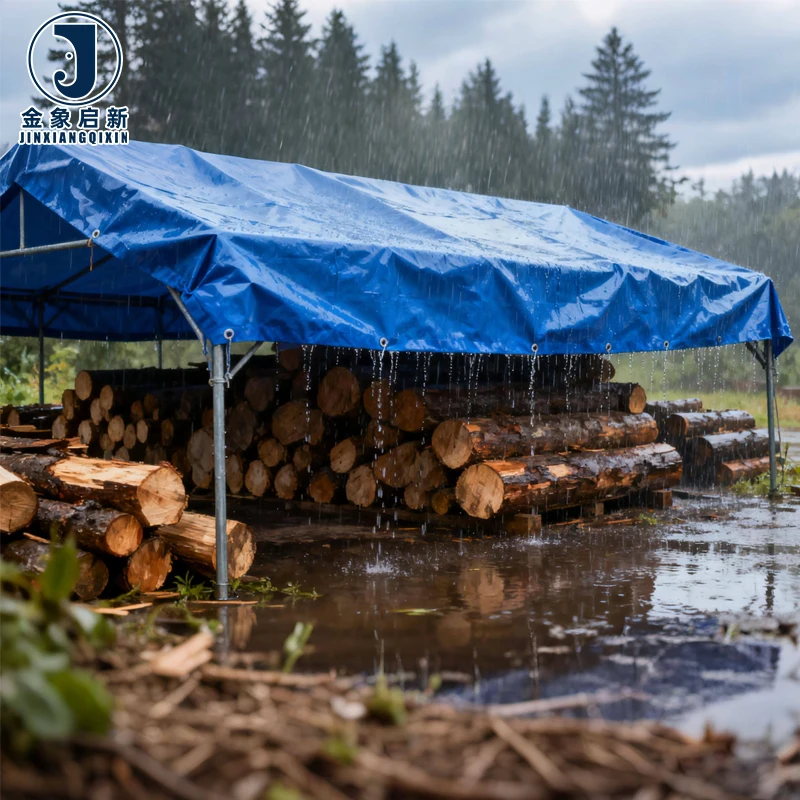
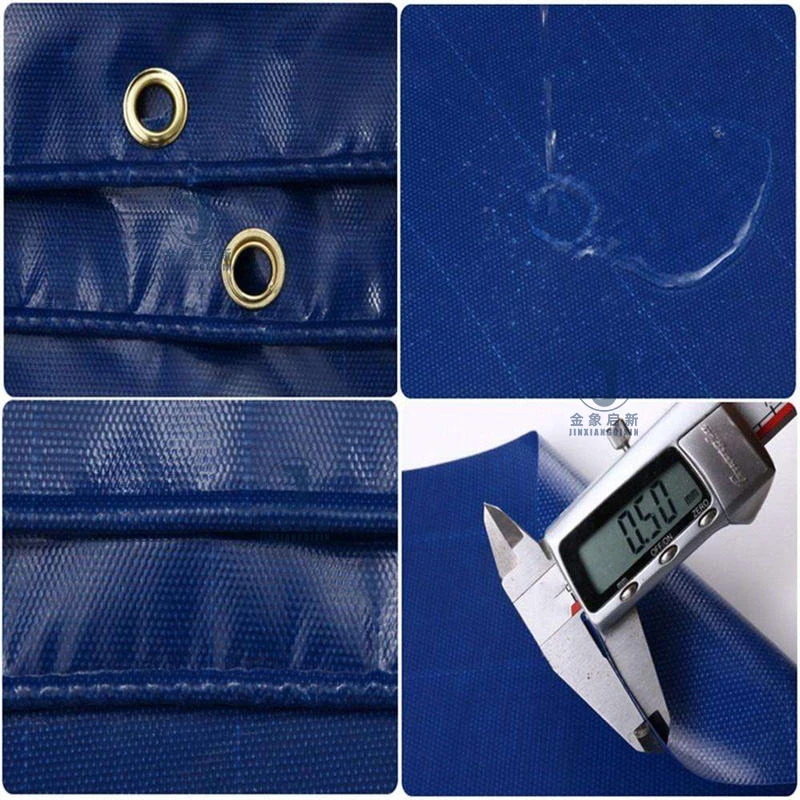
Technical Fabric Depth — base fabric denier from 500D to 2000D paired with coating weight control across three production lines, supporting documented fire-retardant and anti-static grades for ventilation duct and membrane structure projects.
Technical Specifications
| Parameter | Value |
|---|---|
| Product Type | PVC Coated Tarpaulin |
| Coating Material | PVC (polyvinyl chloride) |
| Base Fabric Denier | 500D (medium); 1000D (heavy-duty); 500D–2000D (super heavy) |
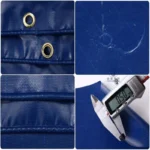
| Total Thickness | 0.35–0.45 mm (medium); 0.70–1.0 mm (heavy-duty); 1.2–1.5 mm (super heavy) |
| Weight (GSM) | 400–500 (medium); 700–1000 (heavy-duty); 1100–1500 (super heavy) |
| Tensile Strength – Warp | 1500–2000 N/5cm (medium); 2000–2500 N/5cm (heavy-duty); 2500–3000 N/5cm (super heavy) |
| Tensile Strength – Weft | 1200–1800 N/5cm (medium); 1800–2200 N/5cm (heavy-duty); 2200–2800 N/5cm (super heavy) |
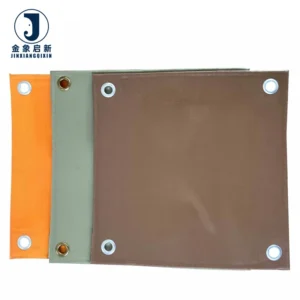
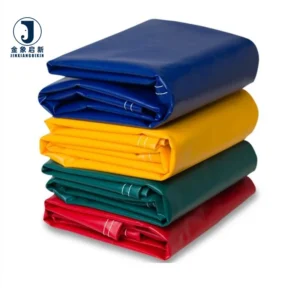
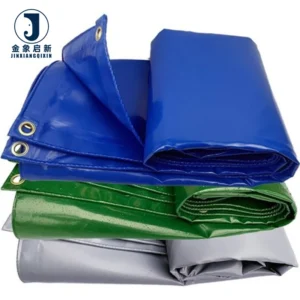
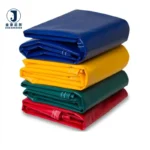
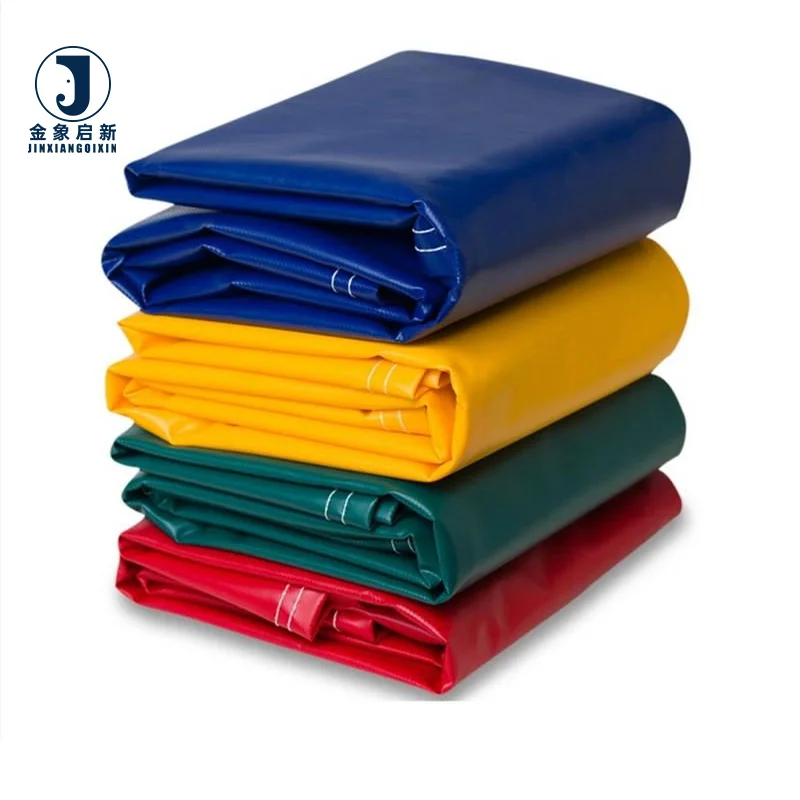
| Colour Options | Blue, Blue/Orange, Green, Grey, Black, Clear, Grey/Green, Orange, or custom |
| Finish | Glossy or matte (confirm at inquiry) |
| UV Treatment | Available — confirm test basis for your market |
| Flame Retardant | Available in flame retardant grades — confirm the grade required for your market |
| Anti-Static | Available — confirm certification requirement for mining or tunnelling duct |
| Anti-Mildew | Mildew-proof and anti-aging treatment stated |
| Waterproof Rating | Fully waterproof coated construction |
| Cut Sizes Available | 8′ × 10′, 10′ × 12′, 12′ × 16′, 16′ × 20′, 20′ × 20′, 20′ × 30′ |
| Printing Option | Custom brand printing available |
| Certification | ISO and CE |
Application Suitability
| Application | Exposure & Requirement |
|---|---|
| Mining ventilation duct | Confined-space airflow, continuous flexing, mandatory fire-retardant and anti-static compliance |
| Tunnelling ventilation duct | High humidity, rock dust abrasion, flame-spread and smoke-toxicity standards |
| Aviation hangar ventilation duct | Fuel-vapour environment, anti-static surface resistance, regulatory inspection |
| Inflatable membrane structures | Tensile load under positive pressure, UV exposure, weld integrity at curvature seams |
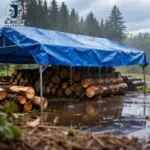
| Construction site enclosure | Wind loading, scaffolding abrasion, temporary weather protection |
What "Fire Retardant" Means When No Grade Is Specified on the Duct Fabric
A duct fabric without a named fire-retardant grade and matching test report is a compliance risk waiting to surface at site inspection.
Ventilation duct installed in mining or tunnelling environments must pass specific flame-spread and smoke-toxicity tests before the site safety officer signs off. A supplier who quotes "fire retardant PVC coated fabric" without attaching a test certificate leaves the contractor exposed — the duct may be rejected at commissioning, forcing a full strip-out and re-installation under schedule pressure. Across multiple projects we have observed duct fabric arrive with only a generic data-sheet claim and no traceable report [NEED_CITE: fire-retardant classification systems for ventilation ductwork in underground mining]. The procurement team then spends weeks chasing documentation that may never materialise.
How Fire-Retardant and Anti-Static Grades Map to Site Requirements
Different markets reference different test standards for fire retardant PVC coated fabric used in duct construction. European mining operations typically require classification to EN 13501-1 or a national equivalent, while Australian sites often specify AS 1530. Anti-static surface resistance is separately tested and reported, usually in ohms per square, to prevent charge accumulation in gas-bearing strata. Confirming which standard your site safety plan references before placing the order eliminates the most common reason for duct rejection at handover.
Tensile, Tear and Coating Thickness in Duct Service
The mechanical demands on ventilation duct fabric go beyond simple tensile figures. When a duct is suspended from roof bolts and pressurised, the fabric experiences biaxial stress with cyclic pulsation from the fan. Base fabric denier and weave density determine how well the material resists tear propagation once a small puncture occurs at a bolt hole or suspension clip. Coating thickness in the 0.70–1.5 mm range provides the abrasion margin needed where the duct rubs against tunnel walls [NEED_CITE: tensile and tear test methods for coated fabrics per ISO 1421]. Selecting denier and GSM together, rather than GSM alone, gives a more reliable predictor of field service life.
Denier, Coating Weight and the GSM Misconception
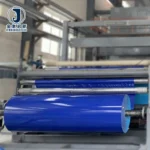
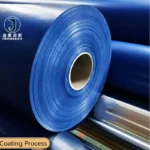
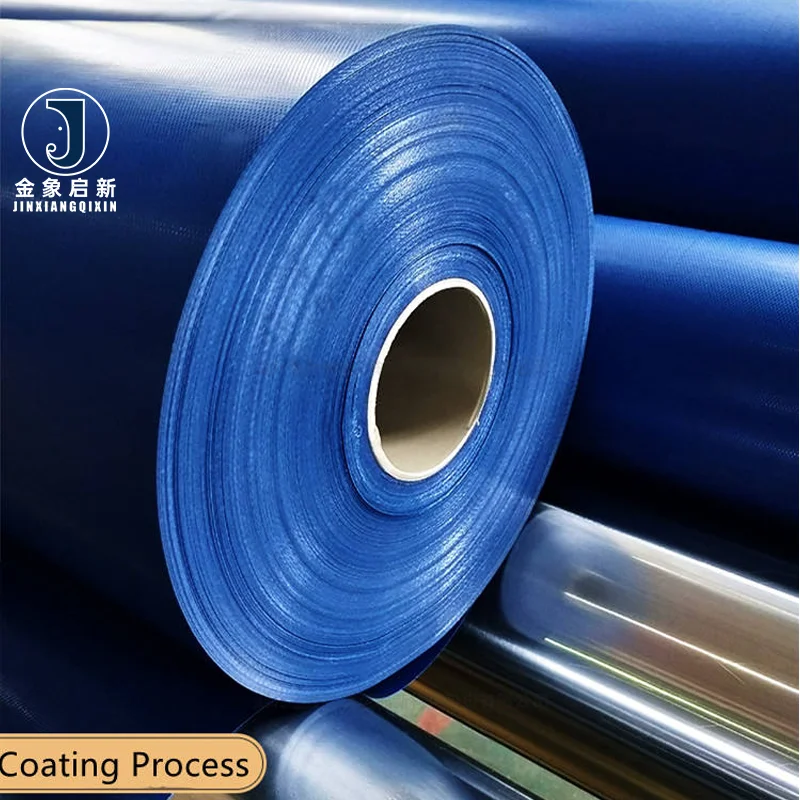
GSM tells you how much material is in each square metre but not how that mass is distributed between base fabric and coating. A 900 g/m² fabric built with a heavy coating on a light 500D base will show good initial stiffness yet poor tear resistance once a nick penetrates the coating layer. Conversely, a 900 g/m² fabric using a 1000D polyester base with a moderate coating weight delivers higher tensile and tear figures because the yarn mass carries the structural load. For ventilation duct subjected to continuous internal pressure and external abrasion, specifying denier alongside GSM ensures the base fabric has sufficient yarn count to arrest tear propagation. Coating adhesion — the bond strength between PVC layer and polyester base — then determines whether the coating delaminates at the heat-welded seam under flexing. Knife-over-roll coating typically achieves higher adhesion values than lamination, making it the preferred method for duct that will be heat-welded into long continuous runs [NEED_CITE: coating adhesion test methods for PVC coated polyester fabrics].
The Hidden Cost of Specifying Duct Fabric on Price per Kilogram Alone
When procurement selects coated fabric primarily on cost per kilogram, the supplier has an incentive to increase filler loading in the PVC compound. Heavily filled coating adds mass but reduces flex endurance, so the duct surface cracks at fold points after repeated installation and removal cycles. Anti-static additives, which carry a cost premium, may be reduced or omitted, leaving the duct surface unable to meet the resistance threshold specified in the mine ventilation plan. Colour inconsistency between rolls can also emerge when pigment dosage is cut to save compound cost — not a structural issue, but one that triggers visual rejection at client walkthrough [NEED_CITE: effect of plasticiser migration on long-term flexibility of PVC coated fabrics].
Why Source Ventilation Duct Fabric Through This Production Setup
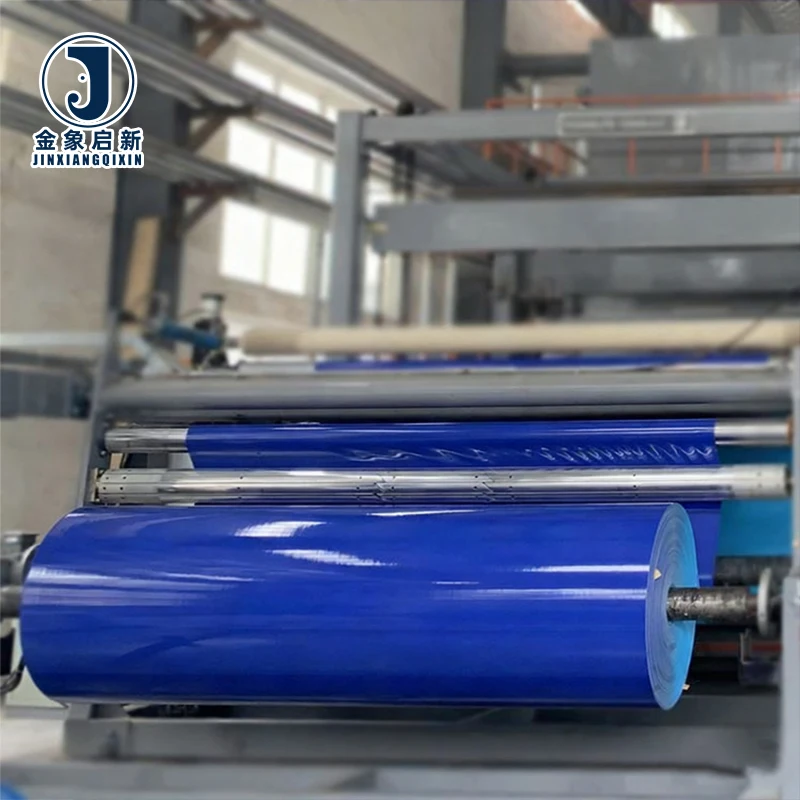
Coating weight and adhesion are controlled in-house across three full production lines, giving roll-to-roll consistency that matters when hundreds of metres of duct are welded into a single run. A ten-person R&D team handles material selection for fire-retardant and anti-static grades, developing samples within days so you can confirm compliance before committing to production volume. Dedicated QA/QC at every stage with full pre-shipment inspection catches GSM deviation and surface defects before the rolls leave the facility. Custom width and colour are available without prohibitive minimums, allowing trial orders for new duct designs or site-specific colour codes. The production team has accumulated process knowledge across coated fabric applications spanning ventilation duct, membrane structures and industrial covers, which informs recommendations on denier and coating weight for each service condition.
Documentation & Verification
- Material specification sheet stating GSM, base fabric denier and coating method for each roll
- Test report for flame-retardant grade matched to the standard your site safety plan requires
- Anti-static surface resistance report for mining and tunnelling duct applications
- Pre-shipment inspection record with individual roll weight verification against quoted GSM
- Certificate of origin and customs documentation for international project logistics
Fabrication, Handling & Storage
- Heat-weld parameters must match coating thickness — 0.70 mm and 1.5 mm grades require different temperature and dwell settings
- Store rolls upright on pallets to prevent flat-spotting that causes visible creases in finished duct sections
- Unroll in ambient temperature above 10 °C to avoid coating crack at fold lines during handling
- Use compatible PVC-based repair adhesive matched to the coating compound for field patching of punctures
- Plan cutting layout to minimise transverse welds in long duct runs, aligning welds with suspension points
- Clean finished duct with neutral pH detergent to preserve anti-static surface treatment effectiveness
Requesting a Quotation for Your Duct or Structure Project
Provide the ventilation duct diameter, total linear metres and the fire-retardant or anti-static standard your site mandates. If the fabric is for an inflatable or membrane structure, share the design wind load and expected internal pressure so we can recommend denier and coating weight. Indicate whether you need rolls in stock width or a custom width to reduce weld count, and whether colour coding is required for duct identification on site. Sample rolls can be produced for weld trials and compliance testing before full production is scheduled.
Frequently Asked Questions
Q: What fire-retardant grade does this fabric carry and which test standard is used?
A: Fire-retardant treatment is available in multiple grades. The specific grade and test standard depend on your market — common references include DIN 4102, NFPA 701 and EN 13501-1. State the standard your project requires at inquiry stage so we supply the matching test report with your shipment.
Q: How is GSM verified on arrival and what documentation supports the quoted weight?
A: Each roll is weighed and recorded during pre-shipment inspection. A weight verification sheet listing actual GSM per roll is included with the dispatch documentation, allowing you to cross-check against the quoted specification when goods arrive at your facility.
Q: What anti-static certification is available for mining ventilation duct applications?
A: Anti-static treatment can be applied to achieve surface resistance values required by underground mining regulations. Request the specific resistance threshold stated in your ventilation plan, and we will provide a test report confirming the treated fabric meets that value.
Q: How do denier and coating weight relate to tensile and tear strength?
A: Denier determines the yarn mass in the base fabric, which carries tensile and tear load. Coating weight adds surface protection and abrasion resistance. A balanced specification pairs adequate denier with appropriate coating thickness so that neither the base fabric nor the coating becomes the weak link under service conditions.
Q: What is the relationship between UV treatment claims and actual outdoor service life?
A: UV treatment availability should be supported by a test report referencing a recognised exposure standard. Request the test basis when specifying anti-UV treatment so you can evaluate suitability against the expected duration and intensity of outdoor exposure at your project location.