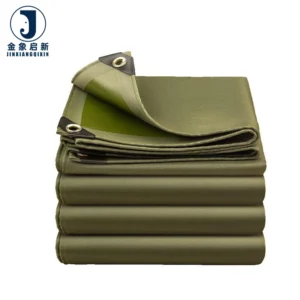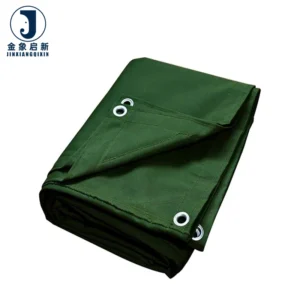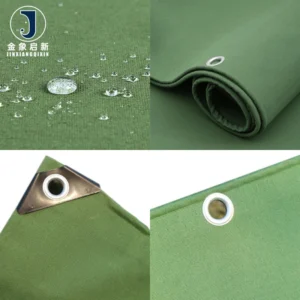


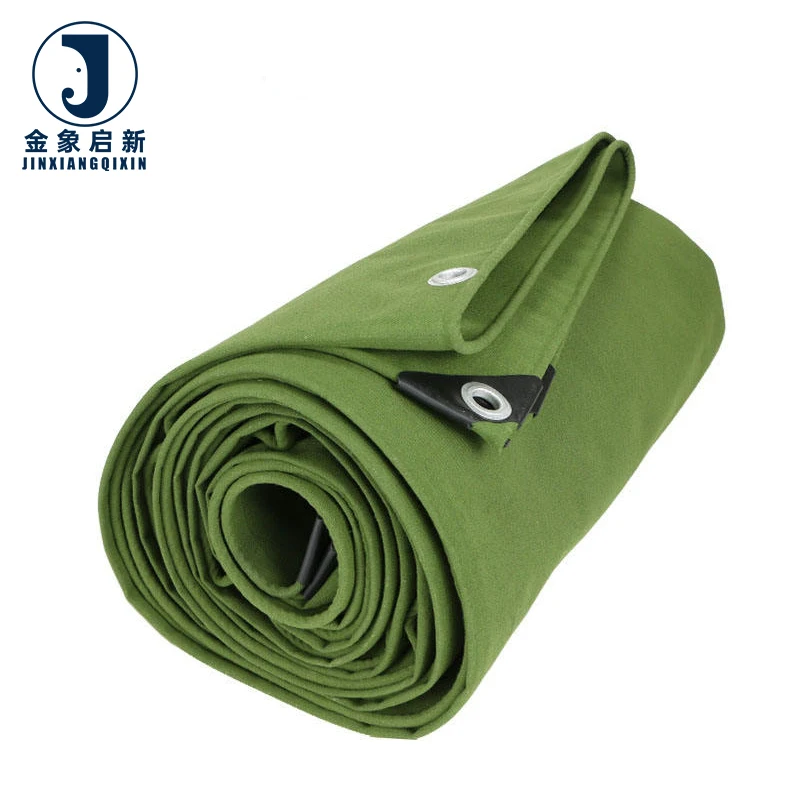
Verified Coating Weight and Consistent Roll Quality — Every 600gsm roll undergoes dedicated QA inspection to confirm coating adhesion and GSM accuracy before dispatch, preventing the mismatch between quoted specification and delivered material that plagues bulk canvas tarpaulin orders.
Technical Specifications
| Parameter | Value |
|---|---|
| Product Type | PVC Coated Tarpaulin |
| Base Material | Polyester cotton industrial textile, 8–12 strands fine cotton yarn |
| Weight | 600gsm |
| Total Thickness | 0.5 mm / 0.6 mm / 0.7 mm (confirm required grade) |
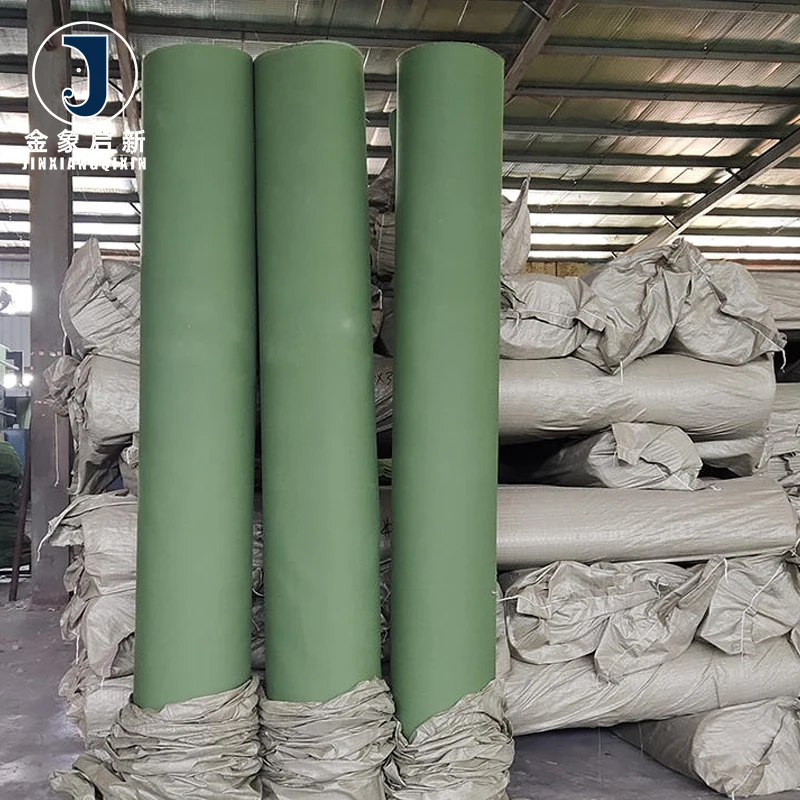
| Roll Width | 2 m |
| Roll Length | 100 m |
| Finish Product Size | Custom cut-to-size or sold as inventory roll stock |
| Color Options | Army Green Camouflage / Custom colours available |
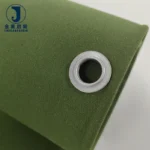
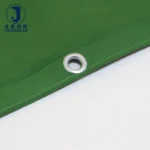
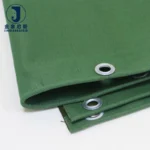
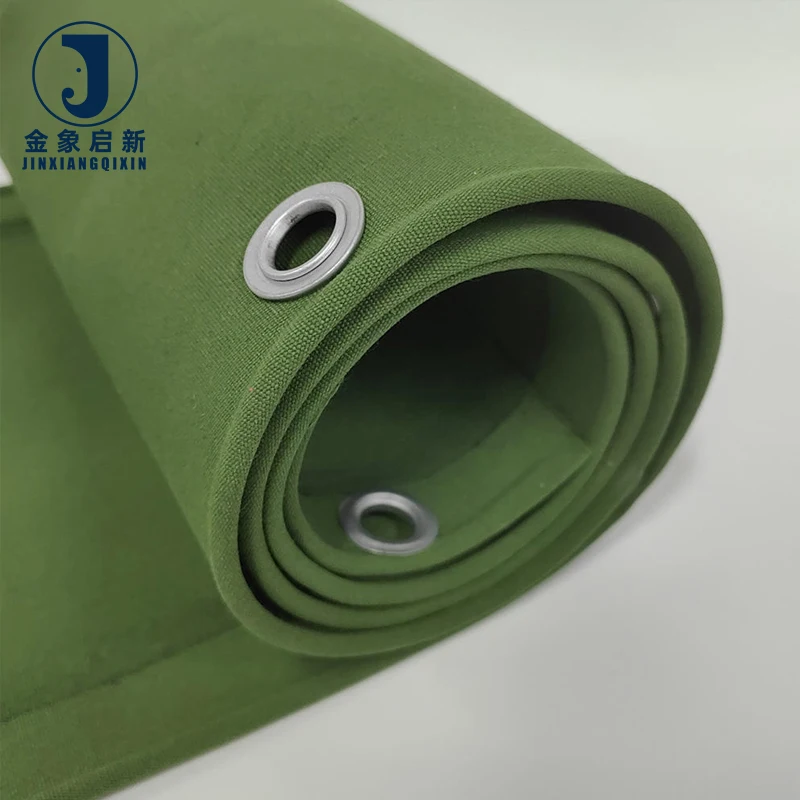
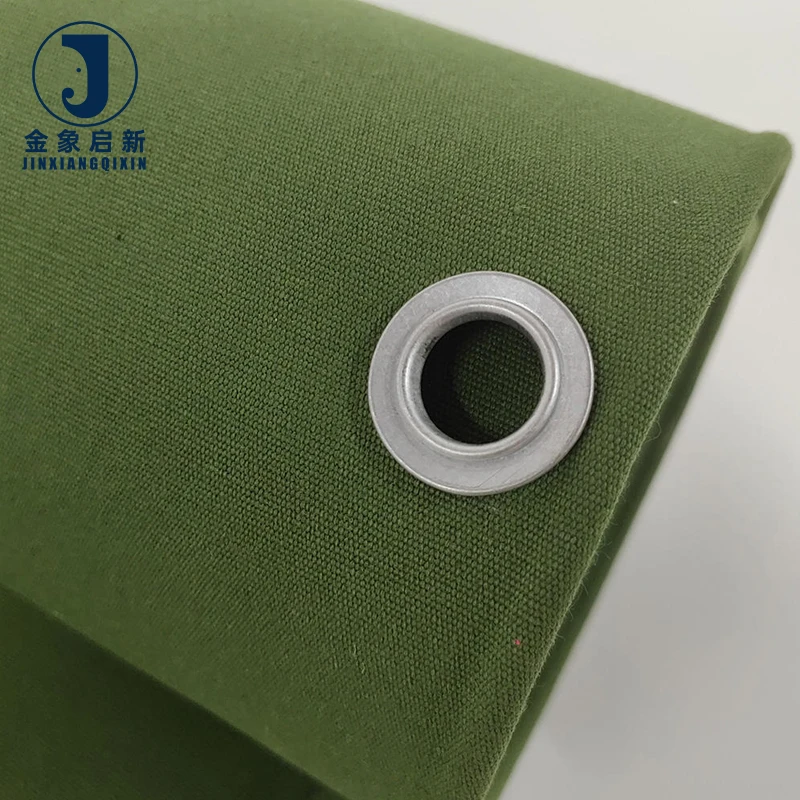
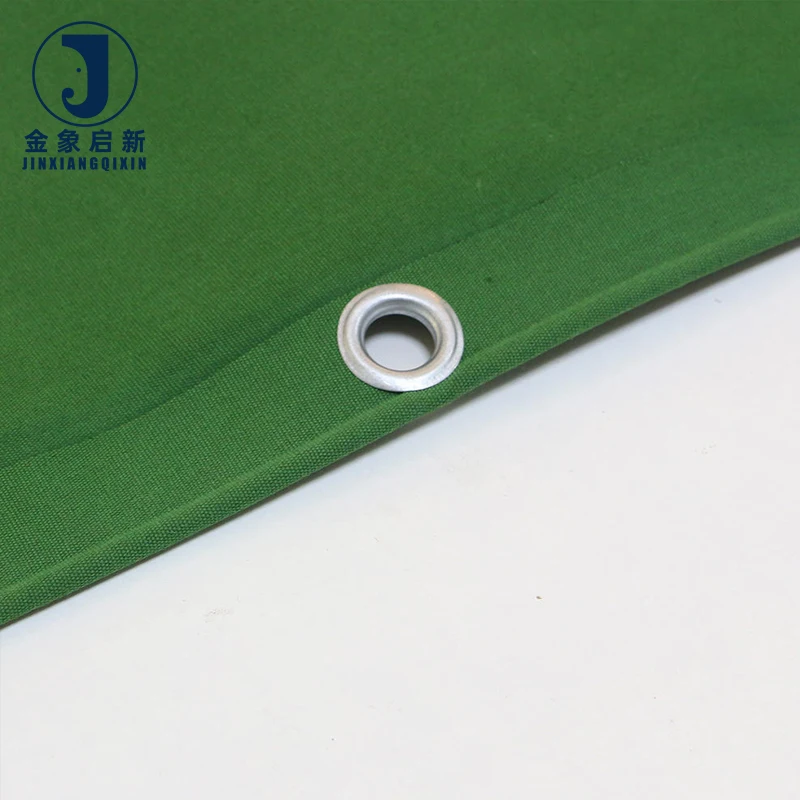
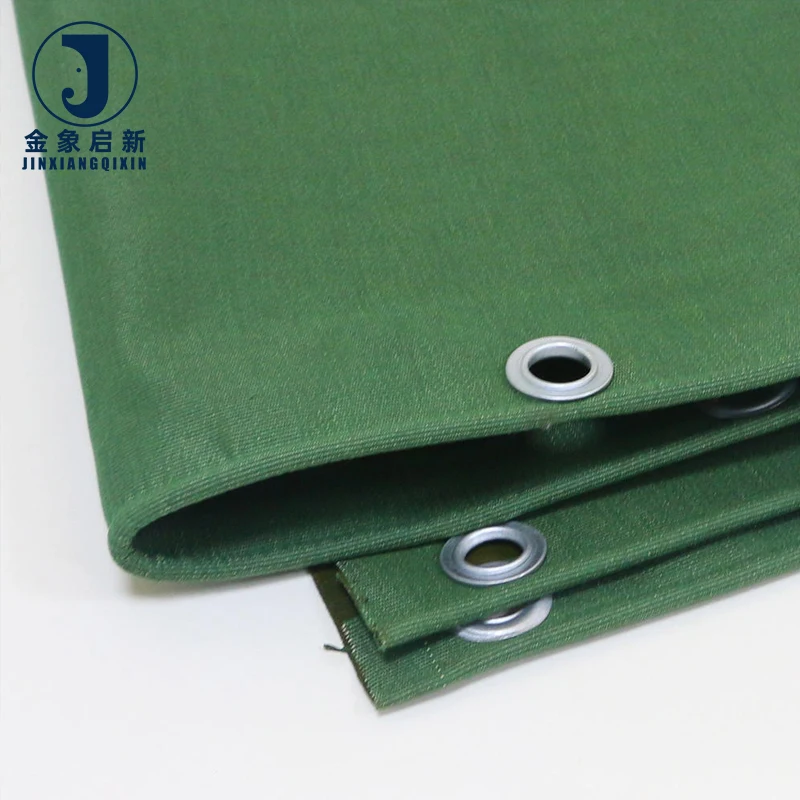
| Edge Reinforcement | Rust-proof aluminum eyelets every 1 m at corners and hem; folded hems welded and sewn with poly ropes |
| Coating / Finish | High-density woven upper layer with weather-resistant low-density reinforced laminated backing |
| Key Features | Wear-resistant, corrosion-resistant, tensile-resistant, high- and low-temperature resistant |
| Waterproof Rating | Waterproof (test basis not stated) |
| UV Resistance | UV resistant (test basis not stated) |
| Anti-Mildew | Mold resistant (test basis not stated) |
| Flame Retardant Grade | Available in flame retardant grades — confirm the grade required for your market |
| Service Life | Suited to extended outdoor exposure |
| Standards | CE, ISO certified production |
Application Suitability
| Application | Exposure & Requirement |
|---|---|
| Truck and trailer side curtains | Constant flexing at load points, road abrasion, wind load on tie-downs, prolonged UV exposure |
| Industrial equipment covers | Outdoor weathering, dust and moisture ingress prevention, repeated removal and refitting |
| Construction site covers | Prolonged sun and rain exposure, abrasion from building materials, wind uplift stress on hems |
| Asphalt protection tarps | Heat transfer from freshly laid asphalt, ground moisture, heavy equipment rolling over edges |
| Tent and awning fabrication | Roll-to-roll colour consistency, clean weldability, dimensional stability under tension |
| Open-air stockpile covers | Long-term weathering, pooling water resistance, tie-down stress at grommet points |
Why GSM Verification Matters More Than the Quoted Number
Specifying a Heavy Duty PVC Coated Tarpaulin aftermarket supplier often starts with a target GSM, yet weight alone does not guarantee field performance. A 600gsm roll that measures light on arrival compromises every downstream property — tensile, tear, and weld integrity all fall below expectation.
Buyers frequently discover that the quoted weight was a nominal figure, not a measured one. The coating may be thinner at the edges, or the base fabric lighter than specified, leaving the finished truck cover or construction tarp vulnerable to early seam failure. When flex-point stress hits a weld on an underweight panel, the fabric tears before the expected service window closes. [NEED_CITE: tensile and tear test methods for coated fabrics per ISO 1421]
Roll Stock Consistency Across High-Volume Orders
When purchasing canvas tarpaulin by the roll for fleet or fabrication use, batch consistency determines whether consecutive panels match on the trailer or tent frame. This PVC coated tarpaulin is produced on lines where coating weight and base fabric tension are monitored continuously, reducing the visible shade variation that forces fabricators to reject panels mid-job. The 2 m × 100 m roll format supports container-scale loading while keeping roll count manageable for warehouse staging.
Welded Seam and Hem Reinforcement for Transport Loads
Truck side curtains and load covers fail most often where the fabric flexes under tie-down tension. The hem construction on this material uses folded edges that are both welded and sewn with poly ropes, distributing stress across a broader zone rather than concentrating it at stitch holes. Rust-proof aluminum eyelets are spaced at one-metre intervals along corners and hems, providing tie-down points that withstand repeated wind-load cycles without pulling through the canvas. [NEED_CITE: wind load calculations for flexible transport covers]
How Base Fabric and Lamination Work Together
The polyester cotton base fabric, woven from 8–12 strands of fine cotton yarn, provides the structural skeleton that resists tensile and tear forces. The PVC lamination applied over this woven substrate seals the weave against water ingress while adding surface abrasion resistance. The resulting composite balances flexibility for folding and draping with sufficient stiffness to hold shape on a truck frame. Thickness options of 0.5 mm, 0.6 mm, and 0.7 mm let buyers match the panel stiffness to their specific mounting system — lighter gauges for side curtains that retract daily, heavier gauges for static equipment covers.
The Hidden Cost of Underspecifying Your Canvas Grade
Choosing a lighter canvas to reduce material cost often shifts expense downstream. A panel that is too thin for the expected flex cycle will crack at the weld line within months, forcing a full replacement rather than a simple patch repair. Colour inconsistency across rolls in the same shipment can require re-sorting and selective cutting, adding labour hours that erase any per-metre saving. [NEED_CITE: field failure analysis of coated fabric transport covers] When flame retardant documentation is missing because the grade was never confirmed at order stage, the finished installation may fail a site safety inspection, delaying project handover.
Why Technical Buyers Source This Fabric Here
Dedicated in-process QA checks coating weight at multiple points across the web width, catching edge-to-centre variation before the roll is wound. The 10-person R&D team develops custom colour and print samples within days, allowing buyers to confirm shade match before committing to a full production run. Three production lines and 36 sets of equipment provide capacity to fulfil multi-container orders while maintaining lead-time reliability. Pre-shipment inspection covers 100 percent of finished rolls, verifying GSM, colour, and hem construction against the purchase specification.
Documentation & Verification
- Material specification sheet confirming base fabric composition, 600gsm weight, and PVC coating type
- Pre-shipment inspection record showing measured GSM per roll before dispatch
- UV and flame retardant test reports supplied for applicable grades — confirm requirement at inquiry
- Roll packing list with individual roll weights, dimensions, and batch traceability codes
- Certificate of origin and customs documentation for cross-border shipment support
Fabrication, Handling & Storage
- Set weld temperature to match the PVC lamination layer thickness; 0.7 mm rolls require higher heat input than 0.5 mm panels
- Allow welded hems with poly rope reinforcement to cool fully before applying tie-down tension at eyelet points
- Store 2 m wide rolls upright on pallets to prevent flat-spot deformation of the outer canvas layers
- Avoid dragging cut panels across abrasive ground; the laminated backing resists moisture but not direct scuffing
- Clean surface dirt with mild detergent; solvent-based cleaners may degrade the PVC coating bond over time
- When cutting from 100 m rolls, plan panel layout to minimise off-cuts at the 2 m width boundary
Request a Specification Match for Your Application
Provide the intended application — truck side curtain, equipment cover, or tent fabrication — along with the exposure conditions your panels will face. Confirm whether your market requires a specific flame retardant grade and whether you need roll stock or finished cut-to-size covers with welded hems and eyelets. Specify target colour or camouflage pattern and annual volume so the R&D team can prepare matched samples.
Frequently Asked Questions
Q: How is the 600gsm weight verified before the rolls leave the factory?
A: Every roll passes through a dedicated pre-shipment inspection where coating weight and base fabric mass are measured and recorded. The inspection confirms the delivered material matches the 600gsm stated on your quotation, with results documented on the dispatch record that accompanies your shipment.
Q: What eyelet spacing and hem options are available for truck cover use?
A: Standard reinforcement includes rust-proof aluminum eyelets spaced every one metre at corners and hems, with folded edges welded and sewn using poly rope. For higher wind-load applications, custom eyelet spacing and additional corner patch reinforcement can be confirmed at the sample stage before production.
Q: Can I get consistent colour across multiple rolls in a single order?
A: Yes — the production line monitors coating colour continuously, and batch matching is verified during pre-shipment inspection. For custom colours or camouflage patterns, the R&D team provides approval samples so you can confirm shade consistency before the full roll order is produced.
Q: What test documentation comes with UV-resistant or flame retardant grades?
A: Where UV or flame retardant treatment is specified, test reports confirming the applicable grade are included in the shipment documentation package. Confirm the specific standard required for your market at the inquiry stage so the correct treatment and certification are applied to your rolls.