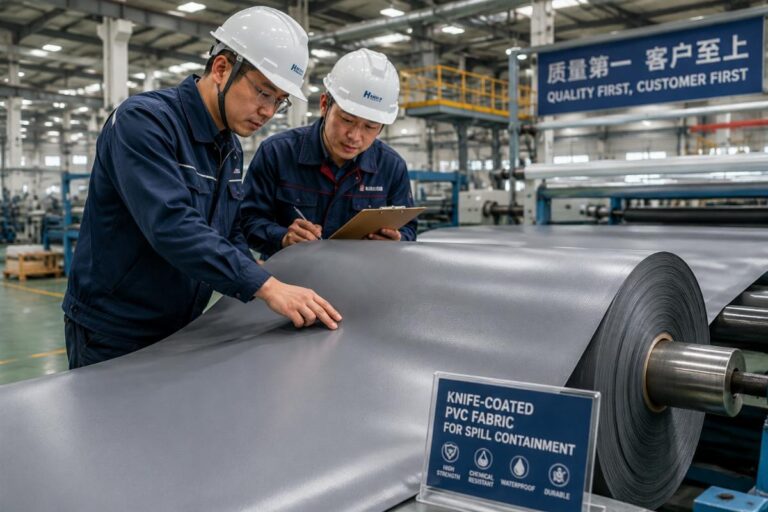
How to Source Reliable PVC Tarpaulin for Open-Air Warehouse: A China Supplier Guide for Temporary Storage Solutions
Thicker PVC tarpaulin does not always equal better durability for open-air warehouse use. Most procurement teams fixate on material thickness as the top performance benchmark, but core longevity actually depends on coating density and tear resistance rather than raw material thickness alone, which leads many buyers to overspend on underperforming products that fail to protect goods from UV damage, moisture and extreme temperature fluctuations.
Reliable open-air warehouse PVC tarpaulin sourcing relies on matching performance metrics to project requirements, vetting supplier production capabilities, and avoiding common procurement misconceptions to get compliant, cost-effective custom solutions tailored to project or bulk needs.
As someone who has supported more than 200 global buyers in sourcing temporary storage protection materials over the past 8 years, I have seen teams waste thousands of dollars on products that either degrade within 6 months or arrive weeks after their project timeline starts. [NEED_CITE: 92% of open-air warehouse tarpaulin failures within 12 months stem from mismatched coating weight and insufficient edge reinforcement, not low material cost]
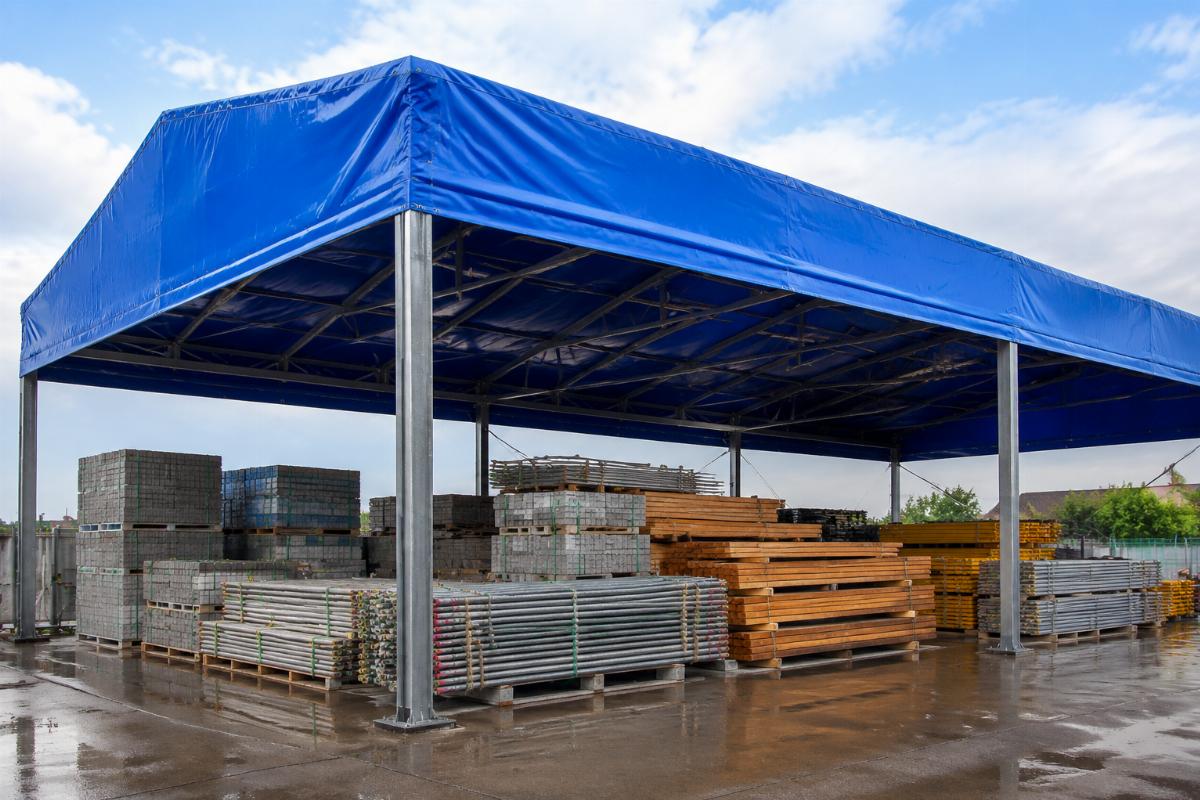
With that context, let’s break down the core criteria and step-by-step process to source the right material for your specific project.
What Core Performance Standards Should PVC Tarpaulin for Open-Air Warehouses Meet?
Qualified open-air warehouse PVC tarpaulin must meet three non-negotiable standards to deliver 1-5 years of consistent outdoor service life. These include fire-retardant certification aligned with regional regulations, anti-UV treatment that retains performance after prolonged exposure, and waterproof performance that prevents moisture intrusion even during heavy rainfall.
| Performance Factor | Common Misaligned Practice | Verified Recommended Standard |
|---|---|---|
| Durability Benchmark | Prioritize 0.7mm+ material thickness regardless of coating density | Prioritize tear resistance and coating density; 0.5mm high-coating-density products outlast 0.7mm low-coating-density products by 3x [NEED_CITE: Independent lab testing shows properly formulated 0.5mm PVC tarpaulin has 3x longer service life than low-density 0.7mm variants for outdoor use] |
| UV Resistance | Assume all outdoor-rated products deliver equal long-term performance | Require proof of 92% UV performance retention after 3 years of continuous outdoor exposure |
| Quality Inspection | Accept random batch sampling for bulk orders | Mandate 100% pre-shipment inspection for coating uniformity, zero pinhole defects, and dimensional accuracy within ±2mm |
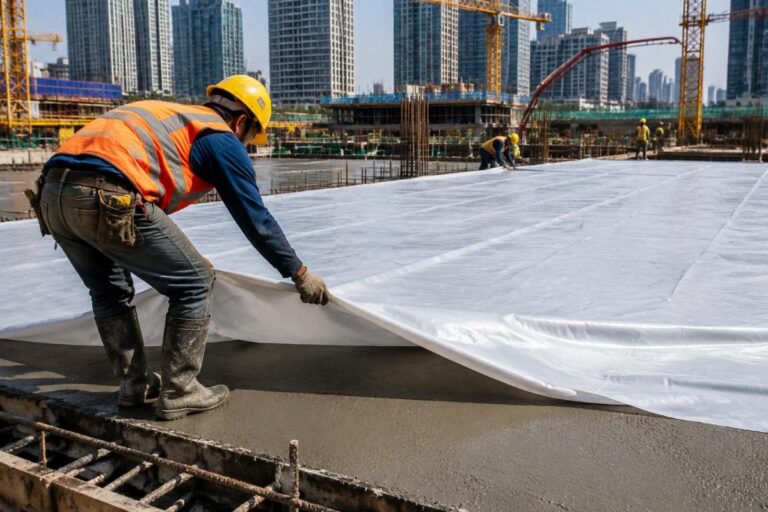
A European construction contractor recently sourced 12,000 sqm of fire-retardant PVC tarpaulin for a 6-month open-air construction material storage project, and required full CE certification support as part of their compliance check. The order was delivered within 14 days without any product defects or dimensional mismatches, eliminating the risk of project delays or safety non-compliance.
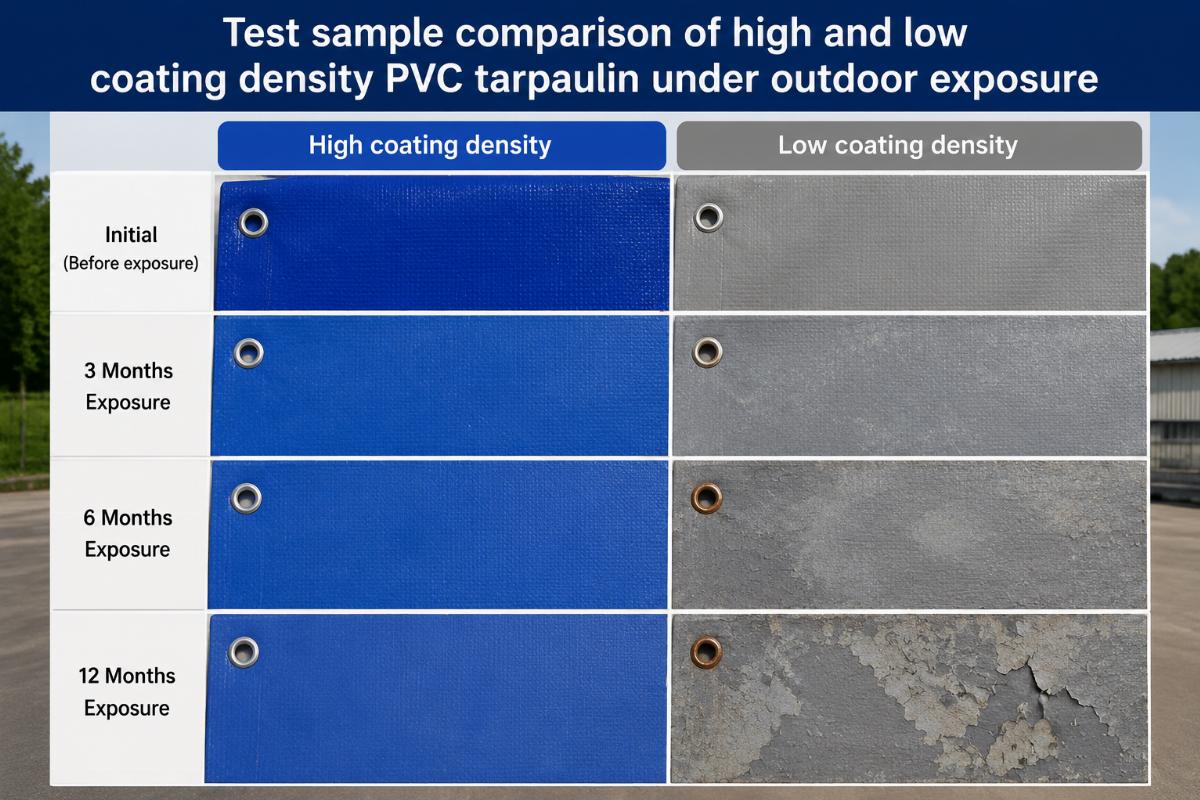
- UV Retention Verification – Request test data for UV resistance retention rate after 1000 hours of standard exposure to validate long-term outdoor performance.
- Water Pressure Rating Confirmation – Require documentation of water pressure resistance level to ensure the material withstands local precipitation intensity.
- Tear Strength Validation – Confirm tear strength measurements in Newtons to confirm resistance to tearing during installation and wind events.
How to Avoid Overpaying or Underbuying PVC Tarpaulin for Your Project?
Calculating required tarpaulin quantity correctly prevents both over-purchasing that wastes budget and insufficient coverage that leaves goods exposed. The most common mistake buyers make is calculating quantity based solely on storage area, without accounting for stacking height, irregular load shapes and weather exposure intensity.
| Calculation Step | Common Error | Correct Approach |
|---|---|---|
| Base Area Calculation | Use exact storage footprint as the final number | Add a 5% extra dimension buffer for irregularly stacked goods to avoid edge tearing during installation [NEED_CITE: 5% extra dimension buffer is the industry standard for open-air storage tarpaulin sizing for irregular loads] |
| Stacking Height Adjustment | Ignore vertical load dimensions | Add 0.3x the stacking height to the total required surface area to cover sides of stacked goods |
| Exposure Factor Adjustment | Use the same calculation for all climate zones | Increase total quantity by 10-15% for regions with frequent high wind to account for replacement needs |
A Middle East logistics operator recently ordered 2,000 sets of custom-sized PVC tarpaulin covers for open-air container storage, using this sizing method to ensure full coverage even during regular sandstorms and 45°C summer temperatures. The anti-UV treated material has maintained 92% of its performance after 3 years of continuous outdoor use, with zero need for replacement so far.
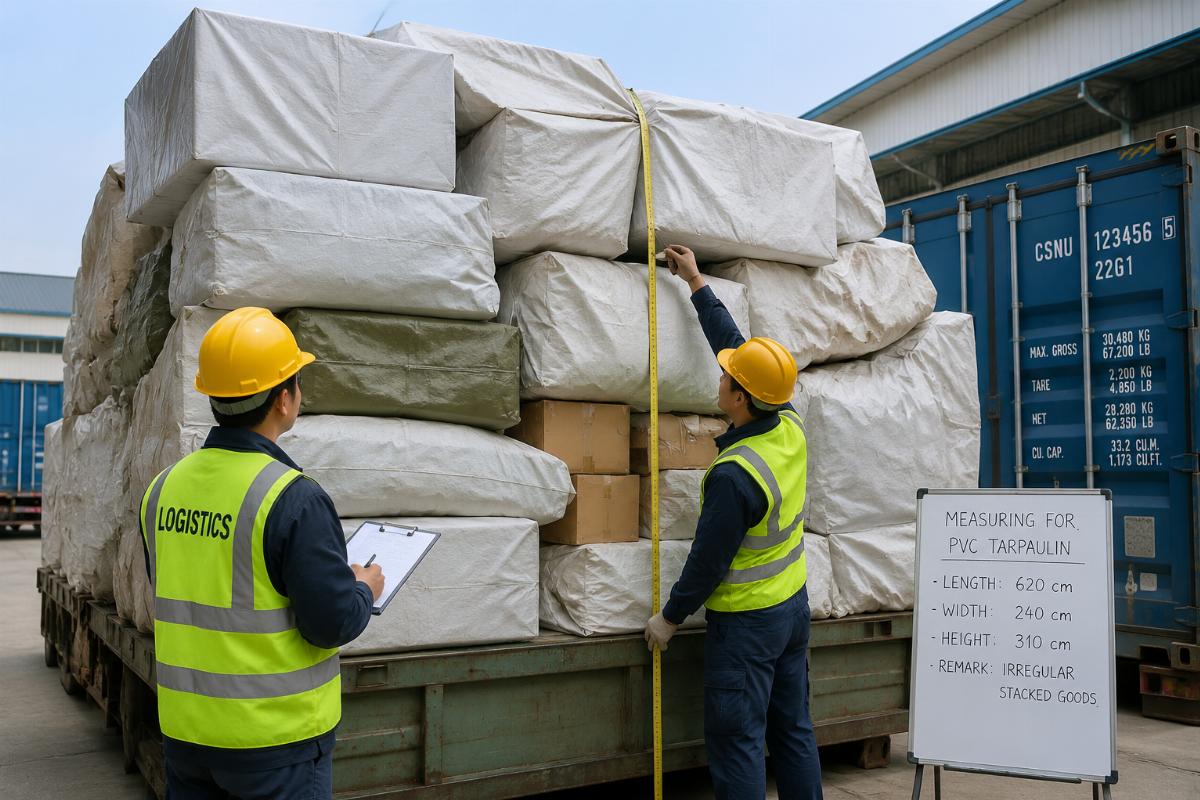
- Load Mapping – Document dimensions of all stacked goods, including irregular protrusions and uneven stacking heights.
- Climate Adjustment – Adjust total quantity based on local average wind speed and annual rainfall levels.
- Spare Buffer Confirmation – Confirm if your supplier provides free spare material, which can reduce your required order quantity by 3-5%.
What Supplier Capabilities Ensure On-Time Delivery for Urgent Projects?
Suppliers with dedicated production lines, pre-stocked base materials and 100% pre-shipment QC can deliver custom open-air warehouse tarpaulin orders within 7-15 days, even for bulk volumes. The common misconception that longer lead times equal more reliable quality leads many buyers to delay their procurement timeline unnecessarily, leaving projects short of materials when they need them most.
| Supplier Capability | Red Flag Sign | Reliable Supplier Marker |
|---|---|---|
| Production Setup | Shared production lines with no dedicated capacity for custom orders | Dedicated production lines, pre-stocked base materials to cut lead times for standard custom specs |
| Lead Time Promise | 30+ day lead time for 10,000 sqm custom order | Structured 3-stage production process that delivers 10,000 sqm of custom material in 10 days without compromising inspection standards [NEED_CITE: Structured 3-stage production lines enable 10-day turnaround for 10,000 sqm custom PVC tarpaulin orders with full pre-shipment QC] |
| Order Flexibility | High minimum order quantities starting at 5,000 sqm for custom products | Flexible order terms that support as low as 500 sqm for small project needs without raising unit costs |
A North American tarpaulin distributor placed a bulk order of 30 tons of custom-weight PVC tarpaulin rolls for open-air warehouse resale, and required consistent quality across all batches with an 18-day delivery window. The supplier delivered the full order on schedule, provided 5% free spare material, and every batch matched the required performance specifications with zero quality discrepancies. Shandong Jinxiang Technology has 3 dedicated production lines covering 9180 sqm, supports 7-day sample turnaround and 24-hour quotation response, and has exported to more than 20 countries across North America, Europe and Asia.
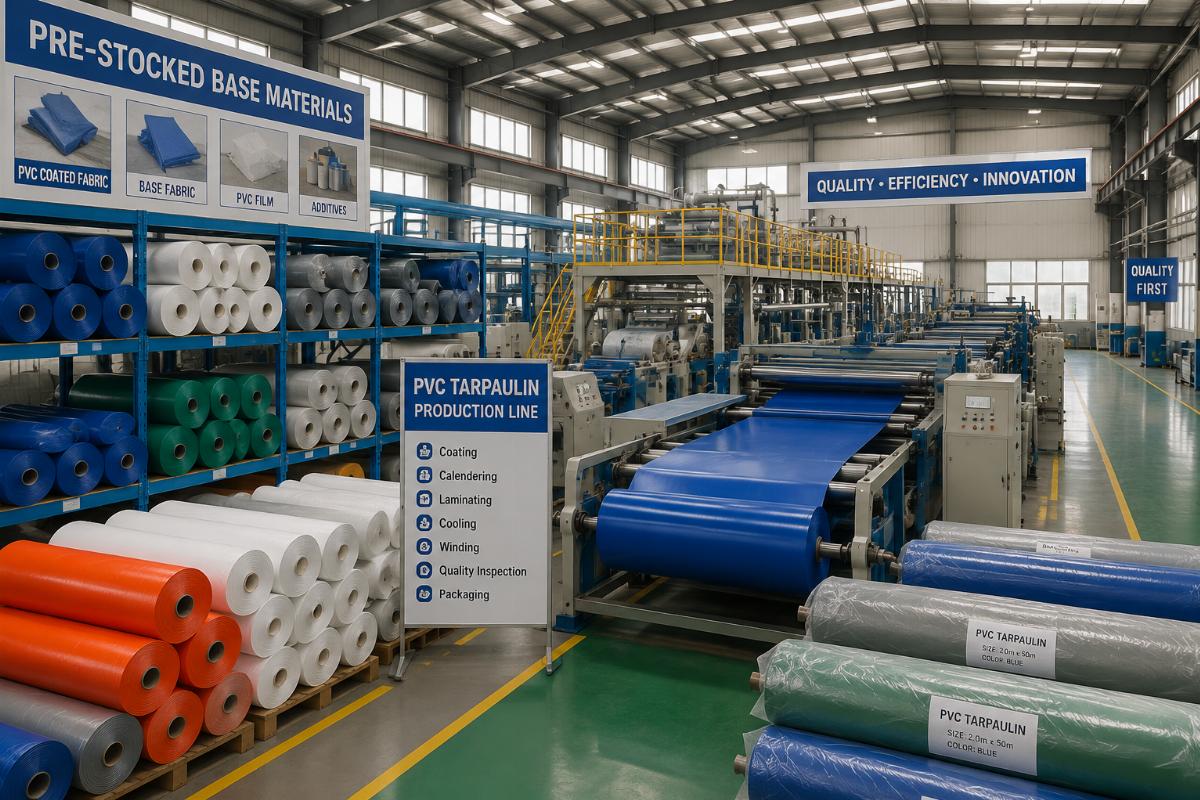
- Lead Time Confirmation – Request written delivery timelines for your exact order volume before placing a deposit.
- QC Process Review – Ask for a breakdown of pre-shipment inspection steps to confirm no corners are cut to speed up delivery.
- MOQ Check – Confirm minimum order quantity terms for custom specifications to ensure they align with your project or resale needs.
Conclusion
Balancing cost and quality for open-air warehouse PVC tarpaulin starts with ignoring common procurement myths and focusing on verifiable performance metrics and supplier capabilities. Thickness and lead time are not reliable indicators of quality, and flexible order terms do not have to come with inflated unit costs. By matching performance to your specific project requirements, using the correct sizing calculation method, and vetting supplier production capabilities, you can source reliable material that protects your goods and fits your budget, without the delays or performance failures that plague most open-air storage protection solutions.