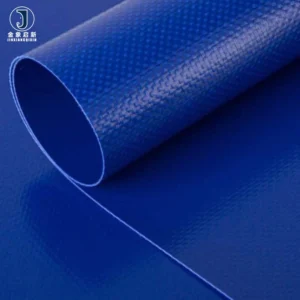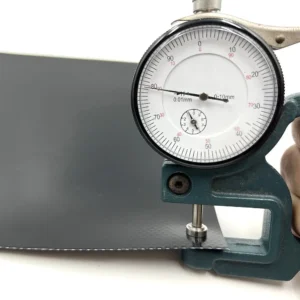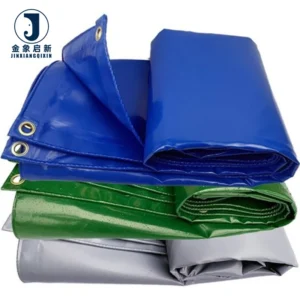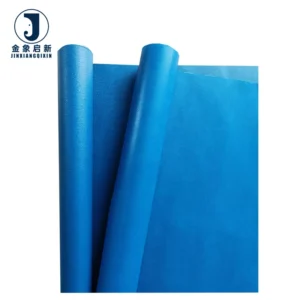
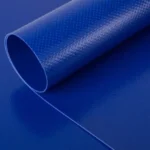
Specialist Coated Fabric — ventilation duct and membrane structure fabric matched to fire-retardant and anti-static compliance requirements before production begins, backed by three full production lines and dedicated QA at every coating stage.
Technical Specifications
| Parameter | Value |
|---|---|
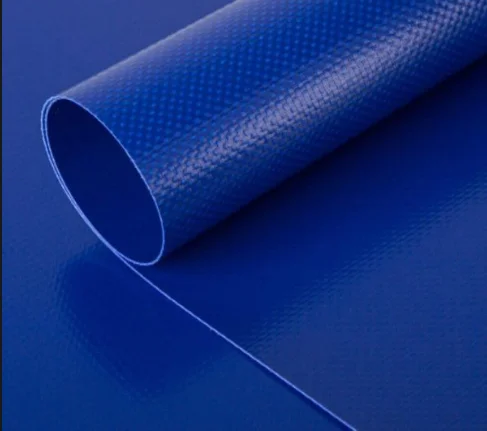
| Product Type | PVC Coated Tarpaulin Roll |
| Material | PVC Knife Coated |
| Coating Method | Knife over edge / knife over roll |
| Welding Compatibility | HF welding, hot air welding, sewing |
| Fire Retardant | Available in flame retardant grades — confirm the grade required for your market |
| UV Treatment | Available with UV stabilisation — test basis to be confirmed per specification |
| Anti-Mildew | Mildew proof treatment available — verify test basis for your application |
| Chemical Resistance | Oil, stain, acid and alkali resistant |
| Temperature Resistance | High temperature and cold resistance — operating range to be confirmed per grade |
| Surface Properties | Self-cleaning surface, anti-oxidation |
| Flex Performance | Highly flexible with crack resistance under repeated inflation cycles |
Application Suitability
| Application | Exposure & Requirement |
|---|---|
| Mining and tunnelling ventilation duct | Continuous airflow pressure, rock dust abrasion, mandatory fire-retardant and anti-static compliance underground |
| Airport hangar membrane structure | Large-span tensile loading, wind uplift cycles, aviation fire safety classification |
| Stadium architectural membrane | Permanent UV exposure, structural flex under wind load, public assembly fire code |
| Portable storage and tensile structure | Seasonal erection and dismantling, repeated folding, weather and chemical exposure |
| Inflatable and air-supported structure | Repeated inflation and deflation cycles, internal pressure stress, coating adhesion at flex points |
| Shade systems and large-format technical textile | Continuous solar exposure, tensile pre-stress, surface cleanliness for visual appearance |
Why Specifying a Grade Matters More Than Claiming "Fire Retardant"
A fabric labelled fire retardant without a grade and test standard is a compliance risk, not a solution.
Mining ventilation duct and architectural membrane projects are governed by site-specific fire codes — M2, B1 per DIN 4102, NFPA 701, or local equivalents. Procurement teams frequently receive material described generically as "fire retardant" only to discover at site inspection that the test certificate does not match the specification the engineer approved. PVC knife coated tarpaulin intended for these environments must carry documentation that names the grade, the test method and the issuing laboratory. [NEED_CITE: DIN 4102 fire classification for building materials]
Coating Adhesion Under Structural Flex
Knife coated PVC construction produces a thicker, more uniform coating layer compared to calendered or laminated alternatives. This matters directly for membrane and inflatable structures where the fabric undergoes repeated tension cycles. The coating must remain bonded to the base fabric through thousands of flex events without delamination at the weld line or along fold creases. When you specify PVC knife coated tarpaulin for a tensile structure, the peel strength between coating and substrate is as critical as the tensile strength of the base fabric itself.
Welding Method Selection for Duct and Membrane Fabrication
Fabricators working with this material have three joint options: high-frequency welding for airtight and watertight seams on inflatable structures and ventilation duct, hot air welding for field repairs and large-format membrane panels, and sewn joints where mechanical fastening is preferred. Each method interacts differently with the PVC coating chemistry. HF welding relies on the dielectric properties of the PVC layer, so coating formulation directly affects weld consistency. [NEED_CITE: high-frequency welding parameters for PVC coated technical textiles] Hot air welding performance depends on the coating’s thermal response window — too narrow a range risks incomplete fusion or scorching at the joint.
Reading the Specification Sheet Beyond GSM
GSM tells you the total weight per square metre of base fabric and coating combined, but it does not describe how that weight is distributed. A PVC knife coated tarpaulin roll with identical GSM can perform very differently depending on whether the weight sits primarily in a heavy base fabric or in a thick coating layer. For tensile and membrane applications, the base fabric denier and weave density determine tear propagation resistance — how a small puncture or cut behaves under load. The coating weight governs chemical resistance, surface durability and weldability. Requesting the base fabric specification alongside the total GSM allows a fabricator to assess whether the material suits a high-tension membrane panel or a low-stress shade canopy.
The Hidden Cost of Untested Compliance Claims
Ventilation duct installed in a mine or tunnel without verified anti-static surface resistance can fail a site safety audit, requiring complete removal and replacement at the contractor’s expense. Similarly, membrane fabric delivered to a stadium project without the fire-retardant grade the building inspector specified halts the entire installation schedule. These failures rarely stem from intentional deception — they result from a procurement process that accepted a general description instead of demanding the test report matched to the project specification before production started. [NEED_CITE: fire safety compliance requirements for tensile membrane structures in public venues]
Sourcing Decisions That Reduce Specification Risk
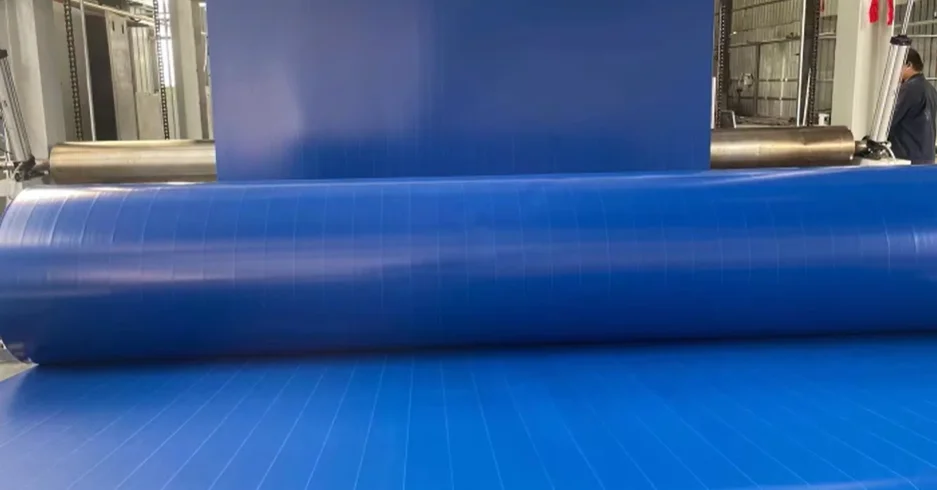
Production across three full coating lines with 36 sets of professional equipment means PVC knife coated tarpaulin rolls are manufactured with consistent coating weight control from first metre to last. The 10-person R&D team handles material selection and sample development against your project’s specific compliance and fabrication requirements, not from a fixed catalogue. Dedicated QA and QC inspection at every production stage — base fabric incoming check, in-line coating weight verification, and 100% pre-shipment roll inspection — catches coating variation before the material leaves the facility. Samples for custom width, treatment grade and colour are developed within days so you can validate weld parameters and compliance documentation before committing to a production run. Material specification sheets, test reports for applicable fire-retardant and anti-static grades, and full dispatch documentation ship with every order to support site inspection approval.
Documentation & Verification
- Material specification sheet stating base fabric denier, coating type and total GSM for each roll
- Fire-retardant test report naming grade and test method matched to your project specification
- Anti-static surface resistance certificate for mining and aviation duct compliance
- ISO and CE certificates included with dispatch documentation
- Pre-shipment inspection record confirming coating weight and colour consistency roll to roll
- Certificate of origin and customs documentation for international shipment
Fabrication, Handling & Storage
- HF welding parameters must be calibrated to the specific PVC coating formulation of this knife coated roll
- Hot air welding temperature range should be verified with sample pieces before full production on this fabric
- Store rolls horizontally on a flat surface to prevent permanent creasing in the knife coated PVC layer
- Allow cold-stored rolls to reach ambient temperature before unrolling to avoid coating crack damage
- Clean the self-cleaning surface with mild detergent only — solvents may degrade the PVC coating bond
- Plan panel cutting layout to minimise offcut waste given the roll width and project panel dimensions
What We Need to Quote Your Project
To provide an accurate specification and sample, share the application type and the environmental conditions the fabric will face — underground ventilation, outdoor membrane, or inflatable structure. Identify the fire-retardant grade or anti-static standard your site requires so we can match the treatment and test documentation. Confirm the roll width, estimated annual volume, and whether you need roll stock or finished cut panels.
Frequently Asked Questions
Q: What fire-retardant grade does my mining or aviation ventilation duct project require?
A: Underground mining operations typically mandate a specific fire-retardant classification such as M2 or equivalent, while aviation hangar duct may require a different standard. Confirm the grade with your site safety engineer before ordering. We supply the test report matched to the grade you specify so documentation passes site inspection.
Q: How is anti-static performance verified for ventilation duct compliance?
A: Anti-static compliance is verified through a surface resistance test measured against the standard your mining or tunnelling authority requires. We provide a test certificate stating the measured resistance value and the test method used. This documentation ships with the roll for your site safety auditor to review.
Q: Which welding method suits duct versus membrane fabrication?
A: High-frequency welding produces airtight seams suited to inflatable structures and ventilation duct sections. Hot air welding works well for large-format membrane panels and field repairs. Sewn joints are preferred where mechanical fastening is specified. We can advise on the optimal method based on your fabrication requirements and this PVC knife coated tarpaulin formulation.
Q: How do you ensure coating adhesion survives repeated flex in inflatable structures?
A: Knife coated PVC construction produces a thicker, more uniform coating bond compared to laminated alternatives. We control coating weight consistency across the roll and verify adhesion during in-process QA. Samples are available so you can test flex and peel performance under your specific inflation cycle conditions.
Q: What documentation ships with each roll for site inspection approval?
A: Every roll ships with a material specification sheet stating GSM, base fabric denier and coating type. Where fire-retardant or anti-static treatment is specified, the corresponding test report is included. Pre-shipment inspection records, ISO and CE certificates, and a packing list accompany each dispatch.